
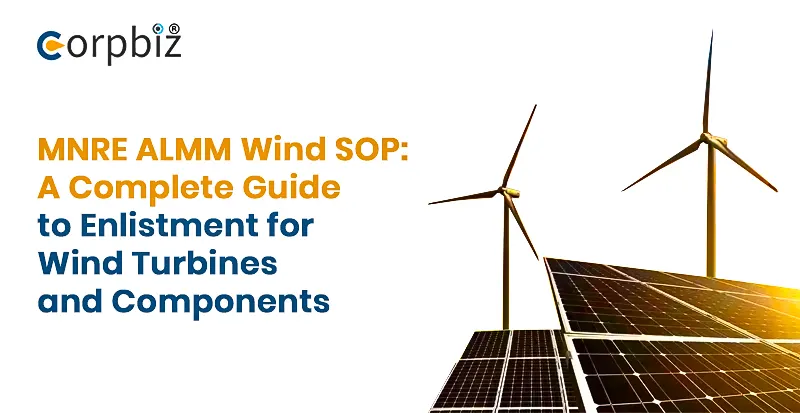
The renewable energy ambitions of India are the most aggressive in the world. By 2030, targeting 500 GW of non-fossil fuel capacity. To power its future, the country is largely relying on wind, solar, and other clean energy sources. Among all of these, wind energy is the key component of India’s climate change mitigation or decarbonization plan, targeting states like Gujarat, Karnataka, and Tamil Nadu, where wind potential is high.
The Ministry of New and Renewable Energy (MNRE) has introduced a number of quality control systems over the years to ensure that the rapid growth of wind turbines in India is both efficient and reliable. The most significant among them is the ALMM (Approved List of Models and Manufacturers), the framework that started with the solar modules, has now included Wind Turbines (WT) and Wind Turbine Components (WTC).
The Ministry of New and Renewable Energy (MNRE) has issued a SOP (Standard Operating Procedure) for wind energy systems, specifically for ALMM enlistment, in November 2025. The aim of this SOP is to accelerate the approval process, promote transparency, and guarantee technical accuracy in the wind energy supply cycle.
To help the manufacturers, OEMs, and component suppliers, this blog aims to cover the following:
- What are ALMM (Wind) and ALMM (WTC)
- Why MNRE introduced the SOP
- Key highlights of the SOP
- Benefits of ALMM Enlistment
- Compliance challenges faced by the manufacturers
- Step-by-step guide to apply for ALMM
- How CorpBiz can help with ALMM registration
If you are looking forward to getting Wind Turbines (WT) and Wind Turbine Components (WTC) enlisted under MNRE’s ALMM, Corpbiz will help you get through all the procedures.
Talk To Expert

Need help with MNRE ALMM Wind SOP – Talk to Our Experts
(4.8)


What are ALMM (Wind) and ALMM (WTC)?
The Ministry of New and Renewable Energy (MNRE) has introduced a regulatory framework- ALMM (Approved List of Models and Manufacturers), to confirm that only high-quality and verified products are being used in India’s renewable energy projects. ALMM has now stretched its limits to the wind energy sector; earlier, it was introduced for photovoltaic (PV) modules and cells. A step taken to reinforce India’s promise of safety, quality, and reliable clean energy infrastructure.
What is ALMM (Wind)?
ALMM (Wind) refers to the enlistment of complete wind turbine (WT) systems that satisfy MNRE’s prescribed technical and performance requirements. This covers all the significant components included in a functioning turbine, such as:
- Nacelle
- Rotor blades
- Hub
- Tower
- Control systems
Only manufacturers are eligible to supply equipment whose turbine models are mentioned under ALMM (Wind) for all the supported wind projects. This also includes manufacturers who are receiving subsidies or participating in public tenders.
Read more:- India’s Renewable Energy Journey for Emerging Economies
What is ALMM (WTC)?
ALMM (WTC) refers to the enlistment of individual wind turbine components (WTC) that are essential to system performance and safety. The equipment that falls under this component are:
- Gearboxes
- Generators
- Controllers
- Yaw and pitch systems
- Power converters
The Ministry of New and Renewable Energy (MNRE) ensures that the turbine building blocks must meet the quality standards strictly by extending ALMM to components. This has helped in minimising the risk of technical failure and improving the project’s long-term profitability.
Why is ALMM important?
The ALMM (Approved List of Models and Manufacturers) framework plays a vital role in:
- Preventing unreliable imports and unverified technologies from reaching the Indian market.
- Aligning with international standards by promoting domestic production.
- To ensure dependability and consistency throughout wind energy installations.
- It helps in boosting the investors’ confidence through transparent and accountable spending.
Why MNRE ALMM Introduced the SOP:
The supply chain of India got complicated as soon as the wind energy sector expanded rapidly. Until now, a number of regulatory and operational challenges have resulted from the absence of a regulated framework for permitting wind turbines. After recognizing all these gaps, the Ministry of New and Renewable Energy (MNRE) launched an elaborate SOP (Standard Operating Procedure) for the ALMM (WTC and Wind) enlistment process.
Key Issues faced before the SOP was introduced:
- Lack of standardized approval process: There was no uniform process for evaluating and clearing wind turbine models and components, which was leading to inconsistencies and delays in manufacturer enlistment.
- Irregular documentation: Lack of systematic documentation led the manufacturers to struggle with submission requirements.
- Delay in projects: Due to a lack of transparency, it prolonged the whole approval timeline.
- Irregular imports or substandard components: As cheap, quality components stepped into the market, they hampered the project’s reliability. The parts failed to meet the performance expectations and caused frequent breakdowns, increased maintenance costs, and safety risks.
- Compliance risks: Loopholes created due to the absence of standardized testing and verification.
Other problems faced by the manufacturers are unclear timelines and different perspectives on technical standards. This not only delayed the execution of the project but also prevented new entrants from participating in the market.
Particularly for the government-backed projects where responsibility and quality are crucial, such shortcomings can result in project delays, compliance risk, and cost overruns.
Read more:- Intellectual Property Rights and the Indian Renewable Energy Industry
The reason for MNRE to bring SOP:
To address all the above-mentioned issues, the Ministry of New and Renewable Energy (MNRE) launched the SOP, a clear, standardized, and transparent enlistment procedure.
- It brings clear documentation requirements and transparency in eligibility.
- Involve recognised testing and inspection agencies.
- Providing a clear review and approval process
- For non-compliance and delisting, MNRE sets penalties.
The SOP has provided step-by-step outlines and demands for third-party testing for the manufacturers to get approval. A significant step by the MNRE to streamline wind energy regulation and ensure that India’s clean energy infrastructure is built on high-quality and verified systems.
Key Highlights of the SOP for ALMM (Wind and WTC)
The MNRE has highlighted the process of enlistment in the SOP from eligibility to renewal and delisting. The key highlights of the SOP are below:
a. Objective and Scope
The MNRE’s SOP aims to:
- Encourage standardization and quality control in wind energy systems.
- Enabling the domestic and international manufacturers to apply for enlistment.
- Covering both the complete wind turbines and individual components.
Who Can Apply?
- OEMs (Original Equipment Manufacturers).
- Component suppliers.
- To the technology providers with manufacturing capabilities.
Relevancy
- To Indian manufacturers
- The foreign manufacturers supplying to Indian projects
b. Eligibility Criteria
Under the Approved List of Models and Manufacturers (ALMM) for wind energy systems, applicants must fulfill precise technical and operational requirements to be eligible for enlistment outlined by the MNRE. Applicants must meet the following:
- Manufacturing Capacity: A minimum installed production capacity must be demonstrated by the manufacturers. This criterion ensures that eligible manufacturers maintain a consistent work quality and have a proven ability to meet the market demand.
- Technical Standards: To minimize failure, the compliance guarantees that the equipment meets the performance standard and the global safety standards. All the WT components and models must comply with the relevant International Electrotechnical Commission (IEC) and Bureau of Indian Standards (BIS/IS) specifications.
- Testing Requirements: The products that are being used must undergo performance validation and type testing at MNRE-designated or NABL-accredited testing labs. The testing of the product may include safety and protection system verification, structural load evaluation, and power curve validation.
- Documentation: A comprehensive document must be submitted by the applicants, which will illustrate the quality of the product and the manufacturing durability. The needed documents are- performance test reports; type and component certifications; quality control and assurance protocol; and elaborated design and engineering drawings.
c. Enlistment Process
MNRE has structured the process for Wind and WTC by the ALMM to ensure accountability, uniformity, and transparency. Below is the step-by-step procedure mentioned in the SOP
1. Application Submission
- Need to submit the application via MNRE’s official portal.
- This application includes manufacturing capacity, product specifications, relevant certifications, testing reports, and company details.
2. Technical Documentation
- MNRE reviews the documents to check the quality assurance protocol, provide design drawings, and IEC/IS certifications.
- If any discrepancy occurs, MNRE may ask for additional data or seek clarification.
3. Verification by Testing Agencies
- The task of verification is assigned to NABL-accredited laboratories or designated testing centers by the MNRE. The objective is to check the product’s performance standard and to verify if the manufacturer’s claim is backed by certified results.
4. Site Inspection or Factory Audit
- An on-site inspection or factory audit is done by the MNRE or designated agencies to check the manufacturing installations for compliance. These inspections include production process, equipment maintenance, quality assurance, and in-house testing capabilities.
5. Approval and Publication
- MNRE will pass the formal approval for enlistment once the inspection and application reports are satisfactory.
- The approved manufacturers and models are published in the official ALMM (Wind/WTC) list.
d. Validity and Renewal
- Validity: Enlistment validity period is for 5 years.
- Renewal: To continue on the list after the validity period requires updated documentation, testing reports, and fee payment. The manufacturers must apply for the renewal before the expiry date.
- Modification: If any new model is introduced or any modification to the product must be reported to the MNRE, and must seek re-evaluation.
e. Suspension or Delisting
MNRE has the right to suspend or delist any model or manufacturer from the ALMM under specific circumstances. Grounds for removal list include:
- Non-compliance with technical standards
- If periodic audits or testing fail
- Submission of false or misleading information
Please note that the manufacturers have the right to appeal through MNRE’s Grievance Redressal Mechanism if their names are suspended or delisted. Within a specific timeframe, the appeal must be submitted along with a justification to resolve the non-compliance issue.
Read more:- Casting light on Viable Business Models for Renewable Energy Companies
Benefits of ALMM Enlistment
There are several benefits provided to the manufacturers in the enlistment under ALMM. Below are the following advantages:
a. Credibility and Trust
When your products meet the MNRE’s rigorous standards, it is listed in the ALMM signals. This enhances your reputation among the investors, buyers, and developers.
b. Eligibility for Government Projects
The models that are listed by the ALMM are only qualified for subsidy-linked projects, state and central government tenders, and public-private partnerships.
c. Export Potential
The recognition by the ALMM can boost your international credibility, and this will help you to enter the foreign markets that value certified products.
d. Support for “Make in India”
The SOP by MNRE promotes domestic manufacturing, in line with India to push for self-reliance in renewable energy infrastructure.
The Compliance Challenges Faced by Manufacturers
Regardless og the benefits provided in the ALMM enlistment, there are a number of challenges faced by the manufacturers. Below are the following challenges:
a. Complex Documentation
Due to the complexity of the documents, the manufacturers get haywired. The documentation work needs expert assistance, as manufacturers need to provide detailed technical documents, certifications, and quality protocols.
b. Regulatory Updates
The guidelines given by the MNRE often get updated, making it difficult for the manufacturer to keep track of those updates without dedicated support.
c. Testing Ambiguity
Need a proper understanding of the labs that are accredited, and the mandatory tests can cause confusion, especially for foreign applicants.
d. Need for Expert Guidance
Expert guidance is extremely important, especially for first-time applicants. As navigating the SOP and guaranteeing timely approval will require regulatory expertise.
Step-by-Step Guide: How to Apply for ALMM (Wind/WTC)
A step-by-step guide for the manufacturer on how to apply for ALMM (Wind/ WTC):
a. Documents Required
- Company registration certificate
- Manufacturing license
- IEC/IS certifications
- Technical datasheets and design drawings
- Quality assurance protocols
- Factory layout and production capacity details
b. Testing Prerequisites
- Product testing at MNRE-approved or NABL-accredited labs
- Performance validation reports
- Safety and reliability assessments
c. Fee Payment
- Application fee as per MNRE’s prescribed structure
- Testing and inspection charges (varies by product type)
d. Submission Portal
- Applications must be submitted via MNRE’s official ALMM portal: MNRE ALMM Portal.
e. Timeline
- Review and approval typically take 3–6 months.
- Due to incomplete documentation or testing backlog, a delay may occur in the procedure.
Role of Testing Agencies and Certification Bodies
For testing the agencies and certified bodies, MNRE has collaborated with two entities that ensure that the enlisted models meet the global performance and safety protocols.
- NABL-accredited laboratories for product testing.
- Certification bodies for agreement assessment and International Electrotechnical Commission (IEC) validation.
MNRE’s Vision and Impact on India’s Wind Energy Sector
In the MNRE ALMM Wind SOP, MNRE promises that India’s wind infrastructure is safe, efficient, and future-ready. In the SOP below are the goals mentioned:
- Attaining 140 GW of wind capacity by 2030.
• Promoting local Research and Development and manufacturing ecosystems.
- Improving India’s position as a global clean energy leader.
- Making India Atmanirbhar Bharat, and supporting “Make in India.”
Conclusion: Building a Reliable Wind Energy Future with ALMM and CorpBiz
MNRE ALMM Wind SOP is a transformative growth in India’s wind energy sector. Ensuring transparency and long-term durability, along with safety and global competitiveness. A strategic move by the MNRE for the manufacturers and Original Equipment Manufacturers (OEMs).
Corpbiz’s deep knowledge of MNRE renewable energy regulations can help manufacturers of Wind Turbines (WT) and Wind Turbine Components (WTC) enlistment.
Helpful Questions About MNRE ALMM Wind SOP
What are the MNRE ALMM wind SOP guidelines?
The MNRE ALMM Wind SOP guidelines clarify the process for manufacturers to get Wind Turbines (WT) and Wind Turbine Components (WTC) approved for government-supported projects.
It includes the following criteria:
• Mandatory testing
• Documentation requirements
• Factory audits
• Validity terms
• Conditions for renewal or delisting
This aims to ensure safety, quality, and standardization in India’s wind energy sector.What happens if a manufacturer fails to meet the MNRE’s requirements?
If a manufacturer fails to meet the MNRE’s eligibility or technical standards:
• Their application may be rejected.
• They may be excluded from participating in government tenders.
• Already enlisted models may be suspended or delisted.
• MNRE may impose penalties or require corrective actions.How long does the enlistment process take?
The typical timeline for ALMM (Wind/WTC) enlistment takes 3 to 6 months, depending on the following factors:
• Completeness of documentation.
• Availability of testing slots.
• MNRE’s review and inspection schedule.
Due to incomplete documentation or testing backlog, a delay may occur in the procedure.What documents are required for the MNRE ALMM (Wind) application?
• Company registration and manufacturing license.
• Technical datasheets and design drawings.
• IEC/IS certifications and conformity assessment reports.
• Quality assurance protocols.
• Factory layout and production capacity details.
• Product testing results from accredited labs.
• Fee payment proof as per MNRE guidelines.Who can apply for enlistment under ALMM (WTC)?
Manufacturers who are serving wind turbine components, such as gearboxes, generators, controllers, yaw/pitch systems, and converters, can apply for enlistment under ALMM (WTC).