

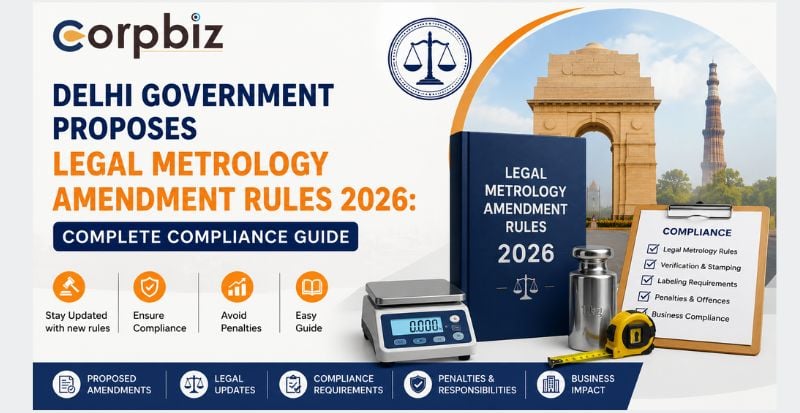
The Delhi government has recently brought a new draft law. Its name is the Draft Legal Metrology (Enforcement) Amendment Rules, 2026. These rules are meant for businesses involved in weights and measures and are expected to simplify the process of legal metrology registration for manufacturers, dealers, and repairers.
So, getting a license will be much easier. Earlier, traders had to wait for a government inspection to get a license. But with the new rule, the license will now be available through self-declaration. This will save a lot of time.
The biggest advantage is that there is no more hassle of repeatedly renewing the license. Once a license is obtained, it will be valid for life. Unless the government cancels it for any reason, it will continue to exist.
This rule is a big relief for small and medium traders. They can work in peace without any additional government pressure. The government has given the public 30 days to express their opinions and objections to this law.
What are the Delhi Legal Metrology (Enforcement) Amendment Rules, 2026?
The Delhi Legal Metrology (Enforcement) Amendment Rules, 2026, propose changes to the existing Legal Metrology (Enforcement) Rules, 2011 of Delhi.
The government wants to introduce a trust-based system in place of an inspection-based approval system. This simplifies the licensing process for weights and measures businesses. Earlier, traders had to run to many government offices to get or renew their licenses. Now, the rules are changing significantly.
The biggest change is that now licenses can be obtained without an inspector’s investigation. Traders can get licenses by self-declaration. This will reduce red tape and corruption.
This license will not have any expiration date. Once you get a license, it will last for life, unless the government cancels it for some reason.
This removes the burden of repeated licence renewals. The government is now seeking public opinion on this rule. Small shopkeepers will benefit greatly from this rule.
Read more – Legal Metrology (General) Amendment Rules, 2026: Complete Guide to Testing of Blood Pressure Devices
Why is the Delhi Government bringing these Amendments?
The Delhi government has brought these draft amendments to improve the working environment for local traders and ease of doing business. The decision to change the law has been taken to reduce the complexity and legal risks of the old rules and regulations.
The key reasons for this are-
- To reduce unnecessary paperwork and the hassle of repeated compliance.
- To make the licensing process faster and more effective.
- To encourage new investment and business growth.
- To reduce delays due to physical inspections.
- To strengthen the surveillance and enforcement system after the issuance of licenses.
- To align the legal metrology framework with modern and digital administrative systems.
Talk To Expert

Need Help? Contact Our Experts Today.
(4.8)

Main Objectives of the Draft Amendment Rules, 2026
The government aims to simplify, speed up, and make the legal metrology licensing system more transparent through this draft amendment. At the same time, an attempt has been made to reduce the unnecessary compliance burden on businesses.
The key objectives are-
- To introduce self-declaration-based licensing so that the process of obtaining licenses is easier.
- To completely remove the obligation of license renewal.
- To provide lifetime validity for licenses.
- To make the application and approval process simpler and less complicated.
- Making compliance management more effective.
- Making better use of government resources and manpower.
- Placing more emphasis on practical implementation and monitoring instead of approval-based controls.
- Building a trust-based system between businesses and regulatory agencies.
- Improving the Ease of Doing Business and creating a business-friendly environment.
Major Changes Proposed Under the Draft Amendment Rules, 2026
The draft law proposes several important changes. These changes are mainly brought to simplify the licensing process and reduce the compliance burden on businesses.
1. License based on Self-Declaration
The biggest change in the new draft law is the self-declaration-based licensing system. Earlier, a manufacturer, dealer, or repairer had to wait for a government inspection to get a license. This often caused delays. Now, it has been proposed to change that rule.
In the new system, the applicant will submit information about their business in a prescribed form. The license will be issued based on the self-declaration.
So, the time to get a license will be reduced. Businesses can also be started quickly. According to the government, this will further improve the ease of doing business.
2. End of the hassle of license renewal
Currently, the legal metrology license must be renewed after a specified period. But the new draft rules propose removing the obligation to renew the license.
Once a license is obtained, it does not need to be renewed. This will greatly reduce the time, money, and hassle of additional paperwork for businesses.
However, the government can suspend or cancel the license when the business violates the law.
3. Permanent validity of the license
According to these draft rules, the license will not have a specific period. Once a license is issued, it will remain valid indefinitely. Until the concerned authority cancels it for any reason, the license will remain valid. This is being seen as a big benefit, especially for small and medium-sized businesses.
4. Some exemptions in the case of repair work
Some repair-related rules have also been simplified in the new draft. If a manufacturer repairs its own equipment manufactured in another state in Delhi, then a separate repairer license will not be required. However, the concerned officer must be informed in advance.
In addition, they will not need a separate repair license when someone repairs their own weighing or measuring instruments. This will greatly reduce the hassle of unnecessary licensing.
5. License cannot be transferred
The draft rules clearly state that the legal metrology license cannot be transferred to anyone else. It cannot be sold, gifted, or inherited.
So, a new license may need to be applied for when the ownership or structure of a business changes. The government wants to ensure greater accountability in the licensing system.
New Forms and Compliance Documentation Requirements
The new draft rules propose introducing a few new application forms under Schedule II-A. Applications for licenses must be made through these.
The new forms are-
- LM-1 – For Manufacturers
- LR-1 – For Repairers
- LD-1 – For Dealers
These forms will require various business-related information. Such as-
- Type and structure of business
- Business address
- GST registration information
- Trade license information
- Details of machines and equipment used
- Number and details of skilled workers
- Type of weighing and measuring instruments used
- Information on Model Approval in case of imported goods
Although the process of obtaining a license has been greatly simplified, it is still very important to submit accurate information. Providing incorrect or incomplete information can cause problems in the future.
The government is now placing greater emphasis on self-declaration. So, businesses will also have to maintain correct documents and provide information. This will help avoid inconvenience during future inspections or verifications.
Updated Statutory Register and Record Retention Rules
Businesses will have to maintain some important records regularly according to the new draft rules. This is mentioned in detail in Schedule VII.
The records that need to be maintained include-
- Stock Register
- Verification Record
- Repair Record
- Dispatch Record
- Interstate Sales Record
- Compliance Monitoring Record
These documents will serve as evidence of the daily activities of the business. When a product is sold, a machine is repaired, or a product is sent to another state, this information must be maintained properly.
Failure to maintain records properly can lead to problems in responding to the authorities. In serious cases, fines, suspension, or cancellation of the license may also be imposed.
So, the issue of maintaining records should be given importance even after obtaining the license. A new license fee structure is proposed in the draft rules.
The new draft rules have fixed fees for different types of licenses. The proposed fee structure is given below-
- Legal Metrology Manufacturer License: ₹5,000
- Legal Metrology Repairer License: ₹2,000
- Legal Metrology Dealer License: ₹2,000
- License Amendment: ₹1,000
- Duplicate License: ₹500
This fee structure has been kept relatively simple and clear. Businesses will be able to know at the outset how much the fee payable for each service.
Removing the hassle of license renewal may also reduce business costs in the long run. This is being seen as a positive step, especially for small and medium businesses.
Revised Compounding Fee and Strict Enforcement Mechanism
The draft amendment proposes introducing a new compounding fee structure in place of the current Schedule XI.
The government’s objective is to reduce fraud and violations of rules related to weights and measures. A more modern and realistic mechanism is now being introduced instead of the old penalty structure.
Strict action may be taken against businesses that use non-standard weights or measuring instruments. So, consumers will get more protection in the market.
Earlier, more verification was done before issuing a license. Now it will be easier to get a license, but once you have one, more attention will be paid to whether the rules are being followed.
So, more emphasis is being placed on post-compliance monitoring and enforcement rather than pre-approval controls.
Read more – Offshore Areas Mineral Auction Amendment Rules
Continuing Compliance Obligations for Businesses
The new rules make it easier to get a license. But that doesn’t mean that all the rules are being lifted. Businesses still have to follow some rules after getting a license. Failure to do so can lead to problems.
Manufacturers:
Those who manufacture weighing or measuring instruments must have their instruments tested before selling them. If necessary, they must also be stamped. They must ensure that the instrument is working properly before releasing it to the market.
Repairers:
The instrument must be tested again after repair. It can be returned to the customer only after it is stamped according to the rules.
Dealers:
Dealers cannot sell incorrect or low-quality weighing and measuring instruments. Products of the specified quality must always be kept.
Impact of the Draft Rules on Manufacturers, Repairers, and Dealers
If these draft rules come into effect, the work of many businesses will be easier.
Benefits for manufacturers
- Licenses will be available quickly.
- Less paperwork will be required.
- Fewer visits to government offices will be required.
- Both time and cost will be saved.
Benefits for repairers
- In some cases, a separate license will not be required.
- Work will be easier.
- The burden of additional rules will be reduced.
Benefits for dealers
- The licensing process will be simplified.
- Businesses can start quickly.
- No need to wait long for approval.
Benefits for all businesses
- It will be easier to do business.
- Transparency of work will increase.
- It will be easier to start new businesses.
- Less time will be wasted on unnecessary procedures.
Public Consultation Process and Next Steps
The Delhi government released these draft rules on May 8, 2026. These are not the final rules yet. The government is seeking opinions from the common people, businessmen, industry associations, and other parties.
Comments or objections can be submitted within 30 days from the date of publication in the Gazette. The government will review all comments. It may make changes wherever necessary.
After that, the final rules may be published. So, it is better for those who do business in this sector to keep an eye on the matter now.
How can Corpbiz help with Legal Metrology Compliance?
Legal metrology licensing can be difficult for many businesses. Gathering documents, applying, and understanding the rules can be a hassle. Here, Corpbiz can help with all compliance requirements in a hassle-free way.
Our Services-
- Manufacturer License Support
- Dealer License Registration
- Repairer License Registration
- Legal Metrology Registration Support
- Import Compliance Support
- GST Registration
- Trade License Support
- BIS Certification Support
- Documentation and Filing
- Compliance Advisory Services
The application process becomes much easier with the right guidance. The risk of submitting the wrong documents is also reduced. So, time is not wasted, and the risk of future legal problems is also reduced.
Conclusion
The Delhi Legal Metrology (Enforcement) Amendment Rules, 2026, are considered a good initiative for businesses. The biggest change is the opportunity to get a license through self-declaration. It is also proposed to remove the hassle of license renewal. This can reduce both the time and cost of businesses.
However, the responsibility of complying with the rules will still be on businesses. So, it is necessary to know about the new rules in advance. Corpbiz can help businesses with legal metrology, licensing, registrations, and other compliance requirements. The whole process becomes much easier with the right advice.
Popular Queries About Legal Metrology Amendment Rules 2026
What is the Delhi Legal Metrology (Enforcement) Amendment Rules, 2026?
Delhi Legal Metrology (Enforcement) Amendment Rules, 2026, is a proposed draft rule of the Delhi government. It simplifies the licensing process related to weights and measures. This draft proposes important changes like abolishing licenses, license renewal based on self-declaration, and lifetime validity. This may reduce the compliance burden on businesses.
Why has the Delhi government brought these amendments?
The Delhi government has proposed these changes to make it easier to do business. Earlier, a lot of paperwork and various steps had to be followed for a license. This also took more time. An attempt has been made to reduce that hassle through the new rules. Its objective is to speed up the licensing process and create a good environment for businesses.
What is self-declaration-based licensing?
Self-declaration-based licensing refers to a system where the applicant can apply for a license by declaring their business information. Earlier, they had to wait for an inspection in many cases. The new draft rules have reduced that obligation. So, the time for getting a license may be less, and it helps to start the business faster.
Who will be affected by this draft amendment?
This new rule has been brought in for businesses dealing with weighing and measuring instruments. Those who manufacture, repair, or sell these instruments will come directly under it. Some rules may also apply to importers. Everyone who is doing business under a legal metrology licence, or plans to do so in the future, may be affected.
How much is the license fee proposed in the draft rules?
The draft rules have different fees for different licenses. A fee of ₹5,000 has been proposed for the manufacturer's license. The fee for the repairer license and dealer license is ₹2,000 each. In addition, you may have to pay ₹1,000 for any changes to the license, and you may have to pay ₹500 for getting a duplicate license. It is good to know these costs before starting a business.
Can a legal metrology license be transferred to someone else's name?
No. The new draft rules clearly state that a legal metrology license cannot be transferred. It is not possible to sell it or transfer it to someone else. It cannot even be transferred through inheritance. If the ownership of the business changes, you may have to apply for a new license.
What happens if a business does not comply with the Legal Metrology Rules?
Action can be taken against it when a business does not comply with the rules. Fines can be imposed for minor mistakes. But major violations of the rules can increase the problem. In some cases, the license can be suspended. In serious cases, the license can also be cancelled. So, it is important to follow the rules even after getting the license and keep the necessary records properly.
What is the purpose of the new Compounding Fee?
The main purpose of introducing the new compounding fee structure is to reduce violations of the rules and fraud. One of its goals is to prevent the use of incorrect or non-standard weights and measuring instruments. The interests of consumers will also be protected through this. The government now wants to pay more attention to whether the rules are being followed or not.
When can objections be submitted to the draft rules?
The Delhi government has given 30 days after the publication of the draft rules. During this period, traders, industrial organizations, professionals, and the public can submit their comments or objections. The government will review these comments. Then, the draft can be changed, and the final rules can be published.
Is physical inspection still required to get a legal metrology license in Delhi?
No. According to the draft amendment, it has been proposed to remove the obligation of physical site inspection. Now, the system of issuing licenses on the basis of self-declaration is being introduced. So, applicants will not have to wait for a long time. In addition, the licence approval process can become much faster.
How can Corpbiz help in legal metrology compliance?
Corpbiz provides various types of legal metrology services. These include license registration, documentation support, compliance management, and regulatory advisory. We also help with GST registration, trade license, and other necessary approvals. Getting the right guidance makes the application process easier and reduces the chances of mistakes.