
Introduction
The Bureau of Energy Efficiency (BEE), which falls under the Ministry of Power, as part of a broader goal to reduce energy use and increase sustainability, has implemented new energy efficiency standards for chest freezers. These reforms will come into force in India starting in January 2026 and are part of India’s continuing effort to promote the use of energy-efficient appliances and increase sustainability to lessen its overall carbon footprint.
This article will break down the major highlights associated with these new standards and what these standards mean for consumers, manufacturers, and the environment.
What is a Chest Freezer?
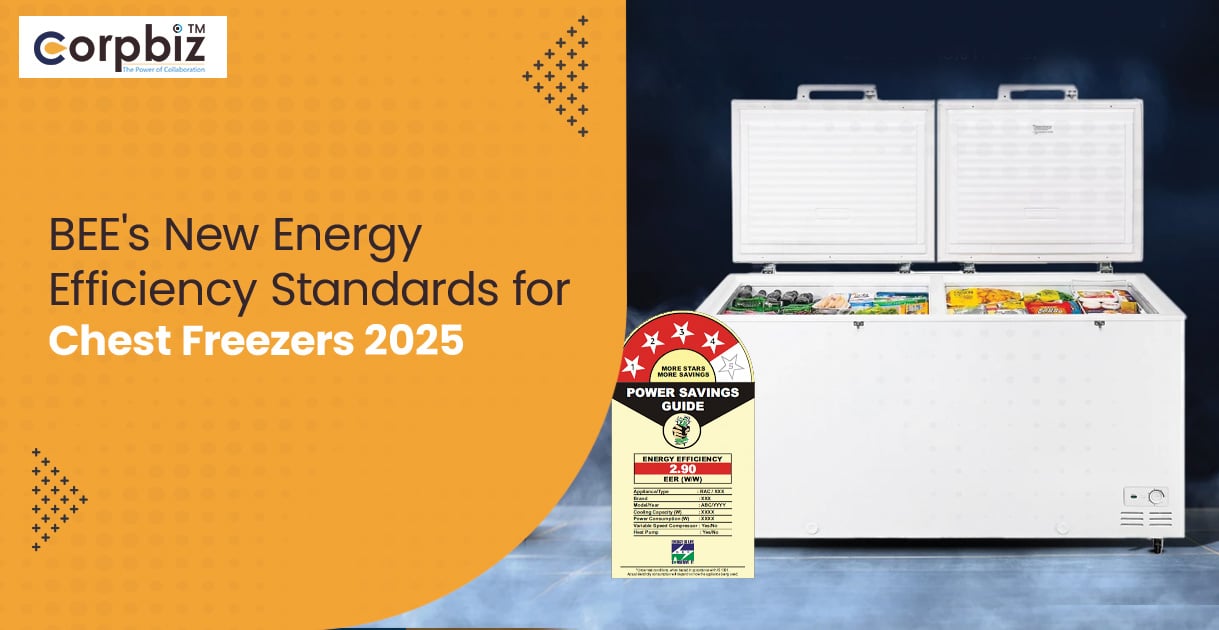
A chest freezer is defined as a large storage appliance for long-term storage of frozen food and frozen goods. It has operational characteristics similar to a trunk or chest, and, as a result, the chest freezer has a lid that opens from the top. These appliances can be located in homes, retail stores, and cold storage facilities. The traditional chest freezer can be classified as a Hard Top and Glass Top freezer.
A Hard Top freezer has a solid lid, whereas a Glass Top freezer has transparent sliding lids and is mostly associated with commercial use. A chest freezer allows for the long-term preservation of food; however, it does contribute a significant amount of electricity usage.
Background of BEE
The Bureau of Energy Efficiency (BEE) is a statutory body operating under the Ministry of Power, Government of India. It was established with the primary objective of promoting energy conservation and improving energy efficiency in all areas of energy usage, including appliances for the household, industry, and transport.
One of BEE’s most significant contributions is the Star Rating System, which provides consumers with an understanding of how energy efficient an appliance is. The Star Rating System uses a scale from 1 star (least efficient) to 5 stars (most efficient).
Further, BEE is also responsible for overseeing compliance through certification and registration of manufacturers, along with regular energy audits for manufacturers to ensure compliance.
Talk To Expert

BEE’s New Energy Efficiency Standards for Chest Freezers 2025
(4.8)


What Does the Amendment Mean?
The 2025 amendment issued by the Ministry of Power provides revised energy consumption limits and new star rating bands for the two types of chest freezers. These guidelines will ensure that only the most energy-efficient freezers will be available for consumers between January 2026 and December 2028.
The amendment also updates the manner in which energy consumption is calculated, with a standard ambient temperature of 38 degrees Celsius in mind. This ensures that manufacturers will have encouragement to innovate so that they can produce appliances that meet increasingly strict energy-saving limits.
Read more: Role of NABL Accredited Labs in BEE Registration
Key Changes in BEE’s 2025 Standards
There are several key updates in BEE’s 2025 standards, including:
New Energy Consumption Bands: Energy usage is now calculated based on the freezer’s volume (V) and temperature conditions.
Separate Bands for Hard Top and Glass Top Freezers: Each category has its own consumption criteria.
Redefined Star Ratings:
A 5-star Hard Top chest freezer must consume less than 1.80* V + 54.04 kWh per year. A 1-star model will consume more than 3.52* V + 105.54 kWh per year.
Similar equations are used for Glass Top models, tailored to their energy profile.
Star Rating Band for Hard Top Chest Freezers
| Star Rating | Annual Energy Consumption (Et) at 38°C |
| 1 Star | > 3.52 × V + 105.54 kWh/year |
| 2 Star | 2.82 × V + 84.43 < Et ≤ 3.52 × V + 105.54 |
| 3 Star | 2.25 × V + 67.55 < Et ≤ 2.82 × V + 84.43 |
| 4 Star | 1.80 × V + 54.04 < Et ≤ 2.25 × V + 67.55 |
| 5 Star | ≤ 1.80 × V + 54.04 |
Star Rating Band for Glass Top Chest Freezers
| Star Rating | Annual Energy Consumption (Et) at 38°C |
| 1 Star | > 4.23 × V + 126.65 kWh/year |
| 2 Star | 3.52 × V + 105.54 < Et ≤ 4.23 × V + 126.65 |
| 3 Star | 2.82 × V + 84.43 < Et ≤ 3.52 × V + 105.54 |
| 4 Star | 2.25 × V + 67.55 < Et ≤ 2.82 × V + 84.43 |
| 5 Star | ≤ 2.25 × V + 67.55 |
Compulsory BEE Registration: Only certified and registered manufacturers with a BEE certification can sell appliances in the Indian market.
These changes encourage manufacturers to adopt newer technologies to meet the enhanced requirements.
Implications
On Consumers
Consumers will be the major beneficiaries of these changes. As freezers with higher star ratings consume much less energy, they will save money on their electricity bills. The introduction of star ratings by design will allow consumers to quickly recognize and select the most energy-efficient appliances based on their personal needs. This potentially saves money over the longer term and encourages consumers to make more environmentally aware decisions.
On Manufacturers
Manufacturers will have to modify their product designs and technologies in order to meet the new energy standards. Compliance with the new BEE standards will be mandatory, so manufacturers will need certification and registration in order to comply. While this may increase suppliers’ preliminary costs of production, it will assist companies in maintaining an adequate level of competitiveness as demand by consumers begins to shift towards greener products.
On Environment
The amount of environmental benefit from the experience that will result from these regulations is extremely positive. This is due to the reduction in energy consumption, which ultimately implies less demand on power plants, many of which depend on unsustainable fossil fuels. The ultimate decrease in electricity consumption will decrease greenhouse gas emissions and help support India’s climate commitments and SDGs.
To Wrap Up
BEE’s revised energy efficiency standards for chest freezers represent an excellent step toward a positive environmental outcome. The tightening of the energy usage standards, together with an overhaul of the star rating system, means the government is enabling manufacturers to push the boundaries of the appliance’s energy efficiency and giving consumers the ability to make an informed choice for the environment.
The standards will reduce energy costs for consumers and global warming. With these abbreviations in the regulatory rollout positive in 2026, India’s first step toward an energy-resilient, sustainable future is beginning to take real shape.
To get expert assistance in BEE certification, visit https://corpbiz.io/.
Frequently Asked Questions (FAQs)
What are BEE’s new energy efficiency standards for chest freezers?
BEE's 2025 standards have specified new maximum energy consumption limits for chest freezers according to the volume and type of appliance, distinguishing between the Hard Top and Glass Top chest freezers. These regulations, effective from January 2026, aim to improve energy efficiency around these appliances to help save some electricity for consumers and decrease the environmental impact.
When will the new standards take effect?
The new energy efficiency standards for chest freezers will take effect on January 1, 2026, and will be enforced until December 31, 2028. During this window of time, manufacturers registered with BEE can only sell chest freezers complying with the standards and which are labelled with the appropriate star label, within India.
How does the new star rating system work?
The revised star rating system provides energy efficiency ratings from 1 to 5 stars, determining how much energy a freezer uses annually at an ambient temperature of 38°C. A 5-star appliance has the least overall energy consumption and uses the least electricity, while a 1-star unit uses far more energy overall, resulting in a considerable energy bill.
What’s the difference in the standards for Hard Top and Glass Top freezers?
Hard Top freezers are constructed with solid insulated lids; these are typically found in homes or small stores. Glass Top freezers are fitted with sliding glass panels as a cover; these are primarily found in retail establishments. The Bureau of Energy Efficiency (BEE) created distinct equations for energy consumption because each piece functions differently, and they differ in insulation and cooling characteristics.
How will this benefit consumers?
Consumers will benefit from lower bills because energy-efficient models use less power. The star ratings revision allows consumers to better understand the energy consumption of a freezer so they can more easily compare freezers and choose one that will save them more money over time. It also provides a means for buyers to make informed, environmentally responsible decisions without a sophisticated understanding of what energy consumption looks like.
Will prices for freezers go up because of the changes?
Yes, prices may go up approximately 2% to 5% because manufacturers are upgrading the designs to satisfy the more stringent efficiency regulations. Consumers will save more in the long term because they will use less electricity, so while freezers will cost a little more to buy up-front, they will be cheaper in their lifetime use.
Are manufacturers required to follow the new standards?
Yes, manufacturers must follow the new energy efficiency requirements as of January 2026. Only BEE-registered and certified products can be sold. They are permitted to label freezers correctly, but they must also measure and list the consumption rates their products achieve, thus allowing transparency regarding the use of energy-saving innovations across the market.
How do the new standards help the environment?
More efficient chest freezers mean less electricity use, which translates into less demand on power plants, many powered by fossil fuels. This results in less greenhouse gas generation and the ability to work toward India's goals of managing climate change. With time, the transition to more efficient freezers will contribute to a cleaner, more sustainable environment.
What does “energy consumption based on volume” mean?
‘Energy Consumption based on Volume’ means the energy limit is set according to the freezer’s storage volume. Larger freezers can consume more electricity, but only within a calculated formula. This ensures that both small and large units are energy efficient and don’t waste power, helping maintain fairness and performance across all sizes.
Where can I find compliant chest freezers?
You can check for compliant models by looking for the official BEE star label on the freezer. This label includes the star rating and annual energy consumption. You can also visit the BEE website to view a list of approved and registered appliances and manufacturers.
Read more: BEE Registration for Direct Cool Refrigerator – How to Apply?