

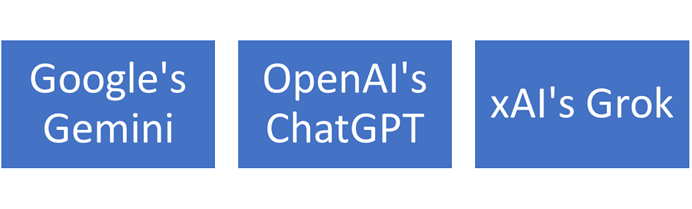
With the rise of artificial intelligence, securing intellectual property has become vital for companies that provide AI-powered services. The recent opposition faced by tech giants like Google’s Gemini, Open AI’s ChatGPT, and xAI Grok while registering their trademarks in India.
The AI tech giant’s struggle to obtain a trademark registration has opened the door to one question: Is early registration the key to a successful IP solution for international brands?
We’ll answer the above question through the legal background of the Trademarks in India, Famous Trademark Disputes, Factors to Consider While Registering Trademarks, and Trademark Oppositions in India.
Legal Background & Basis for Trademark Registration in India
“First to Use” Approach- Section 34
India follows the “first to use” approach, meaning an entrepreneur or corporation with prior use of an unregistered brand gets leverage over the registered brands with a later usage date.
Section 34 of the Trade Marks Act of 1999 explains that an unregistered user will have the upper hand if they have a prior usage against the registered user based on the following grounds:
- The unregistered owner must have used the trademark in question to obtain the prior use advantage.
- The trademark was continuously used within the Indian geographical territory.
- The use of the said trademark must relate to the application of the registered user.
- The unregistered trademark must have a prior usage date against the registered user.
Read more: Understanding the things that can be Trademarked
Class 9 of the Nice Classification
Class 9 is the primary category for the registration of technology and cloud-based solutions. It covers AI applications, data processing systems, computer software, and relevant digital technologies.
The classification is crucial for AI startups and multinational corporations (MNCs) seeking trademark registration in India. It secures exclusive rights over word marks and figurative logo designs against the unlawful use of products associated with this class.
What are the Risks Associated with Unregistered AI Brands?
Trademark registration is one step closer to creating a distinct brand identity. With a registered brand, Indian businesses can not only obtain exclusive rights but also acquire a competitive advantage in the tech-savvy Indian consumer market.
Failure to register a brand will amount to:
- Unnecessary delays in the market entry of the product.
- Hefty and high-cost lawsuits.
- Rebranding due to court orders.
- Loss of market share.
- Lack of legal action against copycats and infringers, such as injunctions, monetary claims, and destruction of counterfeits.
- Inability to secure a license to protect the technology.
- Cause hurdles in the global expansion of the product.
Understanding Trademark Opposition in India
Trademark opposition in India is a part of the registration process. It starts after the Trade Marks Registry examines and publishes the trademark in its official journal to allow third-party oppositions.
The timeline for the trademark opposition in India is four months from the official publication in the Trade Marks Journal.
A third party can raise an objection based on the following grounds:
- The trademark is registered to mislead consumers.
- The mark under question is similar to a well-known or existing trademark.
- The trademark is filed in bad faith to tarnish the reputation of an established brand.
- The opposing party has a prior usage date for the trademark.
What to Do When you Face Opposition?
Entrepreneurs must file a response within two months from the date of the official notice of the opposition, consisting of evidence to support their case. After receiving the reply from both parties, the registry will call for hearing and decide on acceptance or rejection.
It is important to note that a trademark opposition is a mere obstacle in the registration process. With appropriate legal support, you can easily remove the roadblocks to your successful IP registration in India.
Read more: Tips For Filing an International Trademark Registration in India
Trademark Disputes of Gemini, Grok, and ChatGPT in India
1. The Sun TV Network Pvt Ltd vs Google Inc.
Facts of the case:
The Sun TV Network Pvt Ltd (herein referred to as the petitioner) obtained a temporary injunction order against the tech giant, Google Inc (herein referred to as the respondent), from using the “Gemini” as a trademark in India.
Reason: the petitioner has multiple trademarks associated with the word “Gemini”, namely Gemini Music, Gemini Movies, and Gemini TV. The said petitioner contended that they had held the trademarks for over a decade.
The use of the term “Gemini” by the respondent could create confusion among customers in India.
The Madras High Court’s reasoning:
The Hon’ble High Court granted the temporary injunction against the respondent under the preview of Section 9 (1) (b), which explicitly highlights the provision relating to the lack of uniqueness and Section 11, which explains the grounds for refusal due to conflicts with existing trademarks.
2. ChatGPT vs. Flaxxi AI
Facts of the Application Opposition:
OpenAI’s trademark application to register “ChatGPT” as a word trademark in India has been opposed by Flaxxi AI, a Bengaluru-based startup (herein referred to as the opposing party).
The opposing party contends that they’ve been using the name since 2022 for their educational platform development in collaboration with IIT Jammu.
They further argue that they have the first usage as per the “First to use” Indian trademark law, and subsequent goodwill must prevent Open AI’s ChatGPT trademark registration in India.
3. Grok vs Groke Technologies
Facts of the Trademark Application & Opposition:
CAI’s “Grok is an artificial intelligence company that provides real-time information from a social media platform known as “X”, formerly known as “Twitter”.
Groke Technologies filed an application opposing the trademark registration of Grok, contending that they’ve already registered the same trademark under Class 9 of the Nice classification, which is associated with technological products.
In response, Elon Musk’s company xAI argued that while they share the same industry sectors, the two products were entirely different and operated in two distinct consumer markets, with Groke dealing in marine navigation services and Grok being an AI chatbot.
They further argued that the two companies operate in Korea and Finland with no conflicts or confusion among consumers so far. The opposition result is still pending.
Successful AI Trademark Registrations in India
The table of successful AI trademark registrations in India since 2024 is as follows:
| Brand Name | Registration | Company | Registration Status | Journal No. | Validity Up to |
| CLAUDE | Word Mark | ANTHROPIC, PBC | Registered | 2144-0 | 18/01/2034 |
| PERPLEXITY | Word Mark | PERPLEXITY AI, INC. | Registered | 2150-0 | 23/02/2034 |
Factors to Consider for AI Trademark Registrations
AI developers and tech companies must go through the following factors while registering trademarks:
Early Registration
You must register your brand as early as possible because time is of the essence when it comes to obtaining legal protection for your IP brand in India. After all, the latter follows the “first-to-use” principle while granting trademark rights.
Trademark Search
Entrepreneurs and companies must select a distinct trademark to ensure fast-track approval with no room for conflict with existing trademarks. A comprehensive trademark search will help them find a unique brand name.
Class Overlaps
Similar or confusing brand names in different industries can trigger objections. While registering a trademark, it is important to select a name that doesn’t conflict with products in distinct market industries.
Prior Usage Documentation
Companies and individuals seeking registration based on prior usage must demonstrate the usage through strong evidence. Some examples include records of marketing, promotional activities, product launch events, and customer-seller interfaces.
Legal Support
Trademark oppositions are a part of every registration process, so it is best to have an IP attorney or lawyer on retainer. On-time response against a potential opposition can help save time and costs associated with the process.
Conclusion
A registered trademark in India is your testament to your brand’s existence. It helps you enhance the customers’ trust and credibility in the market. A trademark registration will entitle you to file lawsuits and acquire monetary damages against the unauthorized use of your trademarks.
Trademark registration in India provides access to launch your product in the international market of 131 countries through the Madrid System of the WIPO.
With early registrations, you can eliminate any chance of opposition and legal obstacles connected to it, and ensure the business longevity of your brand in India’s growing AI and tech consumer market.
How Can Corpbiz Help with Your AI Trademark Registration?
Our AI-powered trademark search tool will assist you in looking for your desired brand name, identifying similar and confusing marks that may hamper your journey to successful registration.
We ensure you remain 100% compliant with Indian laws throughout the registration process, starting from application and document filing to legal support in case of opposition, eliminating the risk of rejection at any stage.
Frequently Asked Questions
What happens if I don’t register a trademark for my AI brand in India?
The consequences of unregistered AI brands are as follows:
· Lack of the right to claim a monetary claim through legal means.
· Loss of competitive edge in the Indian AI market.
· No exclusive rights
· Unnecessary delays in the product’s launch.
· Expensive litigation process.How to check if a trademark is already registered?
You can conduct a trademark search through the Trade Marks Registry’s “Public Search of Trade Marks” or use our AI-powered tool to ensure your name doesn’t conflict with an existing mark.
What is the validity of a trademark in India?
The trademark is valid for 10 years from the official date of registration. It can be renewed for another 10 years. All trademark owners must apply for renewal within the last six months of the current 10-year period.
What should I do I someone opposes my trademark registration of my AI brand in India?
You must get legal assistance, gather all the evidence, and send your reply to the Trade Marks Registry within two months of receiving the opposition notification. Get legal assistance
What is the “first-to-use” trademark principle in India?
The “first-to-use” approach states that any individual or company that proves the first-ever commercial use of a brand will have the brand’s exclusive rights irrespective of the registration status.
Which trademark class is important for AI tech companies?
Class 9 of the Nice classification is pertinent for the registration of trademarks for AI and tech companies. It deals with AI tools, chatbots, cloud-based software solutions, data processing systems, and other digital products and services.
What are the grounds for trademark opposition in India?
The grounds for trademark opposition in India include the following:
· Lack of distinctness.
· The trademark conflicts with Indian laws.
· Similar to an already existing trademark.
· A trademark is filed in bad faith to mislead the public.Are there any landmark trademark disputes involving global tech companies in India?
Yes, Gemini, ChatGPT, and Grok are facing trademark opposition due to the “First-to-Use” rule in India.