


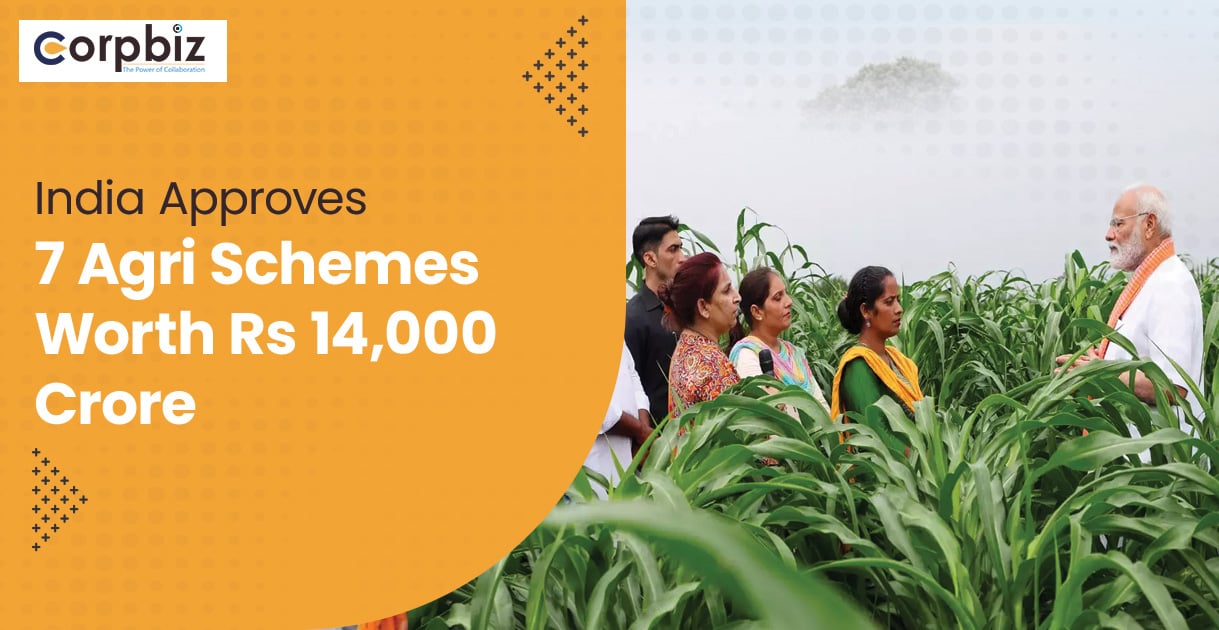
In a move to transform Indian agriculture and ensure long-term sustainability, the government, led by Prime Minister Narendra Modi, has introduced seven key schemes with a total financial outlay of ₹14,235.30 crore. These initiatives aim to modernize the agricultural sector, integrate technology for increased productivity, and support the rural economy through improved education, research, and resource management.
Objective of Approving the Seven Schemes in the Agriculture Sector
The objective is to ensure that India’s agricultural sector remains resilient despite climate challenges while enhancing food and nutritional security. Based on detailed research and strategic implementation, the schemes emphasize sustainable practices, technological advancements, and improved income opportunities for farmers. Details of the seven schemes are given hereunder:
Digital Agriculture Mission
The Digital Agriculture Mission is a groundbreaking initiative to transform agriculture through technology integration. With a budget allocation of ₹2,817 crore, this mission revolves around Digital Public Infrastructure (DPI) and envisions a robust digital ecosystem for Indian farmers. Key components include:
- Agri Stack is a digital repository containing important data, such as a farmers’ registry, village land maps registry, and crop sown registry.
- Krishi Decision Support System leverages advanced data analytics and remote sensing technologies to provide real-time information for weather forecasting, drought and flood monitoring, and crop yield prediction.
- The government promotes digital crop estimation, soil profiling, and yield modelling through this mission by utilizing Artificial Intelligence (AI) and Big Data. These technologies will enable farmers to make informed decisions, increase productivity, and improve market access.
- Moreover, farmers can connect with digital platforms that link them to buyers, helping them get fair prices for their produce while reducing wastage through efficient logistics management.
Crop Science for Food and Nutritional Security
Ensuring food and nutritional security is a priority, and the Crop Science for Food and Nutritional Security scheme, with an allocation of ₹3,979 crore, aims to achieve this by preparing Indian agriculture for the future.
This initiative will focus on the genetic improvement of crops, particularly food and fodder crops, oilseeds, pulses, and commercial crops. The idea is to increase crop resilience to climate change, becoming an increasingly pressing concern due to unpredictable weather patterns.
Further, the scheme promotes innovation in agriculture through research into insects, microbes, and pollinators. By fostering a science-driven approach, it intends to create an agricultural landscape that can thrive in a changing climate while maintaining high crop yields and securing India’s food supply.
Talk To Expert

7 Agri Schemes Worth Rs 14,000 Crore
(4.8)


Strengthen Agricultural Education, Management, and Social Sciences
To equip the next generation of agriculture professionals with modern skills, the government has set aside ₹2,291 crore for Strengthening Agricultural Education, Management, and Social Sciences. This initiative is aligned with the New Education Policy (NEP) 2020, emphasizing the inclusion of Digital DPI, AI, and Big Data into agricultural education.
The Indian Council of Agricultural Research (ICAR) will lead this initiative, ensuring that the new curriculum prepares students to tackle climate-related challenges and encourages adopting sustainable farming practices. In addition to digital literacy, the curriculum will promote natural farming techniques and support eco-friendly agricultural methods. This scheme also aims to improve agricultural research and development (R&D) capabilities, making Indian agricultural education more in tune with the needs of the modern world.
Align your ESG strategies with India’s cutting-edge agricultural reforms to integrate sustainable practices and innovative technologies to drive your business towards a more responsible future.
Sustainable Livestock Health and Production
Recognizing the importance of livestock in rural livelihoods, the government has allocated ₹1,702 crore for the Sustainable Livestock Health and Production scheme. This initiative seeks to improve animal health management, veterinary education, and dairy production, which are critical for increasing farmers’ incomes. Key focus areas of the scheme include:
- Animal genetic resource management aims to improve livestock breeds and their productivity.
- Animal nutrition and the development of small ruminant production are essential for rural farmers who depend on livestock for their livelihoods.
- Veterinary education and health management will ensure farmers have access to modern healthcare solutions for their livestock, boosting animal welfare and economic returns from livestock farming.
- The scheme will support innovation in animal husbandry, improving livestock productivity and increasing farmers’ profitability.
Sustainable Development of Horticulture
The Sustainable Development of Horticulture scheme has been allocated ₹1,129.30 crore. It aims to increase farmers’ incomes by promoting cultivating high-value crops. Horticulture has been recognized as a critical area for diversification and improving farmers’ economic resilience. The scheme supports the production of:
- Tropical, sub-tropical, and temperate horticulture crops.
- Root, tuber, and bulbous crops.
- Vegetables, floriculture, mushrooms, and plantation crops such as spices, medicinal, and aromatic plants.
By diversifying into high-value crops, farmers can increase their incomes and contribute to the growth of the horticulture sector in India, which is already a significant part of the country’s agricultural economy.
Strengthening of Krishi Vigyan Kendras (KVKs)
Krishi Vigyan Kendras (KVKs) play a critical role in extending the reach of modern agricultural knowledge and technology to the grassroots level. With an outlay of ₹1,202 crore, the scheme seeks to bolster the KVK network, ensuring farmers receive hands-on training and expert advice on sustainable agricultural practices.
KVKs bridge research institutions and farmers, translating scientific advancements into practical solutions for rural agriculture. Providing timely advice and local solutions, KVKs empower farmers to adopt new technologies, increase productivity, and solve site-specific agricultural challenges.
Natural Resource Management
Natural resources like soil and water are crucial for agricultural productivity. The Natural Resource Management scheme, with ₹1,115 crore allocated, is designed to promote the sustainable use and conservation of these vital resources. Key objectives of the scheme include:
- Efficient water use, promoting irrigation practices that conserve water while ensuring crops receive sufficient hydration.
- Soil fertility management ensures that land remains productive for future generations by promoting practices that prevent soil degradation.
- Climate resilience encourages adopting agricultural methods that reduce environmental impact and adapt to changing weather conditions.
- This initiative will help farmers manage their resources more effectively, ensuring long-term productivity and sustainability.
Step into a thriving agricultural future with producer company registration and leverage India’s innovative scheme to transform your farm into a beacon of sustainable success.
How do these Schemes Collectively Address Climate Change?
Climate change is one of the key challenges that modern agriculture faces. Many of these schemes, including the Digital Agriculture Mission, Crop Science for Food and Nutritional Security, and Natural Resource Management, focus on building climate resilience in agriculture. These initiatives promote technologies and practices that help crops adapt to changing weather conditions, conserve critical resources like water and soil, and mitigate the environmental impact of farming.
Through improved genetic crop research, advanced weather forecasting systems, and the promotion of sustainable farming techniques, these schemes prepare Indian agriculture for the future, ensuring that farmers can thrive even under changing environmental conditions.
Conclusion
The seven schemes introduced by the government represent a comprehensive approach to transforming Indian agriculture. With a total outlay of ₹14,235.30 crore, these schemes aim to address critical challenges faced by farmers, including climate change, resource management, and income diversification.
The government is integrating technology, research, and education to lay the groundwork for a more resilient and prosperous agricultural sector. The emphasis on digitization, sustainable practices, and modern education will benefit farmers and contribute to the nation’s long-term food security.
The schemes are well-aligned with India’s vision of sustainable development, ensuring that agriculture remains a key driver of economic growth while preserving the environment and ensuring prosperity for future generations. The government empowers farmers with the tools and knowledge needed to thrive in an increasingly competitive and climate-challenged world by investing in these initiatives.
Visit our website Corpbiz to empower your farm with the latest government-backed schemes for sustainable success and cultivate your future today.
Frequently Asked Question
What is the total financial outlay of these schemes?
The total financial outlay is ₹14,235.30 crore, allocated across seven schemes to boost agricultural growth, improve farmers' welfare, and strengthen rural economies. These schemes cover various sectors, from digital transformation to sustainable resource management.
What is the Digital Agriculture Mission?
The Digital Agriculture Mission is allocated ₹2,817 crore and aims to digitize Indian agriculture through innovative technology such as the Agri Stack and Krishi Decision Support System. The mission incorporates Artificial Intelligence (AI), Big Data, and data analytics to provide farmers with precise information regarding crop health, weather patterns, and market prices. It will create a Digital Public Infrastructure (DPI) that serves as a knowledge bank for farmers, enabling them to make better decisions, improve crop yields, and connect with buyers digitally for better pricing.
This mission will leverage technology to streamline digital crop estimation, soil profiling, and yield modelling processes. This will allow farmers to monitor their crops more effectively and increase productivity. The digital platforms will also help reduce wastage, ensuring farmers can sell their produce at the right time and in the right markets.What is the Crop Science for Food and Nutritional Security scheme?
Ans. With an allocation of ₹3,979 crore, the Crop Science for Food and Nutritional Security scheme focuses on the genetic improvement of crops, particularly food crops, fodder crops, oilseeds, pulses, and commercial crops. This initiative addresses long-term food and nutritional security by enhancing the resilience of crops against climate change, ensuring sustainable food production, and providing innovative solutions to meet global food demands.
The scheme also includes research on insects, microbes, and pollinators, encouraging the adoption of scientific methods to combat the effects of climate change. Through improved genetics and advanced research, the scheme will foster higher crop yields, enhance nutritional content, and safeguard food security in the face of growing environmental challenges.What is the goal of the Strengthening Agricultural Education?
The Strengthening Agricultural Education, Management, and Social Sciences scheme, with ₹2,291 crore allocated, is designed to improve agricultural education and ensure students are equipped with the latest technological knowledge, including AI, Big Data, and Digital Public Infrastructure, led by the Indian Council of Agricultural Research (ICAR), this initiative aligns with the New Education Policy (NEP) 2020, which emphasizes preparing students to tackle modern challenges such as climate change and sustainable farming.
The curriculum will be revamped to focus on natural farming techniques, sustainable agriculture, and eco-friendly practices. It will ensure that graduates are well-versed in innovative agricultural methods and ready to support the country's future agricultural growth.
Additionally, the scheme aims to modernize research facilities, expand digital literacy, and create linkages between education and practice, ensuring a smooth flow of knowledge from research institutions to the agricultural workforce.What does the Sustainable Livestock Health and Production scheme focus on?
The Sustainable Livestock Health and Production scheme, with a budget of ₹1,702 crore, focuses on enhancing the health and productivity of livestock, which plays a critical role in rural farmers' livelihoods. This initiative addresses animal health management, animal genetic resource development, and veterinary education, aiming to improve livestock health through better nutrition, genetic improvements, and disease management.
scheme will also enhance dairy production and the management of small ruminants such as goats and sheep, helping rural farmers increase their income from livestock farming. The program also ensures that farmers have access to quality veterinary services, which will directly impact the productivity and profitability of their livestock.
By promoting innovation and modern veterinary practices, this scheme will contribute to higher productivity, better health, and an overall increase in the profitability of livestock farming in India.How will the Sustainable Development of Horticulture scheme benefit farmers?
With ₹1,129.30 crore allocated, the Sustainable Development of Horticulture scheme promotes the cultivation of high-value horticultural crops, such as vegetables, spices, fruits, medicinal plants, and aromatic plants. This scheme encourages farmers to diversify their crop production to include these high-value crops, which generally offer better returns than traditional farming.
The scheme supports farmers in adopting modern horticulture techniques and provides access to high-quality seeds, planting materials, and innovative farming practices. By improving the yield and quality of horticultural products, the initiative will help farmers increase their incomes and contribute to the overall development of India's horticulture sector.What role do Krishi Vigyan Kendras (KVKs) play in agricultural development?
The Krishi Vigyan Kendras (KVKs) scheme, allocated ₹1,202 crore, focuses on strengthening the network of KVKs across India. KVKs are crucial for bridging the gap between research institutions and farmers. They provide on-the-ground training and expertise to farmers on the latest agricultural practices, techniques, and technologies.
These centres offer farmers guidance on improving productivity, adopting sustainable practices, and addressing specific farming challenges in their regions. By equipping farmers with the necessary knowledge and tools, KVKs ensure that the benefits of scientific research reach the grassroots level, promoting improved agricultural outcomes and greater economic stability for farmers.What is the focus of the Natural Resource Management scheme?
The Natural Resource Management scheme, with a budget of ₹1,115 crore, emphasizes the sustainable use of natural resources such as water and soil. This initiative aims to promote the efficient use of resources to ensure long-term productivity and environmental conservation.
The scheme encourages efficient irrigation, soil fertility management, and climate-resilient farming techniques. By ensuring that natural resources are used wisely, the initiative helps farmers maintain soil fertility, conserve water, and reduce the environmental impact of agriculture. It also addresses climate change by promoting resilient methods to shifting weather patterns and resource challenges.