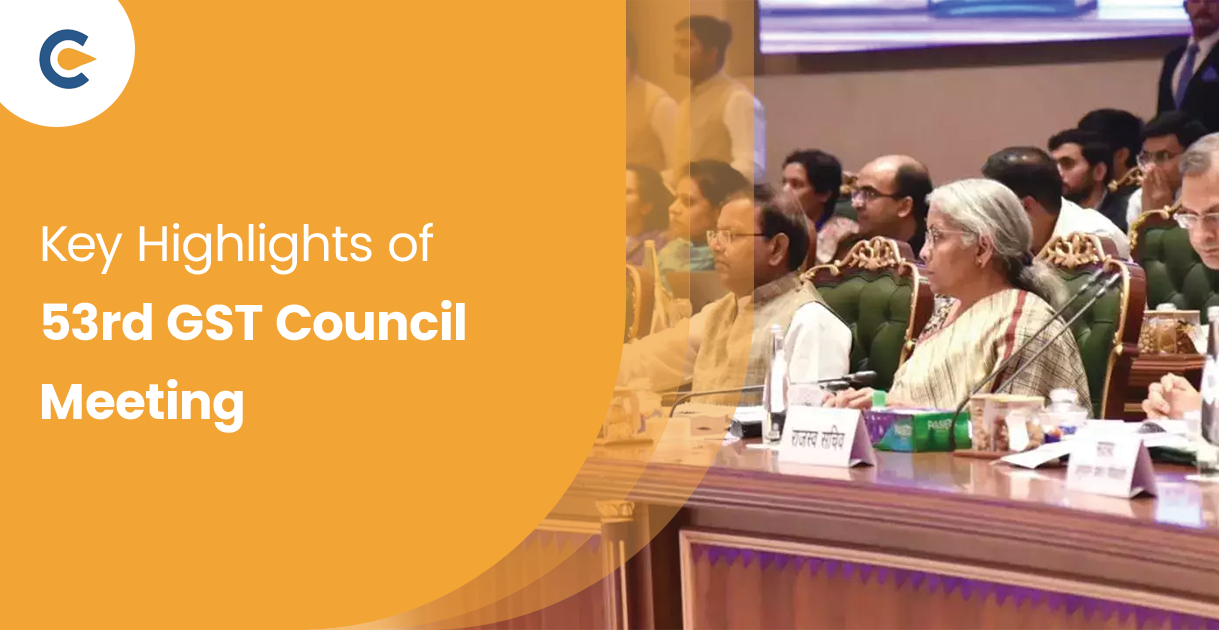



The 55th GST Council meeting chaired by FM Nirmala Sitharaman was held on 21st December, 2024 in Jaisalmer, Rajasthan. Being an important and responsible body in shaping India’s tax structure, the GST Council, through its 55th meeting, has put forward several recommendations likely to affect businesses, consumers, and the overall economy in India.
The Council focused on making adjustments to GST rates offering both relief and challenges for different sectors. Some items are set to become more expensive, while others will see a price drop due to the revised tax rates. By doing this, the Council aims to make necessary goods and services more affordable for the common man.
This article aims to break down the significant key points from the 55th GST Council meeting and further explain the products getting expensive and affordable soon.
What is the GST Council?
The GST Council is a constitutional body responsible for making decisions related to the Goods and Services Tax (GST) in India. The Council consists of the Union Finance Minister, who serves as the chairperson, along with state finance ministers and other members. They meet periodically to discuss and propose changes to GST rates, tax structures, and compliance norms.
The Council’s objective is to ensure the smooth implementation of GST across the country while also addressing the concerns of both businesses and consumers.
During the 55th GST Council meeting, a series of changes were introduced to strike a balance between revenue generation and economic relief. These changes address issues related to tax evasion, clarify the classification of goods, and aim to make certain goods and services more affordable.
Talk To Expert

55th GST Council’s Meeting: What’s Costlier and Cheaper?
(4.8)


Major Updates from the 55th GST Council Meeting
The key highlights of the 55th GST Council’s recommendations include changes in tax rates, the inclusion of new goods and services under GST, and changes in compliance measures. Some changes have made certain goods expensive, while others made them cheaper.
What’s Getting Cheaper after 55th GST Council Meeting?
Aiming to reduce the financial burden on consumers, here are some items that are becoming cheaper due to a reduction in GST rates:
Fortified Rice Kernels (FRK): GST Reduced to 5%
The GST rate on the Fortified Rice Kernel (FRK) has been reduced to 5%. Fortified Rice Kernels (FRK) being an essential food product makes it affordable for low-income groups through the Public Distribution System (PDS). This reduction promotes better nutrition in alignment with government welfare programs.
Gene Therapy: GST Exempted
Another significant recommendation of the meeting is the complete exemption of GST on gene therapy. Gene therapy is an advanced form of medical treatment often used for rare or complex conditions. This exemption encourages the advancement of healthcare in the country and supports the government’s aim to make these therapies accessible and affordable to those in need.
Food Preparations for Free Distribution: GST Reduced to 5%
In support of the government welfare schemes, the GST Council has decided to lower GST rates to 5% on food preparations used for free distribution under government schemes meant for economically weaker sections. This makes it easier for the government to implement its food distribution programs effectively.
Defence Systems (LRSAM): IGST Exempted
Defence has gained massive relief through the exemption of integrated GST on systems, subsystems, components, and tools related to the LRSAM weapons. All these items relate to missile defence assembly. Their exemption thus reduces the cost of advanced manufacturing and high-end technology in defence in India.
Inspection Equipment for IAEA (International Atomic Energy Agency): IGST Exempted
The GST Council has decided not to charge IGST on equipment and supplies used by the International Atomic Energy Agency (IAEA). This equipment is crucial for ensuring safety and compliance with international nuclear regulations. By exempting IGST, the government is supporting the IAEA’s inspections and research efforts, which are vital for global safety standards.
Pepper and Raisins (Supplied by Agriculturists): No GST
Direct Sales by Farmers will no longer attract GST. The GST exemption on Pepper and Raisins supplied by agriculturists ensures relief for agricultural producers selling directly to consumers without any middlemen.
What’s Getting Expensive after the 55th GST Council’s Meeting?
With some products and services getting cheaper, the change in GST Rates makes some items and services expensive for consumers.
Old and Used Vehicles (Including Electric Vehicles – EVs): GST Increased from 12% to 18%
The GST rate on the sale of old and used vehicles, including electric vehicles (EVs) has been raised from 12% to 18%. This impacts the resale market for used cars and EVs. This aims to regulate the used vehicle market and standardize taxation across different vehicle categories.
Ready-to-Eat Popcorn – GST Rates Updated
All packaged popcorn ready to eat will be charged a GST rate of 12%. Caramel popcorn, made with sugar, will be subject to a higher tax rate of 18% since it falls under the category of sugar confectionery. Popcorn that is sold unpackaged will still only attract a lower rate of 5%.
Autoclaved Aerated Concrete (ACC) Blocks – GST Increased to 12%
Autoclaved Aerated Concrete (ACC) blocks, which are used in construction, will now attract a GST of 12%. This rate is an increased rate from the previous rate. The higher GST rate in ACC Blocks will likely result in increased prices for housing and infrastructure projects.
Corporate Sponsorship Services – Now Under Forward Charge Mechanism
Corporate sponsorship services will now fall under the Forward Charge Mechanism for tax purposes. This may lead to higher costs for companies sponsoring events.
Penalty-Only Appeals – Higher Pre-Deposit Requirement
A notable modification pertains to appeals that involve only penalties, excluding any tax claims. The amount required for a pre-deposit to initiate an appeal in these instances has risen from 25% to 10%. This change is expected to impose a financial strain on businesses engaged in such appeals, making the process more expensive.
Other Policy Updates in the 55th GST Council Meeting
The 55th GST Council meeting also introduced several clarifications and updates aimed at simplifying the GST framework and addressing issues:
Vouchers – No GST on Vouchers
The GST Council has clarified that vouchers distributed on a principal-to-principal basis will not be subject to GST. This update simplifies transactions related to vouchers and alleviates the tax burden on businesses. However, services associated with vouchers, such as marketing or co-branding, will still incur GST.
Penal Charges by Banks and NBFCs – No GST on Penalties
Regarding Penal Charges by Banks and Non-Banking Financial Companies (NBFCs), it has been announced that penalties for non-compliance with loan agreements (such as late payments) will no longer attract GST. This change relieves borrowers by removing an extra tax on penalty charges, making the financial services sector more consumer-friendly.
Definition Update for ‘Pre-Packaged and Labelled’ Goods
Additionally, the definition of “pre-packaged and labelled” goods has been updated to align with the Legal Metrology Act registration. Now, commodities intended for retail sale that weigh no more than 25 kg or have a volume of 25 liters will be classified as pre-packaged and labelled. This update clarifies which products fall under this category and ensures businesses adhere to packaging and labelling standards.
To Wrap Up
The 55th GST Council’s recommendations aim to balance affordability for consumers and simplification for businesses. Essential items like fortified rice kernels and gene therapy will become cheaper, while used vehicles and construction materials may see price increases. The changes are designed to alleviate financial strain on lower-income groups and sectors like healthcare and agriculture, although some costs may rise for businesses and consumers.
The overall goal is to make the GST system more efficient and transparent, requiring ongoing adaptation and compliance from businesses and consumers. To get expert assistance in GST registration and other GST-related compliance matters, visit https://corpbiz.io/.
Frequently Asked Questions
What is the GST Council?
The GST Council is a governmental body overseeing decision-making on GST (Goods and Services Tax) rates in India. It consists of the Union Finance Minister and finance ministers from various states. The Council meets to deliberate changes in GST law and policy issues regularly.
What changes happened in the 55th GST Council meeting?
In the 55th GST Council meeting, all the rates on several goods and services were changed. Some items have become cheaper while others have become expensive. The economy is to be balanced by these changes and at the same time, the majority of consumers have been saved from the burden of high-value, expensive items.
Which items will become cheaper?
Several items, including fortified rice kernels and gene therapy, will become cheaper. The GST rate for these items has been reduced or exempted. This aims to make them more affordable for the public.
What is gene therapy and why is it GST exempted?
Gene therapy is a medical treatment used for rare or complex diseases. The GST on gene therapy has been exempted to make it more affordable. This aims to help people access advanced healthcare.
Which items are becoming more expensive?
Some items, such as old vehicles (including electric vehicles) and ready-to-eat popcorn, will become more expensive. Other items like ACC blocks for construction also saw a GST increase. These changes aim to standardize tax rates and control market prices.
How has the GST policy for penalty-only appeals changed?
The pre-deposit amount for penalty-only appeals has increased from 25% to 10%. This means businesses must pay a higher amount when appealing penalties. This could increase the financial burden on businesses involved in such cases.
How do these GST changes impact consumers?
Some goods will become cheaper, like fortified rice kernels and gene therapy, benefiting consumers. However, items like used vehicles and construction materials will become more expensive. These changes balance affordability and standardization of taxes.
Will GST exemptions apply to all types of food distributed for free?
The GST exemption applies only to food preparations used in government schemes meant for free distribution. It does not apply to all food items. The goal is to reduce costs for welfare initiatives targeting the poor.
How do these changes benefit the agricultural sector?
The exemption of GST on direct sales of pepper and raisins by farmers reduces costs for agricultural producers. It simplifies the process for farmers to sell directly to consumers. This helps improve farmers’ earnings and supports the agricultural sector.
Read more Blogs: Hassle-free GST Registration via Aadhaar in These 4 States