

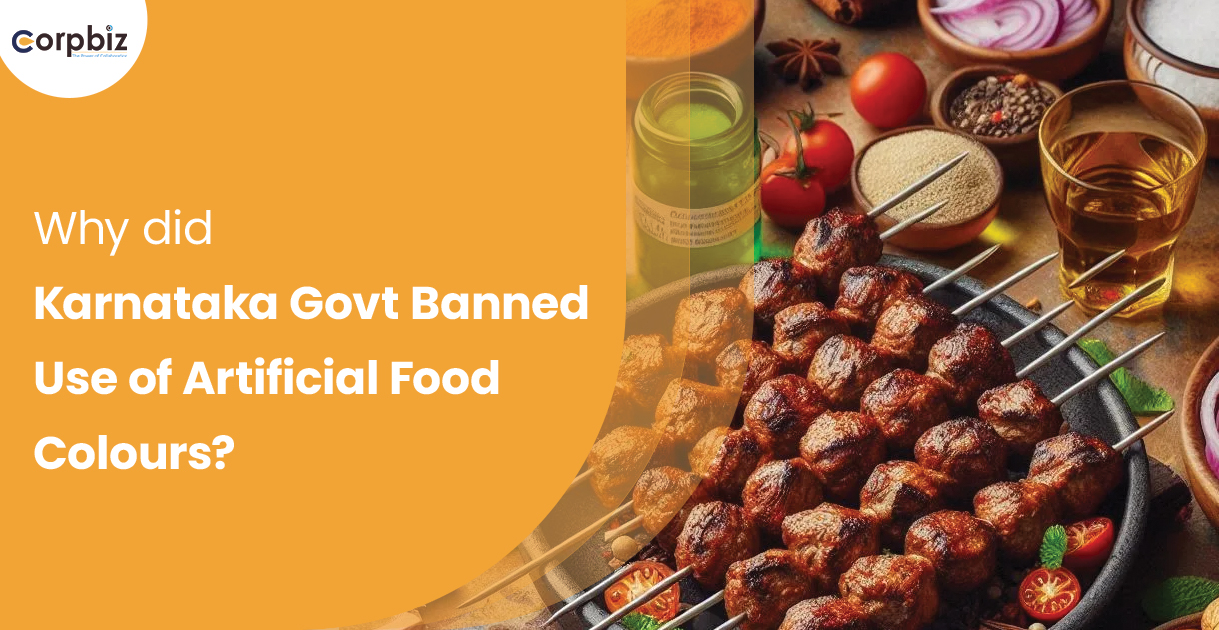
Karnataka Health Department recently banned using artificial food colours in food like fish, chicken kebabs, and other vegetarian items across the state on 11th March 2024.
According to Dinesh Gundu Rao Ji, Karnataka’s health minister, if someone does that in the state after the regulation, they risk a fine of up to Rs 10 lakhs and a sentence of up to seven long years in prison. This bold action for the public’s health and safety has drawn attention to the dangerously high concentrations of artificial colouring—Sunset Yellow and carmoisine—discovered in several kebab samples.
In this post, we will discuss artificial colours, how to identify them, and why they ban artificial food colours.
Let’s read it out:
What are Artificial Colours?
Synthetic food colours, often known as artificial food colours, are pigments used to improve the appearance of food and drink products. They are synthetic materials made from petroleum intended to resemble natural colours.
Risks to Your Health from Artificial Food Colours
The public and media have worried about kebabs’ low quality and potential health risks due to artificial colouring. Health authorities from around the state gathered 39 kebab samples, which were examined and evaluated in laboratories in Karnataka.
The outcomes showed that carmoisine and sunset yellow, two artificial food colours, are dangerous and harmful to one’s health.
Previous Actions Against Harmful Chemicals
Dinesh Gundu Rao Ji, the Karnataka Health Minister, outlawed Rhodamine-B in March. This food colouring chemical is commonly used in foods like Gobi Manchurian and cotton candy.
In response to the problem, Gundu Rao Ji stated, “We conducted a special investigation on the Gobi Manchurian dish and discovered that the dish is being prepared with hazardous Rhodamine-B. It is a colouring agent that poses a health risk.” He said, “A lot of samples had positive Rhodamine-B tests. The additional artificial colours discovered in the samples were tartrazine, carmoisine, and sunset yellow.”
Rhodamine B- a Food Colouring Agent
According to the state minister, Karnataka banned several colouring agents, including Rhodamine B. It’s crucial to remember that Rhodamine B isn’t allowed as a food colouring agent under the nation’s food safety regulations.
In actuality, rhodamine B is a chemical colourant intended for use in the dyeing of leather, plastics, textiles, paper, and other materials. The colour gives the intended usage of the thing a pink and red glow.
In terms of eating the chemical, it is entirely unsuitable. Rhodamine B consumption might result in acute poisoning. Furthermore, exposure to Rhodamine B can cause respiratory tract irritation in addition to being toxic to eat. It may harm the eyes as well.
Can it also cause cancer? It can’t be said for sure, though, because the World Health Organization’s International Agency for Research on Cancer does not classify rhodamine B as a substance that causes cancer in people. Nevertheless, it is indisputable that many rodent studies have shown that rhodamine B is carcinogenic.
The Use of Rhodamine B in Food Items
It cannot be claimed that foods frequently contain rhodamine B. However, when preparing foods like gobhi manchurian, butter chicken, and juices, many sellers secretly add Rhodamine B to the meal to give it a scarlet colour and make it look more appetising. Typically, rhodamine B is designed to be used with Holi colours.
What are the Natural Colouring Options?
Compared to bakeries, restaurants find it simpler to forgo artificial colouring entirely. Natural hues are used in various ways in some kitchens and bars.
The Karnataka government’s ban on artificial colours is entirely consistent with our values and does not affect how we do business. We even infuse these natural substances into oils to generate rich, natural colours that complement our delicacies.
For example, we use beetroot to make our sponge cake and turmeric oil to dye our yellow raita. The natural extract of Byadgi chilli gives our Iranian chicken a beautiful red colour, and the fresh green extract is used to make the green oil we use for plating.
The kitchen’s colours come from natural sources. They are extracted from fruits and vegetables, such as berries, tomatoes, beets, and spinach. Goan green curry is served in some places; curry leaves and cilantro oil are used to get the vibrant green hue.
Even though there are plenty of natural hues, they have advantages over artificial ones. Regarding safety and health issues, it is always advisable to read product labels, conduct research, and only purchase from reliable and hygienic sources.
Are Food Colours Allowed in Food Items as per the Law?
The Food Safety and Standards Authority of India, the nation’s principal food safety authority, does approve some food items. Both natural and artificial colours are included in this list of safe food colours.
It’s also crucial to remember that there are limitations on the kinds of food items that can employ specific food colours.
Chlorophyll, caramel, carotenoids, saffron, curcumin, Annatto, riboflavin, and other food colours can be added to food products. Every one of these food colours is natural. Tartrazine, Erythrosine, Carmoisine, Ponceau 4R, Sunset Yellow FCF, Brilliant Blue FCF, Fast Green FCF, and other artificial food colouring are on the list.
As previously mentioned, not all food items, including those, can contain any approved food colours.
Which Food Colours and Flavouring Agents are to be Used?
The Food Safety and Requirements (Food Product Standards and Food Additives) Regulations, 2011 (the “Regulations”) contain one set of requirements and a list of approved food colouring and flavouring agents. Follow the set parameters and use only food colouring approved by the FSSAI.
According to Chapter 3 of the regulation, adding colouring material to any food item is forbidden unless it is expressly allowed by these laws.
These laws permit carotene and carotenoids, such as beta-carotene, canthaxanthin, chlorophyll, riboflavin, caramel, Annatto, saffron, and turmeric or curcumin.
Furthermore, using artificial colouring in any food item is forbidden under the legislation.
To ensure that food that is both safe and healthful is available for human consumption, food manufacturers, sellers, and importers must abide by all the provisions of the Food Safety and Standards (Food Product Standards and Food Additives) Regulations, 2011, and other pertinent FSSAI Regulations.
Food Safety: Stringent Enforcement
Dinesh Gundu Rao Ji stressed the significance of strict enforcement against hazardous chemicals in food preparation. He said, “Stringent action will be taken against restaurants that are found to be using such chemicals for food preparation.”
Things to bear in mind by the 2011 legislation on food safety and standards (food product standards and food additives)
When producing, distributing, selling, importing, and storing food goods, you must make sure that:
- To be granted a licence by FBOs in the appropriate standard food product category.
- To only use food colouring and approved food ingredients.
- To utilise food colouring and additives within the allotted amount.
- Verify that the required labelling standards are being followed.
- To fulfil the required food standards, composition, and quality for food items.
Conclusion
The outlawing artificial food colouring in Karnataka is a significant step toward better health. By putting public health first and adhering to international norms, the state sets an example that other areas can imitate. This decision fosters innovation and adaptation in the food business to meet the growing demand for safe and natural food items while addressing pressing health problems.
Accepting this shift as customers can improve our health and contribute to a more sustainable food system.
Frequently Asked Questions
What’s the reason behind banning artificial colours by Karnataka govt?
The Karnataka government outlawed these colours after dangerously high Sunset Yellow concentrations and carmoisine were discovered in kebabs and cotton candy samples. These colours can cause allergic reactions, gastrointestinal problems, and hyperactivity in kids, which is especially dangerous for street food like kebabs.
Could this ban influence other Indian states?
It is achievable! This move might encourage other governments to prioritise public health by reviewing their food safety laws and exploring restrictions akin to this one.
Which artificial food colours are included in the ban?
The formal government notification will include specifics on which artificial food colours are prohibited. Synthetic colours that have been deemed potentially dangerous by health authorities are among those that are frequently examined.
How will this ban impact consumers?
Consumers will benefit from safer, healthier food products without potentially hazardous artificial additives. This shift could increase accessibility to natural and organic food products.
What is a safe quantity to consume regarding artificial food colours?
Food and Drug Administration and the European Food Safety Authority are two examples of regulatory authorities that set the acceptable daily intake (ADI) of food colours, which differ depending on the dye. Red 40, for instance, has an ADI of 3.2 mg/kg body weight per day. It is crucial to follow these recommendations and use food colouring no more than the suggested amounts.
Read our Article: 20 Food Business Ideas For 2024