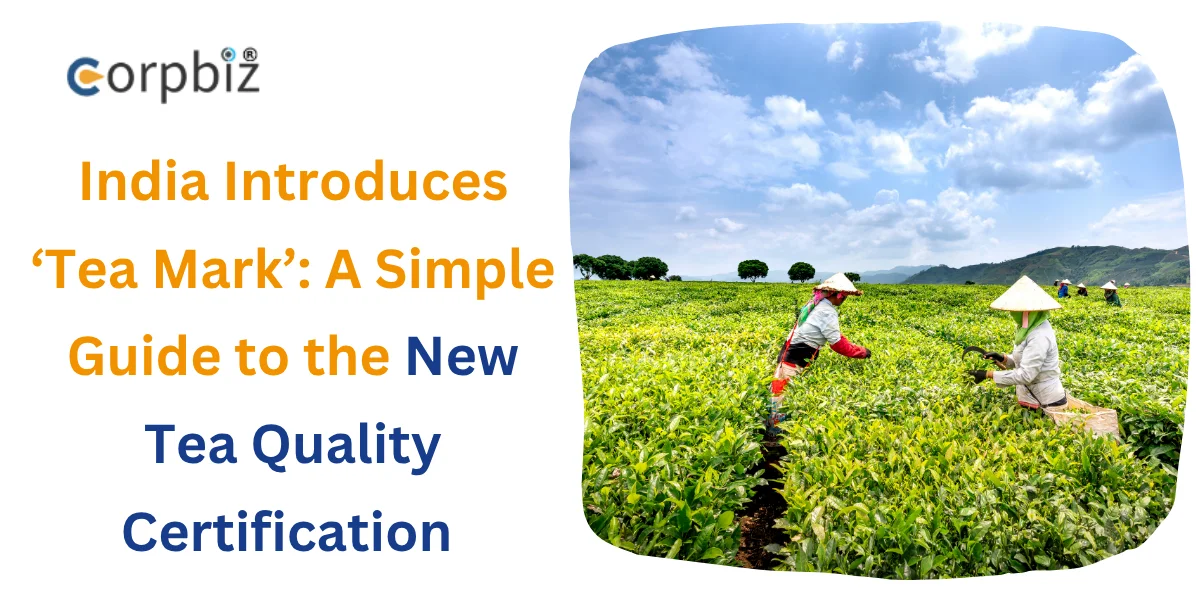



The international market is now in high demand for safe, low-residue, and responsibly produced tea. The government now focuses on whether safety, environmental protection, and worker welfare are maintained at every stage of tea production. The Tea Board is re-emphasizing strict adherence to food safety standards.
So, the Plant Protection Code (PPC) 2025 has been updated to regulate the use of pesticides in tea gardens, promote alternative methods, and ensure worker safety. The new code helps Indian tea remain competitive in the long term. Implementing these sustainable practices has now become crucial to survive in the international market.
If you are a tea board license holder, you must understand the Plant Protection Code 2025 to meet your compliance needs. In this blog, we will discuss sustainable development at tea estates, new plant protection rules, Integrated Pest Management (IPM), worker safety, the benefits of strict PPC compliance for estates, and how Corpbiz can help tea estates.
Understanding Tea Board’s Sustainability Push
There are several reasons behind the Tea Board’s recent guidelines. Firstly, increasing competition in the export market and stringent food safety regulations in various countries have forced the Indian tea industry to rethink. Secondly, consumers around the world are now prioritizing products that are environmentally friendly and free from harmful chemicals. These changing expectations are encouraging the industry to be more responsible.
In addition, climate change has increased pest pressure in various tea-growing areas. Proper management is required to prevent a decline in production and loss of quality. So, the Tea Board has shifted from a mere advisory role to strict monitoring.
According to the Tea Board, Tea Board food safety compliance is essential for the long-term sustainability of tea gardens. This initiative aims to strengthen sustainable tea cultivation practices in the tea industry and provide proper guidance to small farmers as well.
Read more – 10 Benefits of Registering with the Tea Board of India
An Overview of the Updated Plant Protection Code (PPC) 2025
The Plant Protection Code 2025 is a new guideline of the Tea Board. It aims to promote safe and responsible plant protection practices in tea production. The code covers the use of pesticides in tea gardens, alternative pest control methods, worker protection, and regular monitoring.
The code has been developed according to the FSSAI food safety regulations, the international Maximum Residue Limit (MRL), and multi-faceted global sustainability standards. So, tea growers will be able to produce in a more reliable way for both domestic markets and exports.
The new code has given special emphasis to eco-friendly pest control in tea gardens. It encourages the adoption of methods such as biological control, biopesticides, botanical formulations, and technology-based monitoring. It aims to gradually transition to an eco-friendly system by reducing chemical dependence.
In addition, it has been recommended to follow integrated pest management in the tea industry so that unnecessary chemical application is reduced and pest control is more effective.
Talk To Expert

Ensure smooth PPC 2025 compliance—Talk to Corpbiz experts now.
(4.8)


Integrated Pest Management (IPM): The New Sustainable Framework
Integrated Pest Management or IPM, system combines observation, microbiological control, limited chemical application as needed, and field cultural practices. It works in harmony with the tea garden environment, soil, insect behavior, and weather. The Plant Protection Code 2025 states that adopting IPM on a large scale from the start of the season makes it much easier to maintain Tea Board food safety compliance.
The Key methods are-
- Regular pest monitoring and damage prediction
- Biological control using bacteria or beneficial insects
- Use of approved chemicals only when necessary
- Cultural practices such as weed control, pruning, and garden cleanliness
Using IPM reduces chemical dependency, improves soil health, and maintains stable yields. It is the most effective way to maintain sustainable tea cultivation practices. Integrated pest management in the tea industry makes the entire production system safer, more environmentally friendly, and of higher quality.
Eco-Friendly and Alternative Pest Control Measures
The Plant Protection Code 2025 has given more emphasis on eco-friendly control methods. The use of natural and botanical pesticides, such as neem-based products, plant extracts, and herbal formulations, has been recommended. These protect the biodiversity of the garden and reduce chemical residues (MRL) in tea leaves.
The Key methods are-
- Use of beneficial predators and parasites
- Controlling the number of insects by installing pheromone traps
- Use of microbial solutions like Bacillus or Trichoderma
- Climate-smart management, where prevention plans are planned according to the weather
These alternative methods have low chemical residues, making it easier to maintain Tea Board food safety compliance. Eco-friendly pest control in tea gardens leads to the production of healthy and safe leaves. This climate-conscious approach is more effective where pest pressure is increasing due to climate change. These methods are now being rapidly adopted in gardens, as they are sustainable, low-risk, and cost-effective in the long run.
Read more – How to Obtain Tea Board Certificate for Tea Export?
Ensuring Worker Safety and Welfare Under the PPC
The Plant Protection Code 2025 has considered the safety and welfare of workers as an important part. Those who operate machinery are instructed to be regularly trained, taught the correct methods, and wear appropriate PPE at all times. This reduces the risks to the interested workers and creates a safe environment in the field.
Workers working in the fields have also been advised to maintain a safe distance and follow the re-entry interval. Proper safety practices reduce accidents, reduce health risks, and increase overall productivity. This welfare aspect of PPC plays a major role in maintaining the Tea Board food safety compliance and creating a humane work environment.
Climate Challenges and Rising Pest Pressure in Tea-Growing Regions
Temperatures are gradually increasing, monsoon patterns are changing, and humidity is persisting for longer periods in India. This changing environment has become more conducive to the spread of pests. So, many gardens are losing up to 15–30% of their crops every year. The quality of production is declining, and costs are also increasing.
The importance of controlled chemical use, sustainable tea cultivation practices, and seasonal monitoring has increased even more in this situation. These aspects have been clearly mentioned in the Plant Protection Code 2025 so that tea gardens can cope with pest infestation and production remains stable.
In addition, the use of biological and alternative methods through integrated pest management provides long-term protection to the gardens. Maintaining environmentally friendly practices also improves the quality of tea leaves and makes it easier to remain competitive in the market.
What are the Benefits of Strict PPC Compliance for Estates and Small Growers?
- The production increases and the quality of the green leaves improves if the gardens are run properly. This also increases the likelihood of higher prices at auctions.
- Proper Tea Board food safety compliance can help Indian tea compete better with Kenya, Sri Lanka, and China in the global market.
- Reduced use of chemicals maintains the quality of the land and reduces costs in the long run.
- Using eco-friendly pest control in tea gardens reduces the impact on the environment and also reduces the resistance of insects.
Following the Plant Protection Code 2025, it can easily meet the residue standards of the international market, which is very important for exports.
Read more – Different Types of Tea Board Licenses in India
Compliance Challenges and How the Industry Can Overcome Them
Many gardens incur high costs for monitoring, training, and regular inspections. Lack of awareness among smallholders is also a major problem. Many times, alternative biological agents or biocontrol products are not easily available, leaving them dependent on conventional chemicals. A concerted effort is needed to address this reality.
Cluster-based training, digital residue testing, and government support can provide many benefits to farmers. In addition, through expert advice, estates can properly implement Sustainable Tea Cultivation Practices and Integrated Pest Management in the Tea Industry. This will reduce costs, make compliance easier, and make production more stable.
How Professional Compliance Support Help Tea Estates?
Tasks such as documentation, field monitoring, residue testing, and food safety audits need to be done regularly to properly follow each step of PPC. Many estates find it difficult to manage these on their own. The role of experienced consultants is very important.
Organizations like Corpbiz help with Tea Board food safety compliance, documentation, staff training, and implementation of the Plant Protection Code 2025. Third-party guidance helps estates to maintain international standards and increases export credibility. It helps to maintain production quality and strengthen our market position.
To Wrap Up
The Indian tea industry has now reached a stage where sustainable practices and food safety are essential for the future. The Plant Protection Code 2025 provides clear guidelines for tea estates to protect the environment, protect workers, and remain competitive in the international market. Strict adherence to this code improves production standards and gives the tea industry a solid foundation in the long run.
Corpbiz is with you if you need professional assistance in PPC implementation, food safety standards, residue documentation, and export readiness. Our expert team helps estates and smallholders comply with all types of regulations. Join Corpbiz today to take your estate towards sustainable, safe, and internationally acceptable tea production through expert advice.
Top Questions Regarding Plant Protection Code
What is the Plant Protection Code 2025, and why is it important for India’s tea sector?
The Plant Protection Code 2025 is a guideline prepared by the Tea Board. This sets out the rules for the safe use of plant protection products in tea gardens. This makes pest control easier and protects the environment. It helps to maintain the Tea Board food safety compliance and increases the acceptance of Indian tea in the international market.
Why is food safety compliance becoming essential for tea growers today?
Tea-importing countries are now giving more importance to residue-free and responsible farming. Failure to comply with the standards can lead to export delays and financial losses. Compliance with food safety protects soil and water, increases worker safety, and improves product quality. Farmers can sell tea at a better price and get more opportunities in the market by maintaining proper compliance.
How does Integrated Pest Management (IPM) help reduce chemical dependency?
Integrated pest management in the tea industry mainly relies on preventive and biological methods. It includes early monitoring, conservation of natural enemies, use of traps, and limited chemical applications. These methods maintain the balance of the environment by controlling insects and reducing the residue limit on the final leaves. So, farmers become less dependent on chemicals.
What are the benefits of shifting to eco-friendly pest control in tea gardens?
Eco-friendly pest control in tea gardens uses biological pesticides, plant-based liquids, pheromone traps, and microbial sprays. These methods do not allow chemicals to accumulate in the soil and help in preserving beneficial insects. This reduces damage to the environment, makes the fields safer for workers, and reduces costs in the long run. It helps to maintain international food safety standards.
How does climate change increase the need for strict pest control measures?
Rising temperatures, prolonged humidity, and irregular rainfall are rapidly increasing the breeding of insects. In many regions, this results in losses of up to 15–30% of annual production. In this situation, planned monitoring, controlled chemical use, and IPM methods are very important. This keeps the yield stable, the quality of the leaves is good, and the residue limit is also under control.
Why is worker safety a major component of the new Plant Protection Code 2025 guidelines?
Tea garden workers are directly involved in the work of mixing chemicals, spraying, and collecting leaves. Their health risks increase without proper protection. The Plant Protection Code 2025 clearly mentions safety equipment, safe storage, training, and correct application methods. This reduces the risks to workers, increases the speed of work, and creates a responsible environment in the garden.
What challenges do small tea growers face in meeting Plant Protection Code 2025 standards?
Many small farmers do not get the facilities of residue testing, quality training, and affordable biological materials. Many do not know enough about documentation or standards. In this situation, cluster-based training, government support, and expert advice can be of great help. Small farmers can easily follow the Plant Protection Code 2025 and increase their competitiveness in the market with the right guidance.
How does compliance with Plant Protection Code 2025 improve export competitiveness for Indian tea?
Several countries, including Europe, the USA, and Japan, have set stringent MRL standards for tea. Cultivation in compliance with the Plant Protection Code 2025 keeps residue limits under control and reduces the risk of export being blocked. This improves the quality of tea, increases the confidence of foreign buyers and makes it easier to enter high-value markets. So, the brand value of Indian tea also increases.
How can professional consulting services help tea estates with Plant Protection Code 2025 compliance?
Following the Plant Protection Code 2025 requires continuous work such as documentation, regular testing, proper chemical use, worker training and food safety reviews. Many estates find it difficult to manage these alone. Professional advisors help to properly organize these processes and help implement sustainable tea cultivation practices and IPM. This reduces compliance risks and simplifies export operations.
Read more – Chai pe Charcha: 15 Indian Tea Startups, a Fresh Twist to Chai