
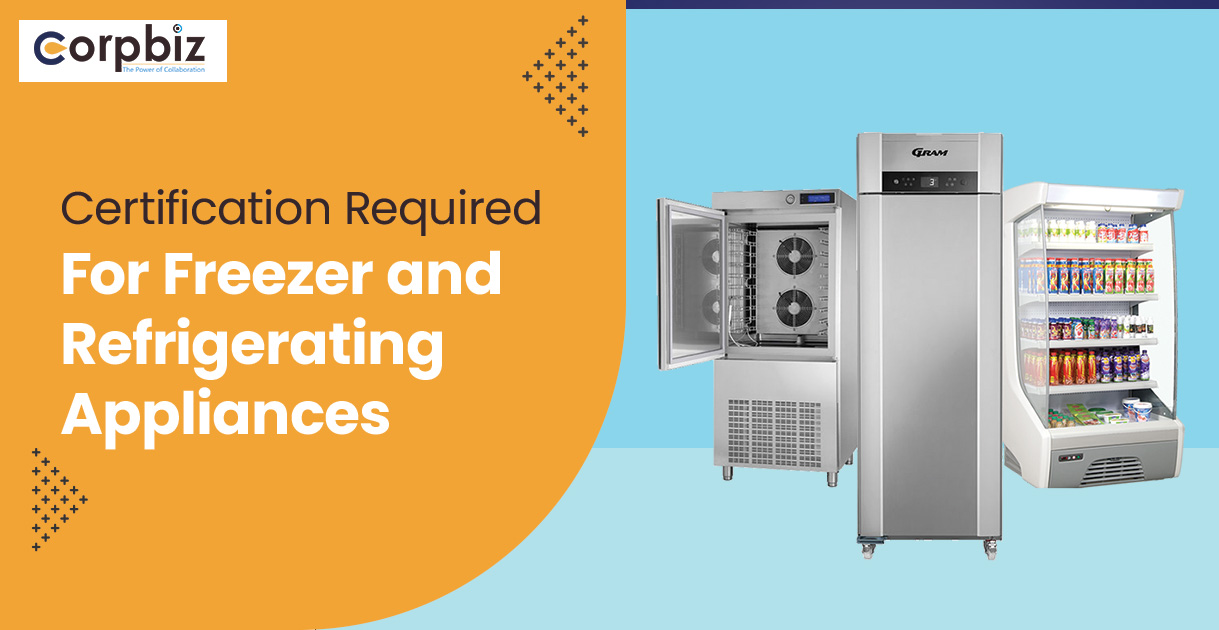
The BIS can be considered a mark of quality, safety, and efficiency on household refrigerating appliances across the nation. Thus, it becomes mandatory for manufacturers and importers to sell their products legally in the Indian market.
The certification under BIS spans a whole range of standards that ensure appliances are working at optimal levels and are environmentally friendly and safe. In this write-up, we have shed light on the certification requirement for freezer and refrigerating appliances.
Market Size of Freezer and Household Refrigerating Appliances
The size of the Indian refrigerator market in 2022 was worth USD 3071.96 million and is projected to grow further with a considerable Compound Annual Growth Rate during the forecast years and reach USD 5880.87 million by 2028. Major driving factors for this prominent growth include:
- Upsurge in the household incomes of middle-class Indian families.
- Raising living standards.
- Rapid urbanisation.
- The rising number of nuclear families and bachelor households.
Certification under BIS for Freezer and Refrigerating Appliances
BIS is the National Standards Body of India, which develops and publishes Indian Standards, implements Conformity Assessment Schemes, recognises and runs laboratories for Conformity assessment, implements hallmarking, works for consumer empowerment, conducts capacity-building programs on quality assurance, and represents the country in ISO and IEC.
Applicants must set up the lab. The complete testing facility will be on their factory premises. After all the formalities are ready, the application and complete testing facility details, calibration, and other supportive documents must be forwarded to the Bureau of Indian Standards.
After scrutinising the documents, the BIS officers will visit the factory to check the in-house testing facilities and manufacturing machinery according to the process flow chart. During the inspection, the manufacturer must offer a sample, and after successfully completing the inspection, the BIS officer will seal the sample for testing in the independent lab. BIS will issue the license after getting a satisfactory report from the lab.
Importance of Certification for Freezer & Refrigerating Appliances
Certification for freezer and refrigerating appliances ensures they meet rigorous standards for quality, safety and environmental impact. It builds consumer trust and legal compliance to give manufacturers a competitive edge. Below are some of the important of obtaining certification for freezer and household refrigerating appliances:
Quality Assurance
Certification under BIS will ensure that the refrigerating appliances fulfil the high-quality standards set by BIS, ensuring the reliability of the products for consumers.
Market Competitiveness
There will be an added advantage for a manufacturer of a BIS-certified product in the market, as such product consumption would primarily rely on certification.
Regulatory Compliance
Compliance with BIS standards ensures that manufacturers meet the legal requirements set by the government, which may avoid legal issues and penalties.
Environmental Impact
Most of the certified products meet higher standards on environmental requirements, thus leaving a smaller ecological footprint.
Economic Gains
The manufacturer can lower the returns and complaints by ensuring consistent quality, thus reducing the costs related to those in the long run.
Relevant Standards for Freezer and Refrigerating Appliances
The standards for freezer and refrigerating appliances ensure compliance with specifications for dimensions, energy efficiency and safety.
IS 1476 (Part 1): 2000
Specifications for household refrigerating appliances with or without low-temperature compartments, covering aspects like dimensions, storage volume, and temperature control.
IS 7872: 2018
Specificationslike energy efficiency, cooling capacity, and safety features for Freezers used for household purposes
IS 15750: 2006
Requirements for frost-free refrigerating appliances, emphasising features such as automatic defrosting, energy consumption, and operational efficiency.
IS 17550 (PART 1): 2021
General requirements, characteristics, and test methods for household refrigerating appliances include standards for performance, safety, and environmental impact assessment to ensure energy efficiency, durability, user safety, and minimal ecological footprint during operation and disposal.
Certification Process of Freezers and Refrigerating Appliances
The manufacturers of Freezers and Household Refrigerators are required to apply for BIS certification. Once they submit all the detailed documents concerning the product specifications, manufacturing, and quality control measures, they facilitate the certification process by assuring compliance with the standards specified by BIS.
1. Application Form V
The application form must be completed with accurate information about the manufacturing and its products,
2. Business License
A copy of a valid business registration certificate or license.
3. Product Specifications
There shall be an elaborative description and specification of Freezer and Household Refrigerating Appliances regarding the raw materials and manufacturing processes.
4. Quality Control Documents
The measures of quality control that have been implemented, such as quality manuals, process flow charts, and inspection procedures.
5. Test Reports
The laboratory test reports from BIS-accredited labs reflecting compliance with Indian standards.
6. Factory Layout
This is the layout of the production factory, pointing out sections that will be concerned with the production of Freezers and Household Refrigerators.
7. Process Flow Chart
This is an elaborate flow chart showing the entire manufacturing procedure, from the procurement of raw materials to the inspection of the finished product.
8. Calibration Certificates
Equipment calibration certificates are utilised in the manufacturing process for accurate testing and measurement.
9. Sample Products
Samples of the Freezer and Household Refrigerating Appliances for physical inspection and testing by BIS officers.
10. Audit Reports
Earlier audit reports (if any) showing compliance with BIS standards.
11. Employee Details
Information regarding the key personnel involved in the respective production and quality control departments.
12. Declaration Forms
Declarations related to the safety of the product, conformance to standards and use of hazardous material.
Benefits of Certification for Freezer and Refrigerating Appliances
Certification for freezers and household refrigerating appliances assures high quality, safety and environmental compliance. It enhances market competitiveness, builds consumer trust and promotes regulatory compliance, leading to economic and environmental benefits. There are some of the benefits of obtaining certification for freezer and household refrigerating appliances:
Consumer Trust
Certification under BIS is considered trustworthy and safe, enhancing consumers’ confidence and loyalty to products.
Market Access
With certification, producers can legally sell their products in the Indian market and achieve substantial market shares.
Environmental Responsibility
Following BIS involves using environment-friendly refrigerants and technologies that would aid in sustaining the environment.
Improvement in Technology
The requirement to continuously conform to BIS standards encourages product manufacturers to incorporate the latest technologies and enhance product efficiency.
Economic Growth
The certification promotes fair competition, stimulates innovation, and betters quality to achieve integral economic growth.
What are the Certification Challenges for Freezer & Refrigerator?
The certification process for freezer and household refrigerating appliances faces some challenges which are stated below:
Stringent Testing Requirements
Compliance with prescribed rigid testing standards is a bit difficult and involves huge investments in testing facilities and equipment.
Documentation and Compliance
Detailed documentation and the frequent updating of standards require an appropriate level of investment in resources and expertise.
Factory Inspections
Keeping the factory always ready for an inspection is time-consuming, and any non-compliance will delay the overall certification process.
Technological Adaptation
Resources have been consumed quickly to keep up with changing technologies, making adaptation to meet changing BIS standards resource-intensive.
Cost Implications
Certification is relatively expensive due to testing, documentation, and compliance requirements, which are especially expensive for small manufacturers.
Environmental Considerations
Other major emphases within the BIS standards include Environmental Sustainability, which includes:
- Eco-Friendly Refrigerants: Promoting refrigerants with a lower global warming potential (GWP).
- Energy Efficiency: Setting benchmarks of energy consumption to reduce carbon emissions from refrigerating appliances.
- Waste Management: To promote practices for safe disposal and recycling of refrigerating appliances. These measures are based on global environmental standards and contribute to the fight against climate change.
Read Our Article: Bonafide Certificate in India
Freezer & Household Refrigerators Testing for BIS Certification
These tests validate that all BIS-certified appliances attain the maximum levels of safety, performance, and energy efficiency and that such products made available to consumers are reliable and of good quality.
1. Temperature Rise Test
This test measures the speed at which the temperature rises inside the appliance when it is disconnected from power. This factor is important in assessing the quality of insulation and general performance during power outages.
2. No-Load Pull-Down Test
A measurement of how well the appliance can pull itself down from a high internal temperature to a lower internal temperature without any load to indicate cooling effectiveness.
3. Ice-Making Test
This test checks the time and energy required to make ice in ice-making appliances.
4. Absence of Odor and Taste Test
This ensures that the appliance does not add undesirable odours and tastes to the stored items.
5. High Voltage Test
This test checks the applicant’s ability to withstand high voltages without any breakdowns, thus ensuring electrical safety.
6. Insulation Resistance Check
Inspect the appliance’s insulation to verify that it sufficiently resists electricity leakage. This is quite an important parameter because the insulation acts as a safety measure between live parts and the user.
Role of BEE Star Labels in Freezer & Household Refrigerators
The Bureau of Energy Efficiency (BEE) Star Labeling program will facilitate the consumer’s understanding of the energy efficiency of the appliances available. These labels rate the appliance, scaling from 1 to 5 stars, show the information on energy the product consumed, and thereby enable consumers to make choices that can help them derive substantial energy savings at the very point of purchase decision-making.
By installing higher star-rated appliances, consumers can cut energy use and reduce their environmental impact. The content of the BEE Star Label for Freezer and Household Refrigerating Appliances is given below:
Star Level
It indicates the efficiency of the appliance. The more stars there are, the more efficient the appliance.
Electricity Consumption per Year
The indication shows the energy consumed in a year, thus helping the consumer understand the long-term operating costs.
Label Period
Specifies the validity of the label, ensuring that consumers are viewing up-to-date information.
Appliance Type
Provides the actual description of the type of appliance (e.g., Top access Deep Freezer.)
Brand and Model Information
Helps consumers easily identify the product.
Year of Manufacturing
It clearly reveals the age of this particular product.
Storage Volume
Shows the appliance’s capacity, an essential factor to match consumer needs.
BEE Logo and Unique Series Code
This signifies the authenticity of the label.
BEE registration plays a major role in encouraging energy conservation and efficiency. Through this, industries and businesses in India align their objectives with energy efficiency standards.
Conclusion
While acting as a standard in the certification of freezer and household refrigerating appliances, BIS makes sure that the freezer and household refrigerator appliances conform to the best practices on safety, quality, and environmental sustainability in India. Getting certification under BIS is not just a legal requirement for manufacturers and importers. Still, it instils trust among consumers and gives an added advantage in the competitive landscape, shaping a fast-growing market.
Moreover, the BEE star labelling with BIS standards further empowers consumers to choose to promote energy efficiency and environmental responsibility. As India’s refrigerator market continues to grow, these certifications will be required to merge global standards into sustainable development.
Secure your BIS certification for Freezer and Household Refrigerating Appliances effortlessly by visiting our website Corpbiz to ensure that your freezer and household refrigerating appliances meet the highest standards in quality, safety and environmental sustainability today.
Frequently Asked Question
Why is certification essential for refrigerating appliances in India?
The certification ensures that freezers and household refrigerating appliances conform to Indian standards for safety, quality, and environmental friendliness. Every manufacturer must have this certification to sell their products legally in the Indian market.
What is the certification process for Freezer & Refrigerators?
The process involves applying detailed documents like product specifications, quality control measures taken, and test reports. BIS officials then inspect the manufacturing facility and test samples. If the product meets the standards, a BIS license is issued.
What challenges do manufacturer faces in certification process?
Some of the common challenges are related to strict and rigid testing requirements, huge documentation, frequently changing standards, inspection at factories, adaptation to changes in technology, and high compliance costs.
How does BIS Certification help in environmental sustainability?
BIS certifies freezer and household refrigerator appliances that are friendly to the environment, including eco-friendly refrigerants, energy-efficient appliances, and proper methods for waste disposal. This helps mitigate refrigerator appliances' carbon footprint in furtherance of the global campaign to avoid climate change.
What is the role of the BEE Star Label in BIS-certified appliances?
The BEE label's star rating depicts the energy efficiency level for consumers, with an appliance rated up to 1-5 stars. In other words, the higher the rating, the greater the energy efficiency, which will provide consumers with a choice and facilitate energy savings and environmental impact.
Is BIS certification required for refrigerating appliances in India?
BIS certification will be imperative for all freezers and household refrigerating appliances sold in the Indian market. Manufacturing, importing, or selling these appliances without this certification is illegal in India.
What are the key documents needed for BIS registration?
Documents required in this regard include the application form, business license, product specification, quality control documents, test reports, factory layout, process flow chart, calibration certificates, sample products, audit reports, employee details, and declaration forms.
Read Our Article: Guide to Police Clearance Certificate