

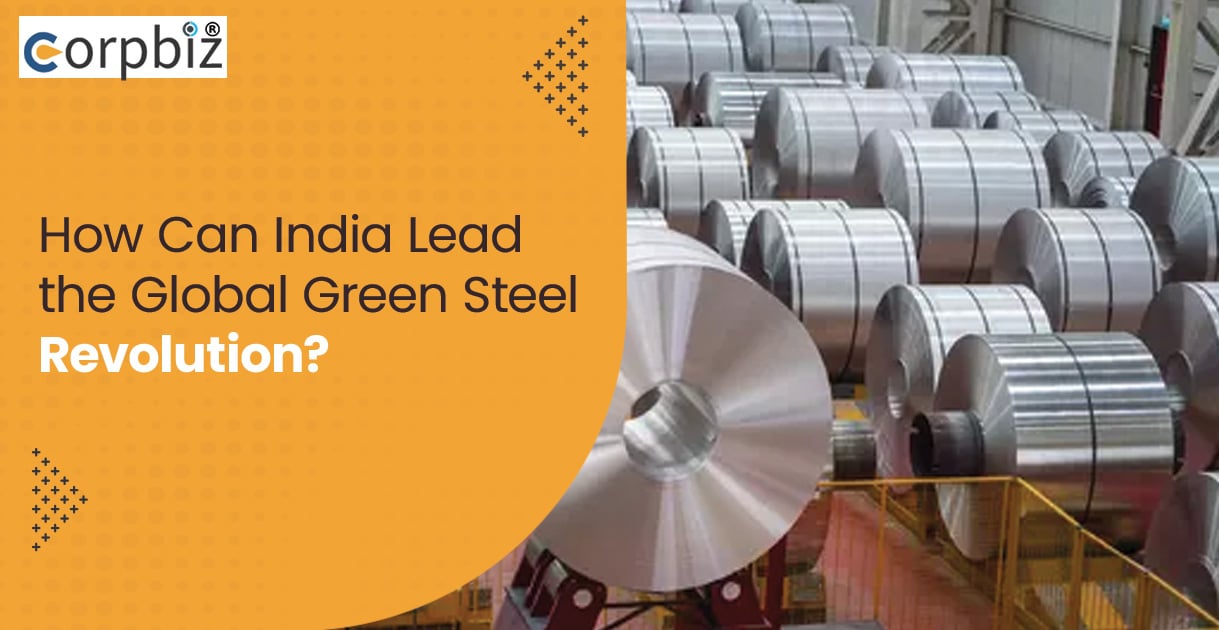
How Can India Lead the Global Green Steel Revolution?
India is now the world’s second-largest steel producer. Keeping pace with the rapid growth of the industrial sector and future development, protecting the environment has also become a significant challenge. The conventional steel production process uses a large amount of coal, which causes a lot of carbon emissions.
India’s steel sector is responsible for approximately 12% of the country’s greenhouse gas emissions. The government has set a target of net-zero carbon emissions by 2070. However, major changes in the steel sector are necessary to achieve this. So, “green steel,” or green steel, is not only a necessity but also a big opportunity. It is possible to take India’s steel sector to global leadership by using eco-friendly technologies backed by the sustainability factor.
Current Status of India’s Steel Production
Most of India’s steel production is produced through conventional and carbon-intensive methods. Currently, 43% of India’s steel production is through the blast furnace-basic oxygen furnace (BF-BOF) method, which emits the most carbon.
Additionally, 22% of steel is produced using the electric arc furnace (EAF) method, and 35% is produced using the induction furnace (IF) method. These methods use coal and new iron, which constantly harm the environment.
The government has set a target of producing 255-300 million tons of steel per year by 2030. However, if this target is to be achieved using conventional methods, carbon emissions will increase at a terrible rate. Therefore, the hour demands paying attention to environmentally friendly technologies along with production.
Talk To Expert

How Can India Lead the Global Green Steel Revolution?
(4.8)


What is Green Steel and How Does It Reduce Emissions?
Green steel is a type of steel that is produced with low carbon emissions. It requires the use of new technologies and renewable energy for its production. The two primary methods are as mentioned below:
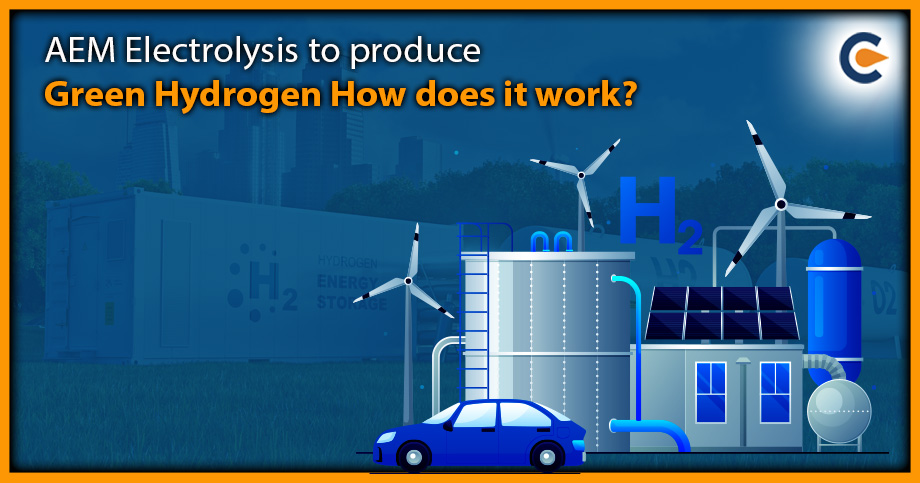
Green Hydrogen-Based Direct Reduced Iron (H₂-DRI): Iron is refined using hydrogen instead of coal in this method. It can reduce carbon emissions by about 97% compared to conventional methods.
Scrap-based Electric Arc Furnace (EAF): Where old steel is recycled, and new steel is produced using renewable energy. This reduces emissions by about 88%.
However, there is still no single, internationally accepted definition of green steel. Different countries or organizations define it according to various criteria. Due to this, there is a kind of diversity in this sector, which affects the acceptance of green steel in the international market.
Read more: India’s Renewable Energy Journey for Emerging Economies
Advice for India’s Leadership in Green Steel Revolution
If India wants to lead the green steel revolution, it is essential to adopt a well-organized strategy. Some of the strategies are as follows:
Increase investment in renewable energy: Utilizing solar, wind, and hydroelectric power in steel plants should be expanded. The government should adopt policies that encourage the steel sector to use renewable energy. It’s a great time to start your renewable energy business.
Research and development in new technologies: Emphasis should be placed on adopting hydrogen-based H₂-DRI and advanced EAF technologies. Opportunities for partnerships and technology transfer with international organizations in sustainable metal production should be exploited.
Development of scrap recycling: ‘Urban mining’ projects should be started in urban areas, where iron can be collected and recycled from old buildings, vehicles or parts. Recycling processes should be made mandatory in various industries.
Government policy support: The government should set clear carbon emission targets and provide tax breaks or subsidies to companies investing in green technology.
Industry and research coordination: There should be increased cooperation between the government, private sector, and research institutes. Rapid progress is possible through sharing experiences and technology.
If all these ESG strategies can be implemented, India can become a global leader in green steel production.
Challenges in India’s Green Steel Transition
Transitioning to green steel is a challenging task for India. Several major challenges cannot be overcome without overcoming them.
High initial investment: Setting up hydrogen-based technology or renewable energy-powered electric arc furnaces (EAFs) requires a substantial capital investment. This investment is often not feasible for small and medium-sized enterprises.
Lack of renewable energy: Green steel production relies on uninterrupted access to renewable energy. However, in many parts of India, this energy supply is still not assured.
Insufficient steel scrap: The method of making steel from scrap is a low-emission process. However, due to the lack of sufficient scrap in the country, this technology cannot be implemented in many places.
Regulation and market volatility: Government policies and market demands change over time. This hampers companies’ long-term planning.
Price competition: Green steel is still sold at a higher price than conventional steel. As a result, it becomes difficult to survive in the market, especially if there is no government support or incentives.
Therefore, India’s steel sector needs to be transformed into a greener one by addressing all these challenges together.
How Can Corpbiz Help with This Transformation?
The transition to green steel technology is a complex and policy-driven process. Corpbiz can be your trusted partner on this journey. We help businesses and industries prepare legal advice, environmental clearances, and technical documentation.
If you want to adopt new green technologies, Corpbiz can guide you through the entire process of obtaining the necessary government approvals, policy incentives, and financial support. Additionally, our expert team assists in preparing ESG reports, applying for PLI schemes or Green Hydrogen Missions, and developing eco-friendly production strategies.
In short, Corpbiz will help you step into the future of green steel, with the right rules and regulations in place.
Conclusion
India stands at a crucial juncture today, where it is possible to achieve both economic development and environmental protection simultaneously. As the world’s second-largest steel producer, India can write a new chapter in its history.
Green steel is environmentally friendly and prepares for future markets. However, this transformation requires a well-coordinated strategy, government support, industry initiatives, and widespread public awareness.
India is pursuing new directions such as green hydrogen technology, electric arc furnaces, renewable energy and scrap utilization. It not only reduces its carbon emissions but also will inspire other countries around the world. Carbon credit trading scheme helps in carbon emission reduction.
If you are looking to convert your business or steel unit to eco-friendly technology, then contact Corpbiz today. We are by your side, supporting the rules, processes, and plans. Together, we will build a green and sustainable future.
Popular Queries About Green Steel Revolution
What is green steel, and why is it important for India?
Green steel is a type of steel produced in an environmentally friendly manner with very low carbon emissions. Green steel is important for a major steel-producing country like India. It will help reduce the country's carbon emissions and can play a major role in meeting the 'net-zero' target by 2070.
What percentage of steel in India is currently produced using green technology?
Currently, India's steel production primarily utilises conventional coal-based methods. Green hydrogen or renewable energy-based projects are still in the early stages of development. Therefore, very little green steel is currently being produced, but its production is likely to increase in the future.
What is the biggest obstacle to India's transition to green steel?
The biggest obstacles are the high initial investment and the insufficient availability of renewable energy. Additionally, the scarcity of scrap in the country and the lack of technical capacity are also significant challenges. Low demand for green steel in the market also slows down the pace of this transition.
How does green hydrogen work in the production of green steel?
A method of refining iron using green hydrogen is called H₂-DRI. This method utilizes hydrogen instead of coal, resulting in carbon emissions reductions of more than 90%. It is a very effective and environmentally friendly technology for making green steel.
How does scrap recycling help in the production of environmentally friendly steel?
Scrap recycling involves remelting old steel to make new steel. This process is very carbon-efficient and energy-efficient. However, the infrastructure for collecting and using scrap in India is still under development.
What initiatives has the Indian government taken to produce green steel?
The Indian government has launched the Green Steel Mission, the Production Linked Incentive (PLI) Scheme, and the National Mission for Green Hydrogen. Additionally, a steel scrap recycling policy has been implemented, which plays a crucial role in the production of environmentally friendly steel.
Is green steel economically viable?
Although the initial cost of producing green steel is high, it can be profitable in the future. Carbon taxes, international market demand and government incentives are increasing the financial potential of green steel. It is the right investment for the future, with a focus on sustainable development.
How can Corpbiz help in the green steel transition?
Corpbiz assists with environmental clearances, applications for government schemes, compliance with regulations, and project planning. If you want to adopt green steel technology, Corpbiz will guide you through the entire process. This will help you make the transition easily, quickly, and accurately.
Read more: Intellectual Property Rights and the Indian Renewable Energy Industry