

The electric vehicle revolution gained pace in India, with the government ever willing to walk the extra mile towards attaining sustainability and green energy. However, FICCI opines that a more favourable taxation policy would help hasten the process. FICCI recently urged the government to reduce the GST on electric vehicle batteries and charging infrastructure, stating that such a step alone would further facilitate the affordability and availability of EVs.
The blog discusses the current GST rate on EV batteries, FICCI’s recommendations, and how a tax cut may spur growth in the Indian EV ecosystem.
What is the GST Rate on EV Batteries?
The GST rate levied on EV batteries is now fixed at 18% in comparison to a 5% GST rate imposed on electric vehicles themselves. Such a skewed difference has incurred significant debate in the industry, as EV batteries prove to be one of the most expensive components in electric vehicles.
Additionally, charging services in the case of GST were charged at 18%, hence augmenting the total cost of ownership for EV users.
FICCI’s Proposal for GST Reduction
FICCI has suggested that the GST on EV batteries and charging infrastructure be reduced to 5%, at par with a tax on electric vehicles. Here is why it is an important move:
- Cost Reduction: EV batteries constitute about 40-50% of the overall cost availed through an electric vehicle. GST reduction will reduce EV prices by a very significant margin hence making it even cheaper for consumers.
- Enhancing Charging Infrastructure: Reducing taxes on EV charging services would encourage the establishment of charging stations, tackling one of the significant obstacles to the adoption of electric vehicles.
- Promoting Domestic Production: Lower GST will help create a domestic production industry for EV batteries, reducing imports and gaining momentum in the ‘Make in India’ campaign.
- Accelerate EV Adoption: Price reduction can bridge the gap between the EVs and the traditional cars’ prices, selling more of the former to the latter.
Talk To Expert

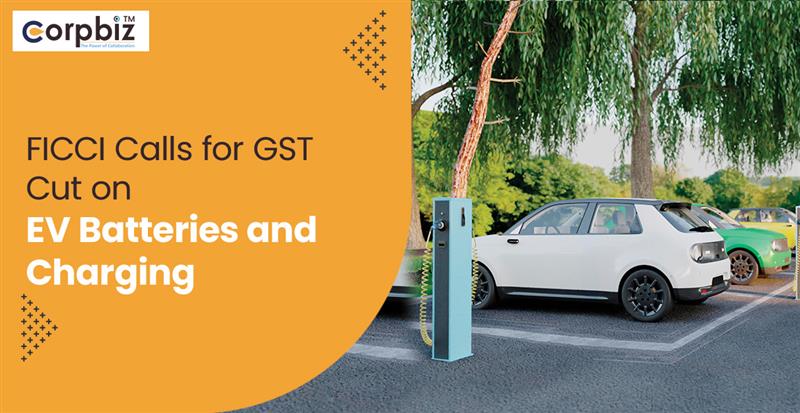
FICCI Calls for GST Cut on EV Batteries and Charging
(4.8)


Why GST Reduction for EV Batteries is Important?
Here is a glance at reasons for why GST reduction for EV batteries is important:
1. Cost Gap Bridging between Electric and Conventional Vehicles
Although the Faster Adoption and Manufacturing of Hybrid and Electric Vehicles (FAME) scheme saw government subsidy, overall, the EV is costlier than an ICE vehicle. A reduction in GST on batteries of electric vehicles will make them more competitive, which would encourage higher adoption.
2. Promoting Transition to Alternative Sources of Energy
Used in conjunction with renewable energy sources, EV batteries will be able to significantly reduce the carbon footprint associated with the transportation sector. A reduced GST rate would make battery swapping and energy storage solutions more feasible, propelling India toward its renewable energy objectives.
3. Developing the Electric Vehicle Ecosystem
Only a well-developed ecosystem, which includes charging stations, battery-swapping infrastructure, and energy storage solutions alongside vehicles, would be enough. Reducing GST would definitely promote private investments in building infrastructure, which would make the whole experience of e-mobility smooth for consumers.
International View on EV Taxation
Many countries have adopted favourable tax policies to promote EVs:
- Norway: Offers tax exemptions on EV purchases, making them cheaper than ICE vehicles.
- China: Provides subsidies and tax rebates for EV buyers, along with incentives for battery manufacturers.
- Germany: Slashing VAT on EVs and offering subsidies to establish EV charging infrastructure.
A global leader in clean energy and mobility, by closely aligning with the best practices of the world is capable of doing this by reducing GST on EV batteries and charging.
The Possible Impacts of Lowering GST
If the GST on EV batteries gets reduced to 5%, advantages could resonate throughout the industry:
- Affordable EVs: Lower upfront costs would attract a larger consumer base.
- Market Growth: Increased demand for electric vehicles may spur the climbing stage of production and create employment for Indians, fortifying the manufacturing sector.
- Environmental Benefits: Increased EV adoption would reduce greenhouse gas emissions, contributing to India’s climate goals just like the carbon credit trading scheme.
- Enhanced Mobility: Improved infrastructure from GST savings could address range anxiety and encourage EV usage in remote areas.
Challenges to Implementation
Despite this reduction in GST on EV batteries, many challenges remain in need of attention for positive implementation.
- Revenue Impact: A briefly set back government revenue through a lower rate of GST could be long-term compensated through gains from a successful EV market.
- Supply Chain Bottlenecks: GST reduction efforts are to be complemented by efforts to strengthen the supply chain, particularly at the raw material sourcing end for batteries.
- Standardization of Policies: Coordination between the Central Governments and State Governments is essential for the standardization of tax benefits.
To Wrap Up
FICCI’s appeal for a reduction in GST on electric vehicle batteries and charging infrastructure arrives at a crucial juncture for India’s electric vehicle industry. Reducing the tax rate could help close the affordability gap, stimulate investments, and resonate with the government’s ambition of attaining 30% electric vehicle penetration by the year 2030.
With immense demand for sustainable transport, the policymakers should, at long last, take an integrated approach while linking tax incentives with investments in technology, and infrastructure and raising public awareness. In this way, India can quickly emerge as a global leader in green mobility.
It is a topic of interest for businesses as well as individuals to stay updated on changes in such policies. A reduction in the GST rate on EV batteries would indeed give electric mobility in India a different dimension.
Visit https://corpbiz.io/ and get expert GST registration and return filing support for your venture.
Frequently Asked Questions
What is the prevailing GST rate applicable to EV batteries?
The current GST rate on EV batteries is 18%, significantly higher than the 5% GST on electric vehicles.
What rate of GST does FICCI propose for EV batteries?
FICCI suggests that the GST rate on EV batteries should be brought down from 18% to 5%, which should be the same as with electric vehicles.
How does GST affect the cost of EVs?
GST on EV batteries adds to the overall price of electric cars, thereby making them costlier than the traditional variants. This could be managed by bringing down the GST rate.
For Electric Vehicle Charging Services, which GST rate applies?
The GST rate on EV charging services is 18%, which FICCI suggests reducing to promote charging infrastructure development.
What would a GST reduction mean for EV adoption?
Reduction in GST would reduce the upfront cost for batteries and EVs, driving more and faster infrastructure development and more affordable EV purchases.
Read our blog: Prospects of Green Hydrogen for Indian Autos, Specially MHCVs