


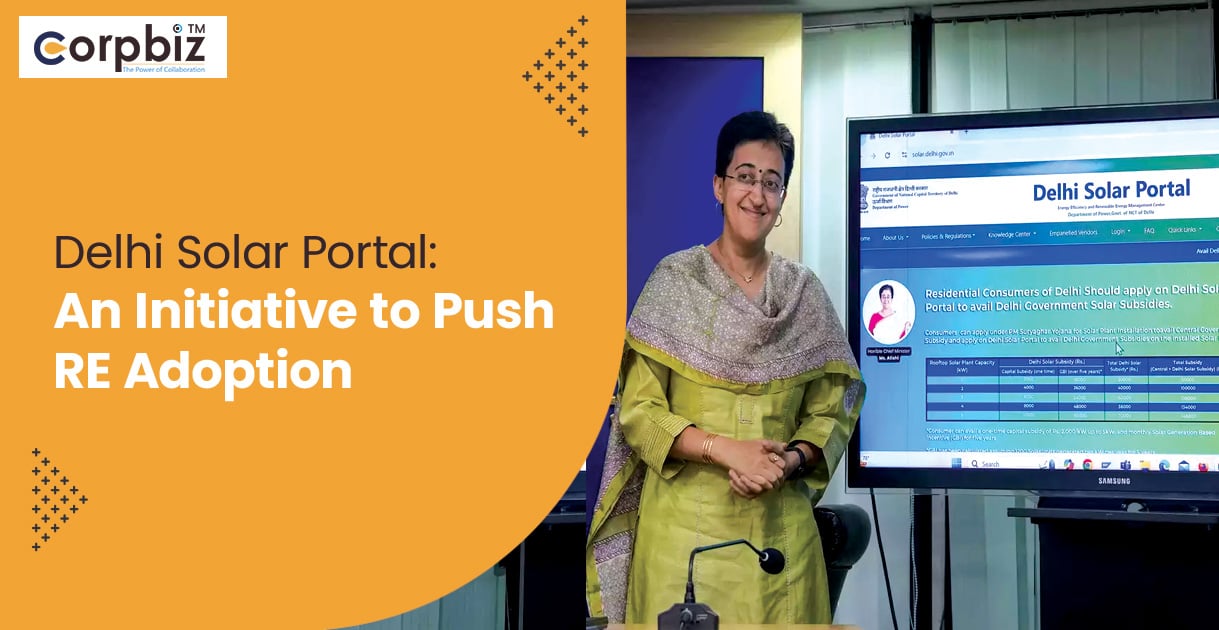
In today’s world, due to the increased demand for energy and the requirement for environmental conservation, renewable energy has become an important alternative. The national capital, Delhi, is taking some strong steps towards using solar energy as a main element in its energy transformation strategy.
Developing and implementing the Delhi Solar Portal was a pioneering initiative taken to facilitate the installation of roof solar panels by householders, small businesses, and community groups. This initiative, therefore, places at its core the dual goals of decreasing fossil fuel consumption, as well as all citizens becoming generators of energy. Thus, this portal is a cornerstone of Delhi’s renewable energy vision.
A Vision for a Solar-Driven Delhi
The Delhi Solar Portal is part of the broader Delhi Solar Energy Policy with a pledge to make the city run largely on clean energy. It targets the attainment of 750 MW of rooftop solar capacity by 2027, with a minimum of at least 25% of the city’s consumption of electricity covered under solar energy. The initiative seeks not just to address environmental concerns but also to place Delhi as a leader in India’s renewable energy journey.
Delhi’s current capacity of solar is 300 MW, and the portal is bound to provide a strong fillip to this growth by making rooftop solar installations efficient, and user-friendly. By leveraging technology, subsidies, and incentives, the government is laying the bedrock for a more sustainable urban energy ecosystem.
Features and Advantages of the Delhi Solar Portal
The Delhi Solar Portal is a one-stop portal offering various tools, resources, and support in facilitating the process of solar adoption.
Easy Installation Process:
The days of navigating the complicated bureaucratic processes are over. One can seamlessly apply on the portal for rooftop solar panel installation, net metering, and availing of subsidy. It cuts down the need to visit power distribution companies, ultimately saving time and effort.
Subsidies and Incentives:
The Delhi government, to encourage the process of adoption, provides the following incentives:
- Capital subsidy: The residential users may get a subsidy of ₹2000 per kW of installed capacity, not exceeding ₹10,000. This subsidy would be provided as a one-time deduction on the first electricity bill after installation.
- Generation-Based Incentive (GBI): In this incentive, ₹3 per kWh is given as an incentive to every surplus energy generator, which will be directly adjusted in the bills or credited into the bank account within seven days of the billing cycle.
Community solar models cater to group housing societies and Resident Welfare Associations (RWAs). It provides an incentive of ₹2 per unit of electricity generated by the community to make sure inclusivity is ensured for residents who do not have adequate rooftop space.
Talk To Expert

Delhi Solar Portal: An Initiative to Push RE Adoption
(4.8)


Solar Calculator:
The portal has a solar calculator, which is a user-friendly tool that allows the user to estimate the potential of energy generation, financial savings, and payback periods based on the rooftop dimensions and electricity consumption. Thus, the portal will empower the users to make informed decisions about their investment in solar energy. Conducting ESDD in solar energy industry is the need of the time.
Directory of Vendors:
In this way, users will gain access to a curated and trusted list of vendors who can install solar panels. It guarantees reliability in service calls and quality. This transparency reduces the risk of a substandard installation and helps the clients avail themselves of the best options available.
Transforming Citizens into Prosumers
One of the most transformative aspects of the Delhi Solar Portal is that it turns consumers into prosumers, that is, any entity or individual producing their electricity while they consume it. The concept democratizes energy production, thereby bringing recurrent financial and environmental benefits to the residents:
- Zero Electricity Bills: Zero electricity bills can be easily achieved by the household through the installation of rooftop solar panels and generating sufficient electricity to meet their own consumption needs, hence reducing the dependency on the grid.
- Earning through Surplus Energy: Any surplus energy generated and fed back into the grid comes with monetary rewards under the GBI scheme.
Inclusive Features for Community Participation
For the residents, having limited rooftop space is cited as a major factor in the reluctance to adopt solar energy. The Delhi government has recognized this concern and introduced a community solar model.
This initiative by the government allows the installation of solar panels collectively by group housing societies and RWAs to share the benefits of clean energy generation among their members. It thus promotes inclusivity within the local community so that even people without personal rooftops can actively join, contribute and benefit from Delhi’s solar revolution.
Driving Solar Adoption in Public Infrastructure
This governmental resolve to depend on renewable sources of energy is not restricted to users in the residential and commercial sectors. Under the policy, the installations of rooftop solar are made compulsory for:
- Government buildings
- Schools
- Hospitals
Tenders for those installations are in process, which would set an example for large-scale adoption of clean energy. These attempts are made to demonstrate the viability and scalability of solar energy solutions in the urban environment.
Financial and Environmental Impact
The Delhi Solar Portal not only promotes environmental sustainability but also offers significant financial benefits for the users and the city as a whole.
Cost Savings for the Residents:
- By shifting to solar energy, households can reduce their electricity bills immensely or even nullify them.
- The combination of subsidies and GBIs shortens the payback time for an initial investment in solar installations, thus making the installations more affordable.
Environmental Gains:
- Solar energy reduces greenhouse gas emissions, playing a crucial role in combating climate change.
- A decentralized model of energy supply will help Delhi reduce its coal-based power consumption, which is in line with attaining the improved air quality objective.
Challenges and Solutions
While this Delhi Solar Portal is a real game-changer, it depends upon overcoming the following key challenges for its success:
Awareness and Accessibility:
- While the portal is easy to use, many residents either remain oblivious to the benefits it offers or lack sufficient levels of digital literacy to use it effectively.
- Solution: Awareness campaigns and offline support centers can bridge this gap, ensuring widespread adoption.
High Initial Costs:
- Although subsidies and incentives reduce the financial burden, even then, the upfront costs of solar installations can still deter some of the users.
- Solution: Collaboration of banks and financial institutions can be extended to offer access to low-interest loans that facilitate easier solar installations.
Limitation of Rooftop Space:
- Not all residents have enough rooftop space to have solar panels installed.
- Solution: The community solar model needs to be scaled up, and incentivizing shared energy projects will help overcome this limitation.
The Path to a Greener Delhi
The Delhi Solar Portal is more than just a mere platform. It is a vision of a cleaner and greener future. By combining technology with policy support and mass engagement of citizens, Delhi becomes an example for other Indian cities to follow. It furthers the goals the Centre has outlined regarding renewable energy and constitutes a crucial step toward a greener, energy-secure India.
Conclusion
The Delhi Solar Portal epitomizes how innovation and collaboration create enough momentum to drive further renewable energy adoption. By making the installation of solar panels easier, providing financial incentives, and enabling community participation, the portal empowers citizens to take charge of their energy needs while contributing to a cleaner environment.
This portal will play a very important role as Delhi moves to achieve its 750 MW rooftop solar target by 2027. For residents, businesses, and policymakers, this initiative is not just about economizing or reducing emissions but also about building a sustainable, resilient future for the upcoming generations.
To get more insights into such unique initiatives, visit https://corpbiz.io/.
Frequently Asked Questions
What is the Delhi Solar Portal, and how does it promote renewable energy?
The Delhi Solar Portal is a government initiative designed to streamline the process of adopting rooftop solar installations for residents, businesses, and community organizations. It simplifies applications, provides subsidies, and offers tools like solar calculators to make solar energy adoption efficient and accessible, aiming to achieve a 750 MW rooftop solar capacity by 2027.
What incentives does the Delhi Solar Portal offer for rooftop solar installations?
The Delhi Solar Portal offers:
– Capital Subsidy: Residential users receive ₹2,000 per kW of installed capacity, up to ₹10,000.
– Generation-Based Incentive (GBI): ₹3 per kWh for surplus energy fed back into the grid.
– Community Solar Incentive: ₹2 per unit of electricity generated by group housing societies and RWAs.How can users calculate the feasibility of solar energy for their property?
The Delhi Solar Portal includes a Solar Calculator that helps users estimate energy generation potential, financial savings, and payback periods. This tool uses rooftop dimensions and electricity consumption data, empowering users to make informed decisions.
What measures are in place for residents with limited rooftop space?
To address limited rooftop space, the portal promotes a Community Solar Model. This model allows group housing societies and RWAs to collectively install solar panels and share the benefits, ensuring inclusivity for those without adequate individual rooftops.
How does the Delhi Solar Portal contribute to environmental and financial sustainability?
The portal reduces dependency on fossil fuels, thereby cutting greenhouse gas emissions. Financially, it lowers electricity bills for households and offers monetary rewards for surplus energy under the GBI scheme. These benefits contribute to both individual savings and the city's environmental goals.
Read our blog: Responsible Business Conduct and ESG in India: Best Practices