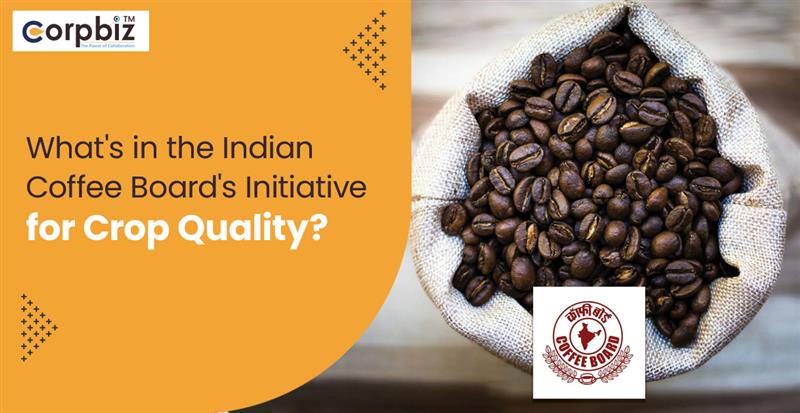



The sustainable farming practices in India’s coffee industry are growing. The Coffee Board of India has launched the INDICOFS Standard & Certification Scheme. This helps promote good coffee cultivation practices and protect the environment.
Currently, sustainable production in both domestic and international coffee markets has increased. Many countries now want to know the cultivation process of the coffee they consume daily. The European Union’s EUDR regulations have introduced new conditions for coffee exports.
As a result of this, the Indian government launched the INDICOFS scheme for Indian coffee farmers and exporters with a coffee board license. It will help them comply with sustainability standards and prepare them for future market demands. Read this write-up to know more.
What is the INDICOFS Standard and Certification Scheme?
INDICOFS stands for Indian Coffee Sustainability Standard. It is a national-level sustainable certification system developed by the Coffee Board of India. This scheme has been specifically designed for the Indian coffee industry and the capabilities of the farmers.
The Core Technical Committee, formed by the Coffee Board, developed this standard and certification framework. This will align Indian coffee with global sustainability standards.
INDICOFS is primarily based on ESG principles. It includes environmental protection, social welfare, and good governance. This applies to the domestic coffee industry and will be expanded in phases.
Talk To Expert

Get Expert help on INDICOFS Certification
(4.8)


Why has the INDICOFS Certification been Launched?
Several essential reasons are behind the launch of the INDICOFS certification. This keeps Indian coffee sustainable and competitive in the changing global trade environment. The key objectives of this scheme are given below:
- To encourage responsible and environmentally friendly practices in coffee cultivation.
- To create an easily accessible and sustainable framework for small and marginal coffee farmers.
- To improve traceability and documentation standards in the production process.
- To facilitate smoother access to international markets for coffee exports.
- To align Indian coffee with international sustainability standards.
This initiative will help ensure long-term sustainability in the coffee industry.
Phased Implementation in the Coffee Value Chain
The INDICOFS certification scheme is planned for phased implementation. This will allow different segments of the industry to adapt to the new system. The scheme applies only to coffee farmers to become familiar with sustainable farming practices and prepare themselves.
The scope of the scheme will be expanded to include:
- Coffee processing units
- Coffee traders and merchants
- Exporting companies
The long-term goal of INDICOFS is to establish an integrated, sustainable system across the entire coffee value chain, from production to export.
Understanding INDICOFS’s Three-Tier Certification Framework
The INDICOFS certification system comprises three stages. The framework is designed to be easily accessible to small farmers and large producers. It allows farmers to progress towards sustainable farming practices.
Level 1 (Basic Level):
The Basic level is designed for small and marginal coffee farmers. Less than 10 hectares of land can easily apply for this level. The Coffee Board’s own inspectors will conduct on-field inspections and grant this certification.
Level 2 (Aspiring Level):
The Aspiring level includes both individual farmers and farmer groups. Verification and evaluation are conducted through independent certification bodies. This enhances the standards of sustainable farming.
Level 3 (Advanced Level):
The Advanced level is primarily for export-oriented and experienced farmers. It is designed to be consistent with international sustainability standards. This ensures that Indian coffee is accepted in the global market with ease.
INDICOFS Sustainable Standards: ESG-Based Pillars
The INDICOFS sustainable standards are based on ESG principles. It emphasizes practical aspects at the field level.
Environmental Aspects:
- Proper utilization of natural resources
- Soil health protection
- Water conservation
- Biodiversity conservation
- Reduction of environmental pollution
Social Aspects:
- Ensuring workers’ safety.
- Creating a fair working environment for all farmers.
- Protecting human welfare.
- Contributing to the development of the local community.
Governance & Economic Sustainability:
- Honest and transparent business practices.
- Proper farm management.
- Traceability of the production process.
- Responsible economic activities.
These standards help farmers move towards sustainable farming.
Read more – Coffee Startups in India: Redefining the Nation’s Love for Coffee
What is the Inspection and Certification Process?
The inspection and certification process under INDICOFS is designed to be transparent and straightforward for farmers to understand and follow it with ease.
Level 1 – Inspection Process
- The Coffee Board conducts the inspection process.
- The inspection system is designed for small and marginal farmers.
- Inspections are conducted directly at the field level.
- Evaluation is based on basic sustainability standards.
- A certificate is issued upon fulfillment of the requirements.
Level 2 and Level 3 – Certification Process
- Level 2 and Level 3, both certifications are managed by authorized independent organizations.
- Both individual farmers and farmer groups can apply.
- Audits and verifications are conducted according to specific regulations.
- Formal certification is granted upon fulfillment of all conditions.
- Farmers can gradually upgrade to higher sustainability standards through this process.
Role of Certification Bodies (CBs) and Accreditation Bodies (ABs)
The roles of certification bodies and accreditation bodies are crucial. These authorities help to maintain the credibility and transparency of the INDICOFS certification system. The Coffee Board has followed specific rules and standards in this system.
- Certification Bodies (CBs) initially receive provisional approval for one year.
- They must operate according to the ISO 17065 standard.
- Each CB must follow a code of conduct.
- Specific rules are in place to avoid conflicts of interest.
- Eligibility criteria have been set for auditors.
Besides, the Accreditation Bodies (ABs) follow ISO 17011. They cannot provide any training or consulting services. This ensures efficiency throughout the entire process.
What is the Impact of INDICOFS on Policy, Export, and Commercial Implications?
INDICOFS certification has significant policy and commercial implications. Sustainable production increases the demand for coffee exports in the international market.
The certification will help farmers and exporters comply with the EU Deforestation Regulation (EUDR). This will facilitate coffee exports to the European market. So, it will increase the international buyers’ confidence.
INDICOFS will establish a strong position for Indian coffee in the global market. Recognition of sustainable production will make Indian coffee more competitive. It will also enhance the reputation of India’s agriculture-based sustainable initiatives.
Benefits and Global Impact of INDICOFS
INDICOFS certification brings significant benefits both domestically and internationally.
The domestic level:
- Creates a single and clear standard for coffee cultivation.
- Increase opportunities to receive better prices for high-quality coffee.
- Makes the supply chain more stable.
The export sector:
- Makes it easier to comply with international regulations like EUDR.
- Increase opportunities to access the European Union’s premium market.
- This is important as approximately 40% of India’s total coffee exports go to Europe.
Broader impact:
- Creates ESG-based leadership in the agricultural sector.
- Small farmers can participate in sustainable systems through an easy entry point.
- Strengthens the government’s sustainable initiatives in the context of climate discussions.
Future Plans: Next Phase of INDICOFS
The INDICOFS certification scheme is planned for expansion in the future. Currently applicable to farmers, the goal is to include the entire coffee value chain.
In the coming days, processing units, traders, and exporters may also be brought under this framework. There is also potential for alignment with international sustainability standards.
The ESG standards will be strengthened over time. Plans also include increasing participation in the scheme through awareness campaigns, training, and capacity building.
The Bottom Line
The INDICOFS certification scheme is a positive initiative for the Indian coffee industry. It allows farmers to learn sustainable farming practices. It also helps to comply with the necessary exports regulations.
Today, most people want to know the cultivation process of coffee that they consume in their daily lives. INDICOFS clearly highlights this aspect. So, customer confidence in Indian coffee increases.
But the certification process and paperwork can be difficult for many farmers and businesses to understand. Proper support is needed in this area, and for which Corpbiz is a trusted partner helping to understand the process, prepare documentation, and manage compliance issues in a simplified manner for the INDICOFS certification scheme.
Common Questions About INDICOFS Certification
What is the INDICOFS certification launched by the Coffee Board of India?
INDICOFS is an initiative of the Coffee Board of India. It aims to make Indian coffee farming more sustainable. This certification encourages farmers to follow environmentally friendly practices, social responsibility, and proper farm management. It has three levels for step-by-step quality improvement.
Who is eligible for Level 1 INDICOFS certification?
Level 1 INDICOFS certification is designed for small and marginal coffee farmers. Farmers who have more than 10 hectares of land can apply for this level. Simple and basic sustainability criteria have been set at this level. The Coffee Board's own inspectors verify this certification at the field level.
How is INDICOFS different from international coffee certification?
INDICOFS is an India-centric certification. International certification is often complicated and expensive for small farmers. INDICOFS certification provides a step-by-step opportunity to improve and progress with international standards.
Is INDICOFS certification mandatory for coffee farmers?
No, INDICOFS certification is not mandatory. But this certification will be very useful in the future to survive in the international market and facilitate exports. Those who adopt this standard early will get an advantage in complying with future regulations.
How does INDICOFS help in coffee exports?
INDICOFS helps to prove sustainable production while importing coffee. It increases the transparency of cultivation and production. It helps to increase the confidence of international buyers. It also helps to export Indian coffee in the tough markets like Europe.
What sustainability issues are included under the INDICOFS standard?
INDICOFS standard emphasizes three areas — soil, water, and biodiversity. These are protected from an environmental perspective. The safety and welfare of workers are taken care of, from a social perspective. Proper farm management, fair practices, and traceability are ensured, along with good governance and economic aspects.
Who carries out inspections and audits under INDICOFS?
The inspection process of INDICOFS differs according to the level. In the case of Level 1, designated officials of the Coffee Board visit the plantations directly. They look at general sustainability issues. Independent certification bodies accredited for audits are audited for Level 2 and Level 3. If all the conditions are met, specific rules are verified, and certificates are issued.
What is the provisional approval of certification bodies in INDICOFS?
Certification bodies initially receive provisional approval for one year under INDICOFS. They work according to the scheme. The quality of their work is monitored. If the specified conditions are met correctly, full approval is granted. This system helps to keep the certification process accurate and credible.
How is INDICOFS linked to the EU Deforestation Regulation (EUDR)?
It is necessary to prove that deforestation has been caused by coffee cultivation according to the EUDR. The INDICOFS rules give importance to land use and environmental protection issues. It keeps information on cultivation. This information is useful during exports. So, it is relatively easy to send coffee to the European market.
Can farmer groups or grower collectives apply for Level 2 and Level 3 certification?
Yes, farmer groups or grower collectives can apply for Level 2 and Level 3 certification. They can work together to meet these standards. This divides the costs and responsibilities. This is advantageous for small farmers. This also helps to adopt sustainable farming methods.
Read more – Essentials for Starting a Coffee Shop Business in India