

The Plastic Waste Management Rules restrict the use of single-use plastics for Indian businesses that produce cheap disposable packages. Following this, businesses shift towards building a Compostable Plastic Brand in India.
But this is far more different than businesses expect; do you know why? Because of various challenges, including high raw material costs, strict compliance, lengthy approval timelines, and weak infrastructure.
Businesses require CPCB certification to meet the regulatory requirements for compostable plastics in India. With operational and compliance barriers, the manufacturers, startups, and sustainable packaging brands face the biggest compostable business challenges in India.
Continue reading the blog to know the key challenges for building a compostable plastic brand in India. You will get strategic ways to deal with them, while ensuring CPCB compliance.
Who is a Compostable Plastic Brand?
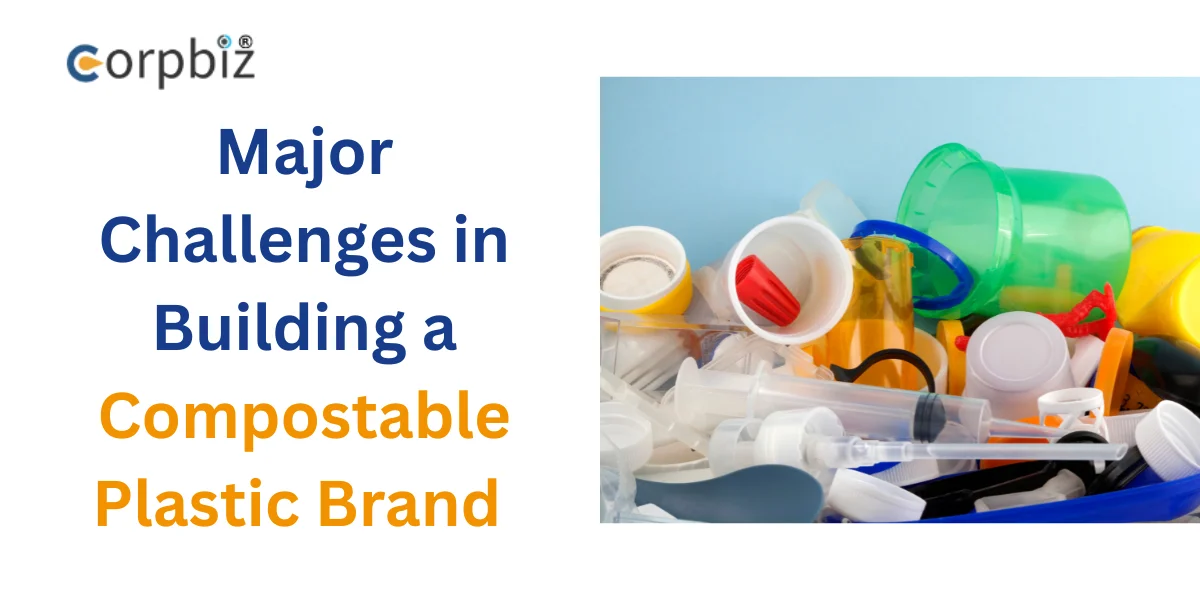
Compostable plastic is a bioplastic material. It splits into water, CO2, and biomass when exposed to a composting environment. Manufacturers specialize in CPCB-certified compostable products, including, carry bags, food packaging, cutlery, medical, and garbage polybags products. Such manufacturers are the compostable plastic brands aiming to adopt the use of compostable plastic products to meet sustainability, ESG standards, and IS/ISO 17088 standards.
Talk To Expert

Start Your Compostable Plastic Brand.
(4.8)


Compostable Plastic Business Challenges in India
Manufacturers producing CPCB-certified compostable products face various challenges in building a compostable plastic brand. Look below the given pointers to know the major challenges.
High Production Cost for Compostable Plastic Products
The production cost is higher for compostable plastic products due to energy-intensive raw materials, machinery, certifications, and testing factors. It is a major challenge in building a compostable plastic brand.
Low-quality raw materials degrade product durability, and specialized machinery like extruders. Moreover, it requires proper handling that impacts production capacity.
Using biodegradable raw materials requires more energy to break down and slows down the manufacturing process. Ultimately, it increases the unit costs. Furthermore, certifications and testing by third-party facilities incur high costs.
Limited Raw Material Supply for Production
The limited supply of raw material is a major challenge for those building a compostable plastic brand in India.
Most manufacturers rely heavily on the import of raw materials:
- PLA (Polylactic Acid)
- PBAT (Polybutylene Adipate Terephthalate)
- Biodegradable resins
Heavy import of raw material causes high price fluctuations and supply disruptions for compostable plastic products.
Infrastructure Limitations for Production
Businesses face issues with low production due to limited infrastructure. It increases supply chain issues due to insufficient raw materials and limited production.
Technology Barriers in Raw Material Processing
The technology barriers in raw material processing due to slow breakdown process, temperature sensitivity, inadequate handling and low- quality equipment are major hurdles for compostable plastic brands in India.
Manufacturers face difficulty in handling specialized equipment and staying non-compliant with IS/ISO 17088 standards causes delays in approval of compostable plastic products. It increases operational and infrastructure investment.
Awareness Gap in Biodegradable/ Conventional Plastic Materials
The potential consumers who purchase compostable plastic products often misunderstand biodegradable and conventional plastic materials. Biodegradable plastics are not bio-based. It’s mainly due to their slow breakdown process and is sensitive to high- temperature processing.
By biodegradable plastic product if you understand that it can be easily recycled or reused, then yes, it can be but also, it contaminates the recycling streams. Also, it affects product awareness for the customers.
Regulatory Compliance Pressure for Businesses
Regulatory compliance pressure is a challenge for businesses building a compostable plastic brand in India. The challenges arise due to strict testing standards, causing delays or rejections in approval, and non-compliance with the Plastic Waste Management Rules, resulting in penalties or facility closure.
Complications in CPCB certification for compostable packaging
There are several complications in CPCB certification for compostable packaging. It creates hurdles in technical standards (IS/ISO17088), document filing, and compliance monitoring for manufacturers building a compostable plastic brand in India.
If an applicant fails to adhere to strict standards, provide incomplete records and invalid SPCB registration, it delays market entry and declines the market positioning. This is a key challenge for those building a compostable plastic brand in India.
Brand Reputation Risk for uncertified compostable plastic products
Businesses face reputation risk challenges in building a compostable plastic brand. Production and selling of uncertified compostable plastic products cause heavy reputational risk.
Unauthorized products mislead the customers, which breaks their trust in buying the product, and in the brand, too. It degrades the overall credibility and market positioning of the brand. Additionally, it provokes penalties and fines too.
Short Shelf Life of Compostable Plastic Products
Businesses face challenges in building a compostable plastic brand in India due to the shorter shelf life of the compostable plastic products.
Frequent issues occur in transport and storage due to low moisture and high temperature sensitivity. Moreover, improper handling lowers the product’s quality and affects supply chain efficiency. Furthermore, it increases the operational costs, resulting in inventory management problems, causing hurdles in the product’s durability for the customers.
Read more – MoEFCC: Plastic Waste Management (Amendment) Rules
What are the Benefits of Building a Compostable Plastic Brand?
Businesses producing compostable plastic products require strong compliance planning, reliable sourcing, and sustainable operations. Look below to understand the benefits of building a compliant and scalable compostable plastic brand in India:
Early Compliance Planning
Businesses start CPCB compliance planning before product manufacturing. It helps avoid approval delays and compliance risks significantly.
Partnering with Certified Raw Material Suppliers
Manufacturers source certified compostable raw materials from genuine suppliers near the site. Not only does it help to improve the product’s quality, but it also ensures consistent productivity.
Proper Documentation and Testing
Businesses maintain accurate compliance with documentation and product testing records carefully. It supports smooth CPCB approval and regulatory verification.
Consumer Awareness and Product Labeling
Compostable plastic brands educate consumers through proper labeling and packaging information. It helps to improve customers’ trust along with product awareness.
Building Long–Term Sustainability Credibility
Businesses implement sustainable operations for transparency in environmental compliance. It meets ESG initiatives and long-term brand credibility.
Driving Factors for Businesses Investing in a Compostable Plastic Brand
Indian businesses building a compostable plastic brand aim to meet sustainability goals due to changing consumer preferences and compliance requirements. These are major factors driving businesses in building a compostable plastic brand in India to support market expansion and business shift. Look below to understand the other key reasons behind this growing business shift.
- Compostable product packaging helps businesses improve brand image and build customer trust.
- Companies use compostable materials to fulfil sustainable and Corporate Social Responsibility (CSR) goals.
- Businesses invest in the production of compostable products, including carry bags, food packaging, and garbage bags, to meet the market demand.
- Compostable plastic products help reduce landfill waste to support businesses in environmental compliance.
- Restrictive use of plastic bags encourages businesses to build a compostable plastic brand in India.
- Sustainable packaging solutions support compostable plastic brands in implementing ESG initiatives.
Read more – Less Plastic & More Paper: Will it Resolve Environmental Woes?
Building a Compostable Plastic Brand in India: Why is it Necessary?
9.3 million tonnes of total waste is generated in India every year. It increases pressure on businesses to adopt sustainable packaging alternatives. It is a major reason for building a compostable plastic brand in India. Other reasons are provided below:
- India is the 2nd largest country for being a global plastic producer, increasing the urgency for sustainable packaging solutions.
- People in urban areas use 11 kg of plastic waste for packaging purposes.
- Consumers trust businesses that utilize sustainable and plant-based materials.
- Companies secure a valid CPCB certification for compostable products.
- Compostable plastic products decompose organically to enhance soil quality.
- Increasing cost of compostable packaging for plastic products.
Regulatory Requirement for Compostable Plastics in India
CPCB approval helps businesses with legal compliance for compostable plastic products before entering the market. Look below to understand CPCB certification, testing, and compliance needs for the compostable plastic products in India.
Why is CPCB Mandatory?
Businesses require CPCB authorization to confirm that the product fulfils the defined standards under the Plastic Waste Management Rules.
Testing Requirements for Compostable Products
Compostable products must pass the testing requirements of the CPCB-authorized facilities before approval. Testing labs check heavy metal limits, compostability, biodegradability, and eco-friendly material composition for authenticity and regulatory compliance of the products.
Risks of Selling Uncertified Compostable Packaging
Businesses selling uncertified compostable packaging result in strict legal action, product seizure, and financial penalties. It risks the brand’s reputation, creating compliance risks with pollution control authorities.
SPCB Compliance and Post-Approval Reporting
During inspection, authorities may ask for regular reports, compliance documents, and product details. After securing the CPCB certification, businesses fulfil compliance needs and maintain proper records.
Read more – CPCB Deadline for Filing EPR Plastic Returns
How does Corpbiz help businesses in Building a Compostable Plastic Brand in India?
Corpbiz is a top expert-led consultancy helping build a compostable plastic brand. Our certified experts with 10+ years of experience guide businesses or manufacturers facing challenges in production costs, regulatory compliance, and customer trust in building a compostable plastic brand in India.
From business setup to EPR registration, BRSR reporting, environmental auditing, environmental management plan, environmental due diligence, environmental impact assessment, and more, we handle everything effectively and with grace. Looking to build a compostable plastic brand in India? Let our seasoned consultants at Corpbiz help you out.
FAQs on Building a Compostable Plastic Brand in India
Why a business invests in a compostable plastic brand?
Few reasons for businesses invest in a compostable plastic brand include consumer choices, meet sustainability goals and ESG compliance, and ban on single-use plastics.
What are the compostable plastic business challenges in India?
The compostable plastic business challenges are high production costs, limited stock of raw materials, strict regulatory compliance, and weak infrastructure of the facility.
What are the regulatory requirements for compostable plastics in India?
Main regulatory requirements for compostable plastics in India include IS/ISO 17088 standards, SPCB approval, CPCB authorization, and technical laboratory testing.
How to avoid greenwashing risks?
Businesses must secure a valid CPCB certificate for compostable products using accurate product labeling and maintaining transparency, which avoids greenwashing risks with ease.
Why is CPCB certification for compostable products needed?
The CPCB certification for compostable products is needed for businesses to legally manufacture, sell, or import, as defined under the Plastic Waste Management Rules in India.
Read more – EPR for Plastic Recycling: Reasons and Solutions