
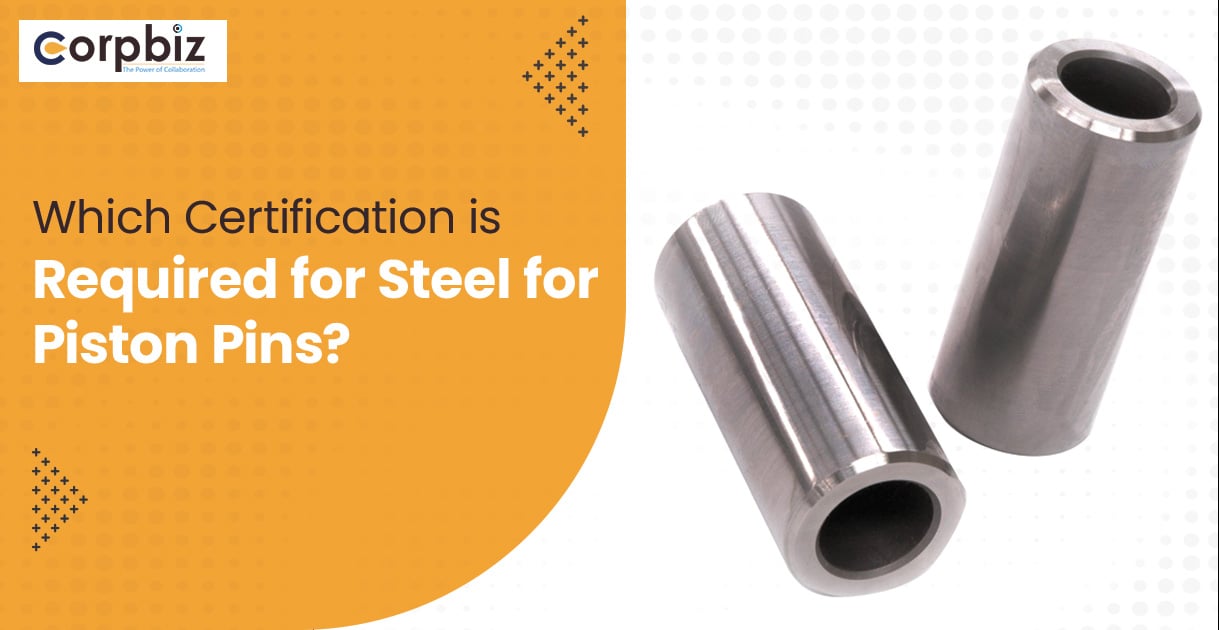
It is a fact that certification programs at par help to ensure the quality, safety, and reliability of products within the boundaries of India. One major and integral certification includes steel used in making piston pins, otherwise called gudgeon pins. These are components of an automotive engine and transmit force from the piston to the connecting rod.
The quality of the used steel in their making is very critical to the life and efficiency of the engine. The applicable standard for this certification shall be IS 11952:1986. This blog will tell you about the certification of steel for piston pins, details of the IS 11952:1986 Standard, and the certification process under BIS.
Understanding about Piston Pins (Gudgeon Pins)
Piston pins, or sometimes gudgeon pins, are cylindrical parts that connect a piston to its connecting rod in an internal combustion engine. The pins are substantially stressed by the force of combustion and pass that force through the connecting rod to the crankshaft. Since they face cyclic working forces, resistance to fatigue and wear and tear products have to be expected; therefore, high-quality steel must be used to manufacture piston pins.
The choice of the type of steel used in making the piston pins is critical because it directly relates to the performance and life of any motor. Using poor-quality steel may mean that early rupture of a piston pin will lead to failure in the engine, which may have catastrophic effects on high-performance or heavy-duty engines.
What is IS 11952:1986?
IS 11952:1986 is a standard for steel used in the production of piston pins. It contains requirements for the chemical composition, mechanical properties, and testing methods that steel must comply with if it is to be used for making piston pins.
Chemical Composition
One of the very important aspects of the IS 11952:1986 standard is the chemical composition of the steel, which defines the percent content of carbon, manganese, silicon, sulphur, phosphorus, and other alloying elements that should characterize the steel. This standard ensures that the steel used in making the piston pins is hard, strong, and tough enough.
- Carbon (C): Carbon content is very important since it affects reinforcement and alteration in the steel’s degree of hardness. In general, the more carbon it contains, the harder it gets with less toughness.
- Manganese (Mn): It promotes hardenability in the steel and contributes to the tensile strength.
- Silicon (Si): Silicon works as a deoxidizer during steelmaking and improves steel’s strength and ductility.
- Sulphur (S) and Ph: Such elements are considered, by the general rule, as impurities in steel and are always minimized because of an adverse effect on the mechanical properties of steel.
Mechanical Properties
The mechanical properties of steel for piston pins are hardness, tensile strength, yield strength, and elongation. These properties basically describe how well the steel can endure the mechanical stresses that will appear when the product is functional.
- Tensile strength: This is the maximum stress that the steel can withstand in pulling and stretching just before failure.
- Yield strength: The yield strength is the point of stress at which the steel material commences plastic/permanent deformation that continues beyond the removal of the stress and will not return to its original shape.
- Hardness: Hardness is the resistance of steel to surface indentation and wear. In the application of piston pins, shut pins require a balance between hardness and toughness.
- Elongation: Elongation is an important feature that does not turn steel into “overly” brittle metal. It measures how much the steel will stretch or elongate under stress before it breaks.
Test Methods
IS 11952:1986 specifies various testing methods to ensure the steel meets the required standards. These tests include:
- Tensile Testing: This test measures tensile strength, yield strength, and steel elongation.
- Tests for Hardness: These tests estimate the extent to which the steel is hard or wear-resistant.
- Impact Testing: This steel variety is subjected to impact testing to understand its toughness, particularly its ability to absorb energy and resist fracture under sudden impacts.
Importance of Certification for Piston Pins
BIS certification for Piston pins ensures that quality and safety have been certified for the steel used in making piston pins, which must meet all requirements of IS 11952:1986. The certification process involves strict testing and inspection to ascertain the steel’s compliance with the prescribed chemical composition and mechanical properties.
Some of the essential reasons for acquiring BIS certification for Piston Pins are as follows:
1. Assurance of Quality
The implication of certification under BIS guarantees both the manufacturer and the automobile company that the steel on the piston pins is of good quality to the end-user. The steel has been tested for its chemical composition, mechanical characteristics, and behaviour under pressure, so it is suitable for crucial automotive engine applications.
2. Compliance with National Standards
BIS certification ensures that the steel meets the BIS national standards, which have been harmonized with International best practices. It is important to manufacturers, particularly those desiring to enter domestic and international markets with their products.
3. Competitive Advantage
For manufacturers, BIS certification can bring competitive advantages by distinguishing their products from non-certified products and communicating to customers and partners that the makers comply with high standards of quality and safety.
4. Reducing the Risk of Failure
The certification reduces the risk of component failure because it ensures the quality of steel used for the piston pins conforms to the required standards. This would be of great importance for the automotive industry, considering that a small component like the piston pin in an automobile may lead to major damage and expensive repairs.
Procedure to Obtain Certification for Steel for Piston Pins
Getting BIS certification for steel for piston pins used in the industry involves a few steps of evaluation and testing at different stages. Below is the breakdown of the same:
STEP 1. Submission of Application
First, the applicant must submit an application, which should be sent to the BIS. The application is supposed to provide all the information relating to the steel, including its composition, mechanical properties, and manufacturing process.
STEP 2. Tests and Inspections
Once the application is submitted, BIS officials will test and inspect the steel. That means taking samples from the steel and testing them for various tests to ensure conformance with IS 11952:1986. Some of the tests are as follows:
- Chemical Analysis: This test confirms the chemical composition of the steel within defined ranges.
- Mechanical Testing: Mechanical testing procedures examine the tensile, hardness, and impact strength properties of steel in the finished product.
- Dimensional Inspection: Dimensional checks are carried out to ensure that the steel meets the required specifications of size and shape.
STEP 3. Factory Inspection
While testing the steel, the BIS officials will conduct a factory inspection. This inspection evaluates the manufacturing processes, quality control systems, and the manufacturer’s capability to continue producing steel under the required standards.
STEP 4. Grant of Certificate
Suppose steel passes all the tests and nothing unsatisfactory is revealed during the factory inspection. In that case, BIS will then issue a certificate to the manufacturer, allowing them to obtain ISI Mark certification. This permits the manufacturer to use the ISI markon their steel products as per the specification of the IS 11952:1986 standard.
STEP 5. Ongoing Surveillance
In addition, the BIS undertakes to ensure that the manufacturers comply with the standard after certification has been granted through surveillance audits at regular intervals or by picking random samples for further testing of products. This ensures that quality is sustained over time and that products in the market are up to the standard.
List of Tests for the Certification Process for Piston Pins
Several tests required while acquiring the certificate for steels for piston pins (Gudgeon pins) are as follows:
- Test of chemical composition
- Test of Mechanical Properties
- Grain size test
- Inclusion rating test
- Test of hardness
- Test of surface defects
Documents Needed for BIS Certification for Piston Pins
To acquire Certification for Piston Pins, you must submit certain essential documents. The list of documents is as follows:
- The first Application Form V form will contain the primary factory and information related to the product category.
- A copy of the Remittance/Payment Advice.
- A Copy of a test report done within a month by the Internal Laboratory indicating product compliance with the relevant Indian Standard.
- Address Proof of Factory units such as factory license documents in the name of the manufacturer.
- Trademark Registration, if available (Photocopy of Trademark Registration)
- Certificates from the concerned regulatory agencies for manufacturing.
- Product Drawing (as applicable) of the current manufacturing capacity.
- Details of the raw materials will include the component’s name, the supplier’s name, and the component’s quality certificate.
- Machine Details will include the names of the manufacturers, manufacturing capacity, and quantities.
Challenges in the Certification Process for Piston Pins
Though there are many advantages associated with certification under BIS, securing one is not very easy. The manufacturers face several challenges, which include:
Stringent testing requirements
The BIS certification testing requirements are rigid. Any deviation from the standard can reject an application. Manufactured steel consistently meeting the required chemical composition and mechanical properties is among the main criteria to be substantiated.
Involvement of Cost and Time
The certification acquisition process could be long and may be expensive. First, they have to invest in good testing equipment. Second, they have to keep a record of all the processes involved while making your product. Third, companies are always subjected to periodic inspections, adding up to higher costs.
Maintaining Compliance
Requirements go further in that the manufacturer, having certified, is never given time to be non-compliant with BIS standards. This would require continuous monitoring of the production process, periodic testing, and ensuring that modifications to the product or process do not affect compliance. It is a demanding, ongoing process requiring massive resource input and attention to even the smallest detail.
Conclusion
The steel used for piston pins must have a BIS certification within IS 11952:1986, as this is one of the critical parameters for the quality and reliability assurance of the said components. Piston pins are quite important for the workings of internal combustion engines, and the steel used in them must satisfy stringent standards to ensure their respective durability and performance. As the trend in the automotive industry grows towards a demand for high-performance and tough components, proportionally, the significance of standards like IS 11952:1986 and the associated BIS certification is also increasing.
Developing manufacturing capabilities within these standards will improve the components’ high performance, safety, and robustness, which will help the manufacturers in a highly competitive market, ensuring the resultant products are of the best quality and safe for use.
Ensure your piston pins meet the highest quality standards with BIS Certification. Visit our website Corpbiz today to start your certification process and gain a competitive edge in the automotive industry.
Frequently Asked Question
What does the BIS certification mean regarding steel used in piston pins?
BIS certification guarantees quality, safety, and dependability in automotive engines by confirming that the steel used in piston pins complies with IS 11952: 1986.
What is covered by IS 11952:1986?
IS 11952:1986 specifies the chemical composition, mechanical characteristics, and testing procedures of steel used in the production of piston pins (also known as gudgeon pins).
Why is steel's chemical composition so important for piston pins?
Steel's chemical composition directly impacts its hardness, strength, and toughness, which are all essential for piston pins' longevity and functionality.
What is the importance of obtaining BIS certification for manufacturers?
The certification under BIS gives manufacturers a competitive edge by guaranteeing adherence to national standards and lowering the risk of component failure.
What mechanical qualities does IS 11952:1986 require of steel?
Tensile strength, yield strength, hardness, and elongation are necessary mechanical qualities to guarantee that the steel can sustain the stresses involved in engine running.
What documents are needed to apply for certification in IS 11952:1986?
Manufacturers must provide various documentation to apply for IS 11952:1986 certification, including:
1. Application Form V, which includes factory and product details.
2. Verification that the application cost was paid.
3. A recent product compliance test result from an internal laboratory.
4. Factory's address proof.
5. If available, trademark registration.
6. Regulatory agency certificates.
7. Product drawings, including information on the raw ingredients and production equipment.What are the steps involved in the certification procedure?
There are multiple crucial steps in the certification process:
Application Submission
Assessment
Sampling and Testing
Certification Grant
Surveillance and Re-certificationWhat obstacles must manufacturers overcome to receive BIS certification?
Strict testing specifications, greater expenses, labour-intensive procedures, and the demand for ongoing compliance monitoring are some of the difficulties that manufacturers face and must overcome.
What are the benefits of BIS certification for the automobile sector?
It guarantees that the steel used in piston pins satisfies strict quality requirements, lowering the possibility of engine failure, ensuring security, and increasing consumer confidence.
Why is it crucial that steel used in piston pins adhere to IS 11952:1986?
Compliance guarantees that the steel can withstand the severe operating conditions of an engine, offering dependability and longevity in automotive applications.
Read Our Article: Requirements for Steel Bars used in Prestressed Concrete