

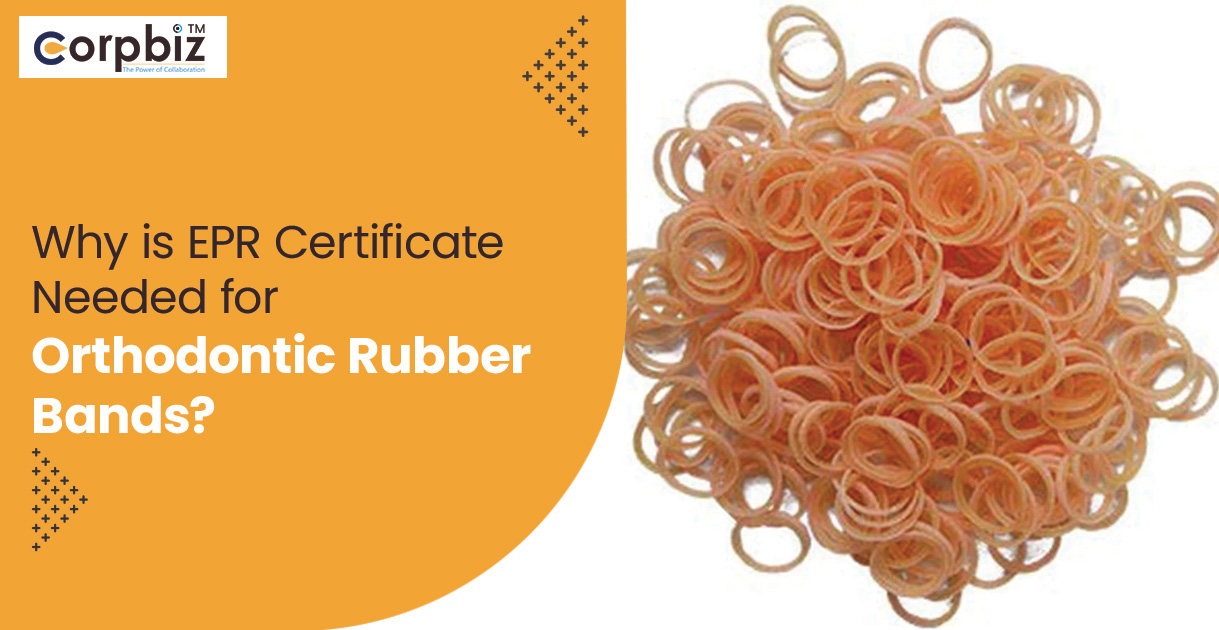
EPR stands for Extended Producer Responsibility, which is a certificate for companies that produce or import orthodontic rubber bands and shows that the company is committed to managing the environmental impact of its products. Orthodontic rubber bands are small in size but have bigger impacts on the environment once used by consumers and disposed of.
Rubber bands are normally made up of synthetic rubber that is hard to break down easily. This contributes to pollution in landfills and water bodies. Hence, an EPR Certificate ensures that products are properly disposed of, recycled, or reused rather than ending up as waste.
What is an EPR Certificate?
An EPR certificate is part of an environmental regulatory framework and is required to be obtained by the manufacturers and importers. The Central Pollution Control Board (CPCB) is a governing body to issue this certificate ensuring the companies follow the rules. In India, the EPR certificate acts as proof that they are managing the waste generated by their products in an environmentally friendly way.
The EPR certificate is important for companies that specially produce products like orthodontic rubber bands because they are responsible not only for the production and sale of these items but also for their proper disposal, recycling, or safe management once they reach the end of their useful life.
The EPR framework aims to reduce waste, encourage sustainable practices, and promote recycling.
Role of Orthodontic Rubber Bands in Dental Treatments
Orthodontic rubber bands are used in conjunction with braces and other orthodontic devices. They help to adjust the positioning of teeth by applying pressure to specific areas of the mouth. These rubber bands are available in various strengths and sizes, depending on the needs of the patient. OrthodonticRubber bands are used to:
- Align the teeth
- Correct bite issues
- Promote faster treatment
Talk To Expert

Why is EPR Certificate Needed for Orthodontic Rubber Bands?
(4.8)


Importance of EPR Certification for Orthodontic Rubber Bands
This EPR certification is crucial for manufacturers of orthodontic rubber bands. Below is the reason why:
Environmental Responsibility and Sustainability
EPR certification is necessary for orthodontic rubber bands to ensure manufacturers are environmentally responsible. It helps to ensure that orthodontic rubber bands are recycled or disposed of correctly. This prevents possible harm to the environment by contributing to pollution and protecting ecosystems.
Legal Compliance with International Standards and Regulations
Orthodontic rubber bands are used worldwide. Different regions have varying laws and regulations. By obtaining an EPR certificate, manufacturers and importers show they are following environmental protection laws and also comply with international standards. This helps them avoid penalties, fines, or legal trouble that could arise from failure to meet these requirements.
Safety and Health
Another important reason for EPR certification is patient safety. Orthodontic rubber bands are put in the mouth; hence they must meet strict health and safety standards. The materials used in rubber bands must be non-toxic and free from harmful chemicals that could involve risks.
Building Consumer Confidence
Consumers today are very environmentally conscious. Obtaining an EPR certificate shows the customers that they care about the environment. This step toward sustainability builds trust with consumers.
Transparency and Accountability in Manufacturing
The EPR certification process ensures that manufacturers are transparent and accountable for the products they produce. Consumers can trust that the products they are using are safe, reliable, and meet industry standards. The certificate requires manufacturers to disclose detailed and true information about the process of production, materials used, and disposal methods of the products.
Market Access
Businesses need to show they are managing their waste responsibly. An EPR certificate makes it easier for companies to enter these markets and sell their products internationally.
Waste Reduction and Proper Disposal
Orthodontic rubber bands when they reach the end of their life cycle need to be disposed of. The EPR certificate encourages manufacturers for proper disposal. This reduces waste production and ensures that used rubber bands are disposed of in an environmentally friendly manner.
Resource Conservation
An EPR certificate is meant to motivate companies to recycle rubber and other materials used in orthodontic rubber bands and their habitats. As recycling material is proven, companies will require less new raw material, conserve natural resources, and progress toward sustainable manufacturing.
Operational Efficiency
Good waste management systems do not only make companies more efficient and effective. The savings on operational costs from less waste and increased recycling can filter into more efficient production methods, resulting in greener production.
Encouraging Innovation in Eco-friendly Materials
With an increased demand for eco-friendly products, EPR certification catalyses innovation. Manufacturers invest in research and development to find new, sustainable materials and technologies for producing orthodontic rubber bands. This ensures less harm to the environment along with a move towards more sustainable practices.
Contributing to Economy
Utilization of the EPR framework enhances the economy by reusing and recycling products. The companies fulfill their part by utilizing rubber waste so that it does not end up as waste.
Requirements to Get Certification for Orthodontic Rubber Bands
To obtain an EPR certificate for orthodontic rubber bands, certain regulations are required to be followed by the company:
- Registration
To start the application process for the EPR certificate, firstly the company should inform the relevant authorities (such as the CPCB) about their business activities.
- Waste Management Plan
A detailed waste management plan covering how they will collect, segregate, recycle, and dispose of the rubber bands properly should be prepared by the company.
- EPR Compliance with Standards
The waste management plan needs to meet the standards of EPR Compliance set by the Ministry of Environment, Forest, and Climate Change (MoEFCC).
- Reporting Requirements
Once the EPR certificate is obtained, companies must submit reports regularly about the management of waste and if they are following it accordingly.
- Public Awareness Programs
Manufacturers, by campaigns or educational initiatives, must inform the public about the responsible way of disposal and recycling of orthodontic rubber bands.
- Audits and Monitoring
Regular environmental audits will be conducted to check that companies are complying with the EPR rules.
- Fines for Non-Compliance
Non-compliance with the EPR rules could lead to penalties, fines, or even legal actions.
Challenges You Might Come Across
Obtaining an Extended Producer Responsibility (EPR) certificate for Orthodontic Rubber Bands can be challenging in the following ways:
High Costs: Meeting the EPR standards can be expensive. Small businesses might face financial burdens as they need to invest in equipment and processes to recycle.
Regulatory Complexity: To obtain an EPR Certificate, a company needs to follow certain regulations to prove compliance.
Lack of Awareness: Some businesses might not be aware of the requirement for an EPR Certificate. This makes it harder for them to get started on the process.
Resistance to Change: Businesses may feel that adopting these new practices is too complicated and, hence, can slow down the process.
Coordination with Recycling Facilities: Finding well-established systems for recycling rubber products like orthodontic bands can be difficult. This takes a lot of time and effort.
How to Get an EPR Certificate for Orthodontic Rubber Bands?
Manufacturers or importers must follow a clear process to obtain an EPR (Extended Producer Responsibility) certificate for orthodontic rubber bands:
Register with the Relevant Authority
To start the application process for the EPR certificate, firstly the company should inform the relevant authorities (such as the CPCB) about their business activities. This means officially registering your company as a manufacturer or importer of orthodontic rubber bands.
Prepare Necessary Documents
The documents showcasing the following need to be submitted:
- Materials used in orthodontic rubber bands
- Waste Management Plan
- Proof of compliance with MoEFCC regulations
Submit the Application
Fill out and submit the application form for the EPR certificate.
Application Review by the Regulatory Body
Once submitted, the regulatory authority will review the application and ensure that the waste management plan meets all required environmental standards.
Develop a Waste Management Plan
Create a detailed waste management plan. It must include:
- Collecting and recycling the rubber waste.
- Properly disposing of any waste that cannot be recycled.
- Complying with the recycling and disposal targets set by the authorities.
Prepare and Submit Annual Reports
The company must submit annual reports with the details of the quantity of rubber waste produced and how it was managed.
Meeting Recycling Targets
It is essential to meet the recycling targets set by regulatory bodies.
Certification Issuance
On the application being approved, the EPR Certificate gets issued.
To Wrap Up
EPR certification for orthodontic rubber bands is essential for responsible waste management and sustainability. This makes manufacturers and importers responsible for the environmental impact of their products, including disposal and recycling. Though the process is difficult and expensive, certification has many advantages, such as building a company’s reputation, making it possible to comply with the environmental laws, and enabling access to new markets.
All in all, businesses that come under EPR certification prove to reduce pollution, save the environment, and stay committed to sustainability, which establishes higher customer trust for long-term growth.
To get expert assistance in EPR authorization and meet your EPR compliance requirements, visit https://corpbiz.io/.
Frequently Asked Questions
How long is an EPR certificate valid?
An EPR certificate is generally valid for one year, but recent amendments allow certain certificates to be treated as “One-Time Registration Certificates” without requiring renewal.
What is the role of the CPCB in the EPR certification process?
The Central Pollution Control Board (CPCB) is responsible for issuing the EPR certificate and ensuring companies comply with environmental standards.
Which entities shall register on the centralized portal developed by CPCB?
The following entities shall register on the centralized portal developed by CPCB:
– Producer
– Importer
– The brand owner (BO)
– Plastic Waste Processor engaged in; recycling, waste to energy, waste to oil, and industrial compostingCan small businesses get an EPR certificate?
Yes, small businesses can obtain an EPR certificate.
How can consumers recognize products with an EPR certificate?
Consumers can recognize products with an EPR certificate by looking for specific logos or labels on the packaging or checking the company's website or product information.
What is a waste management plan in the EPR process?
A waste management plan is a document that outlines how the company will collect, segregate, recycle, and dispose of rubber bands responsibly.
Is EPR certification mandatory?
Yes, it is mandatory for Producers, Importers, and Brand Owners (PIBOs) to have an EPR certification in India.
What are the challenges in obtaining an EPR certificate?
Challenges in obtaining an EPR Certificate include high costs, regulatory complexity, lack of awareness, and difficulty in coordinating with recycling facilities.
What are the advantages of buying products from EPR-certified companies?
Consumers can trust the products of EPR-certified companies as these products are disposed of responsibly, contributing to environmental protection and sustainability.
Read our blog: Challenges and Future Prospects of EPR in Healthcare Devices