

With the growing concern for the environment across the globe, India has made a giant leap forward in finding an answer to the dire need for sustainable production and consumption, especially with regard to plastic.
The Bureau of Indian Standards launched an eco-labeling initiative called the “Ecomark Rule 2024” on October 3, 2024. It aims at reducing the environmental impact created by household products.
Ecomark Rules 2024- A Landmark Move
This is a landmark policy that gives a road map to the companies for producing environmentally-friendly goods and enables consumers to make environmentally conscious choices, an idea very close to the principle of ‘Lifestyle for Environment’ (LiFE) launched by the Indian government.
In this blog, we will find out what Ecomark is, how it affects plastic products, what are the criteria for their eco mark certification, and finally, the overall impact of the rule on India’s sustainable development Goals.
What is the Ecomark?
Ecomark Rule 2024 is India’s latest initiative in eco-labeling, administered through the Bureau of Indian Standards under the aegis of the MoEFCC. Ecomark provides consumers with information on the environmental sustainability of the products and helps them make informed choices with ecological conservation.
The certification is not just a label but a comprehensive environmental endorsement of products passing through their life cycle with as minimal environmental impact as possible. Ecomark standards aim at encouraging a circular economy, conceptualizing designs for preparing products for either reusing, recycling, or safely decomposing to avoid waste and reducing the dependency on finite natural resources.
The Ecomark vision aligns with India’s commitment toward sustainability and carbon reduction on the global platform under initiatives like LiFE and the Paris Agreement. Through the implementation of Ecomark, India addresses the use of energy consumption, judicious use of raw materials, and integration of renewable resources in the production processes.
Talk To Expert

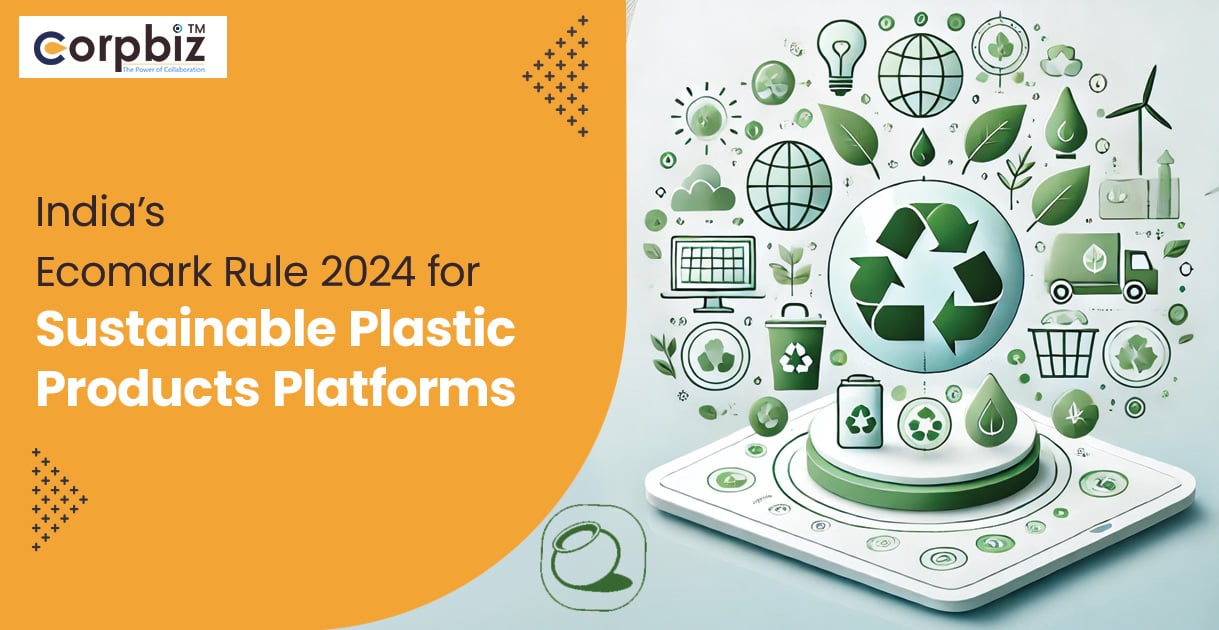
India’s Ecomark Rule 2024 for Sustainable Plastic Products
(4.8)


Why Ecomark is Necessary?
With increased awareness of environmental impacts, there is now a growing demand for eco-friendly products worldwide. However, it is difficult to choose genuinely sustainable products due to a lack of reliable information with respect to product sourcing and manufacturing practices. Ecomark addresses this issue through its verified eco-label that ensures products meet stringent environmental criteria, thus affording the consumer a straightforward method of supporting green manufacturing.
Ecomark thus becomes an essential feature of any effort to direct utilities towards sustainable plastics in a country like India, which generates one of the highest amounts of plastic waste in the world. Through the identification and certification of eco-friendly alternatives to conventional plastic products, Ecomark not only serves as an informative tool but also motivates manufacturers to shift to greener practices.
Product Eligibility and Certification Criteria
The eligibility criteria of the Ecomark Rule are some of its cornerstones. The scope of certification under this mark covers a wide array of household products with specifications that guarantee environmentally friendly production and disposal. A product will be qualified for the Ecomark certification only if it meets several key criteria:
Efficient Resource Consumption
Products targeted to achieve Ecomark certification shall be made in such a way that the resources so used are utilized with optimal efficiency and also focused more on renewable and raw materials sourced from sustainable sources. This criterion calls upon innovation in design and production by manufacturers, using as minimal natural resources as possible without compromising on the quality and durability of the products. For instance, plastic-made products whose polymers are of plant origin or from recycled plastics stand a better chance of meeting the set criteria than those made from virgin plastic materials.
Reduction of Waste and Emission
Another critical factor is waste minimisation and the reduction of harmful emissions in production. This category includes control over carbon emissions, reduction of water pollution, and decrease in hazardous by-products. This criterion can be met by using closed-looping systems in manufacturing process chains whereby the wastes are continually re-used.
Recyclability and Use of Recycled Materials
A product to receive certification should either be fully recyclable or produced from recycled materials. This will play a very important role in ensuring that the use of plastic products has reduced production based on non-renewable resources, thus reducing the ecological footprint of manufacturing plastic. Therefore, under this criterion, products made from recycled plastics, biodegradable plastics, or compostable polymers are highly encouraged.
Minimising Risks
Ecomark also focuses on the reduction or elimination of hazardous chemicals in use in the products. As an example, plastic goods containing toxic additives or heavy metals like lead, cadmium, and mercury would not meet the certification criteria.
It makes products carrying the Ecomark certification safer for its users and the environment as well, through meeting the global chemical safety standards.
Environmental Impact and Life Cycle Analysis
The BIS certification process also covers the appraisal of the life cycle of the product. Ecomark ascertains, through analysis of the effect a product has on the environment right from extracting resources to its disposal, that only those products that follow sustainable practices in their life cycle qualify for accruals.
Application Process for Ecomark Certification
The application process for obtaining the Ecomark certification involves a series of processes that have to be followed to ensure compliance with the BIS standards. In this regard, the manufacturer will have to submit an application to the CPCB with detailed documents related to his product’s environmental impact. Besides this, we recommend businesses to proceed with environmental impact assessment and social impact assessment for sustainable growth.
STEP 1. Documentation and Verification
The application received will be scrutinised by the CPCB or a designated verifier, after which documents verifying that the product meets the criteria will be reviewed. It may include site visits, analysis of raw materials and the manufacturing process of the product.
STEP 2. Certificate Validity and Compliance Reports
The product gets the Ecomark certification for meeting this criterion. This certificate remains valid for three years. However, the manufacturer has to file compliance reports every year, on an ongoing basis. In case a manufacturer fails to meet the standards, CPCB has all the rights to suspend or revoke the certificate.
STEP 3. Addressing Misrepresentation
The Ecomark rule contains strict guidelines for misrepresentation. The CPCB has the prerogative to suspend or cancel the certificate if it finds the manufacturer furnished false information or omitted details before granting the Ecomark, ensuring that the label retains its integrity for marking environmental quality.
Products Covered Under the Ambit of Ecomark Rule
The Ecomark certification applies to various consumer products, making it one of the most comprehensive eco-labeling initiatives within the country. Major products that come under this rule include:
- Architectural paints and coatings
- The batteries and lubricant oils
- Soaps and detergents
- Food packaging material
- Plastic Products
- Textiles and leather goods
For plastics, this is a very crucial thing. All plastic products will have to conform to BIS regarding quality, safety, and performance, including measures of their recyclability, biodegradability, and safe disposal. This wide product coverage is likely to result in a paradigm shift in consumer goods manufacturing, forcing manufacturers to adopt more environment-friendly practices.
The Broader Impact – Shaping a Sustainable Future
Ecomark Rule 2024 reflects a landmark policy in the sustainable development path of India, holding huge potential for impacting diverse sectors significantly. The policy is designed to promote responsible production practices, increase resource efficiency, and drive sustainable innovation among manufacturing companies.
For Businesses – Opportunities in the Green Economy
For businesses, compliance with Ecomark standards isn’t just about fulfilling regulatory requirements, it’s about how they fetch an opportunity to position themselves in the lead of the green economy. Embracing sustainable practices enhances their brand image to attract environmentally aware customers and gives them a competitive advantage.
This shift will also spur innovation in product development as businesses seek greener alternatives from conventional materials. For instance, companies in the packaging industry may seek to invest in biodegradable polymers or recyclable composites to create a culture of green innovation.
Consumers – Making Informed Decisions for a Healthier Lifestyle
The other important function of Ecomark is to extend services to consumers by making the products environmentally friendly and will promote the identification of such products.
With increased awareness of environmental issues, the demand for such Ecomark-certified products is also bound to rise. This helps consumers to choose goods that will result in the conservation of the environment, hence affecting the market level and encouraging more manufacturers towards eco-friendly usage.
Empowering consumers to make choices that contribute to environmental conservation, Ecomark plays a very important role in promoting responsible consumption and a healthier lifestyle for one and all.
Environmental Benefits
The environmental benefits of the Ecomark Rule are massive. Reducing the production and consumption of non-recyclable/harmful plastics would reduce pollution levels in the country and dependence on non-renewable resources. The rule would, therefore, be in tune with the country’s ambitious climate targets, including commitments to reduce carbon emissions and promote sustainable development.
The Road Ahead – Challenges and Future Potential
While the Ecomark Rule 2024 only remains a milestone in identifying implementation challenges, rigorous enforcement by the government, along active communication and coordination with the industry, there are a few imperatives that have to be followed to make enterprises adapt to eco-friendly practices. In addition, educating manufacturers and consumers about the value of Ecomark-certified products remains key for this initiative to succeed.
The Ecomark Rule would, therefore, evolve further, with more categories under its ambit and even a wider compass of industries getting pushed towards sustainability. The avenue opens for collaborative innovation through which industries will be working together to develop eco-friendly solutions and establish best practices for sustainable production.
Conclusion
The Ecomark Rule 2024 is a sustainable step by India. This rule will also make sure that there is usage of eco-friendly materials, resource-efficient processes, and a responsible approach to waste management. In this way, Ecomark sets the ground for a greener economy. With its stern standards and certification processes, Ecomark has the potential to reshape India’s manufacturing landscape toward a future in which sustainability is not an option but a norm.
To companies, Ecomark is an opportunity to emerge as a leader in the green economy. To consumers, it assures a clear and credible pointer of environmental responsibility. As Ecomark-certified products grow in demand, India inches closer to achieving a sustainable, circular economy-one in which resources are conserved, waste is at a minimum, and environmental impact remains foremost in all considerations.
For expert assistance in eco mark certification in India, visit https://corpbiz.io/.
Frequently Asked Questions
What is the Ecomark Rule 2024, and why was it introduced?
The Ecomark Rule 2024 is an eco-labelling initiative introduced by the Bureau of Indian Standards on October 3, 2024, to promote the production and consumption of environmentally-friendly products, especially plastic items.
This rule aims to help reduce the environmental impact of household products and encourage consumers to make sustainable choices, supporting India's broader goals for environmental conservation and climate responsibility.What criteria must a product meet to qualify for Ecomark certification?
To obtain Ecomark certification, a product must meet several criteria, including:
– Efficient Resource Consumption: Using renewable or sustainably sourced materials.
– Waste and Emissions Reduction: Minimising harmful emissions and waste in the manufacturing process.
– Recyclability and Use of Recycled Materials: Being fully recyclable or made from recycled materials.
– Minimising Chemical Risks: Avoiding toxic chemicals and heavy metals.
– Environmental Impact Assessment: Undergoing a life-cycle analysis to ensure minimal ecological footprint.Which products are covered under the Ecomark Rule?
The Ecomark Rule covers a range of household products, including but not limited to architectural paints, batteries, lubricant oils, soaps, detergents, food packaging materials, textiles, leather goods, and various plastic products. These categories have been selected to encourage eco-friendly practices in key consumer goods sectors and reduce plastic waste specifically.
How does the Ecomark certification process work?
The certification process involves several steps:
– Application and Documentation: Manufacturers submit an application and documents detailing the product's environmental impact.
– Verification and Compliance: CPCB or other verifiers assess the product's compliance with Ecomark standards, which may include site visits and raw material analysis.
– Annual Reporting and Validity: Certification is valid for three years, with mandatory yearly compliance reports. The CPCB can revoke the certification if standards are not maintained.What are the potential benefits of Ecomark for businesses and consumers?
For businesses, Ecomark provides a competitive advantage by aligning them with the growing green economy and attracting eco-conscious consumers. It also promotes innovation in sustainable product development. For consumers, Ecomark offers a reliable indicator of a product's environmental responsibility, allowing them to make informed, sustainable choices.
Read our blog: What Are The Stages Of Environmental Impact Assessment?