

FICCI, which stands for Federation of Indian Chambers of Commerce & Industry, is a leading industry association that advocates for policy reforms to eliminate illicit trade across various sectors of India. The FICCI report also focused on the negative impact of illicit trade on the economy, legal business, tax structure, and consumer safety. Have a look at the vulnerabilities caused by regulatory complexities and higher demand in the FMCG, textile, alcohol, and tobacco industries.
Know the Hidden Danger of Illicit Trade
Illicit trade refers to the illegal production, sale, and distribution of goods in multiple global sectors, such as Fast-Moving Consumer Goods (FMCG), textiles, alcohol, and tobacco. Illegal trade, including smuggling and counterfeiting, has become a global problem, significantly affecting vulnerable industries with high demand, profit margins, regulatory structure, and complex taxation policies.
The landscape of illicit trade in FMCG, textile, alcohol, tobacco, and other apparel sectors is becoming complex due to the establishment of sophisticated networks operating across borders, making enforcement and regulation more challenging.
FICCI Shedding Light on the Illicit Trade Landscape
The FICCI’s Committee Against Smuggling and Counterfeiting Activities Destroying the Economy (CASCADE), in association with the Thought Arbitrage Research Institute (TARI), highlighted the size of illicit trade in India’s diverse sectors. The chambers of FICCI report an estimated size of around Rs. 7,97,726 crores of illicit trade.
Further, the FICCI CASCADE’s 2022 study, Illicit Markets will have threat to national interest, also reported a rise in illicit trade, or around 163%, in the 5 key industries dealing with alcoholic beverages, mobile phones, FMCG-household and personal goods, FMCG-packaged foods, and tobacco products.
Talk To Expert

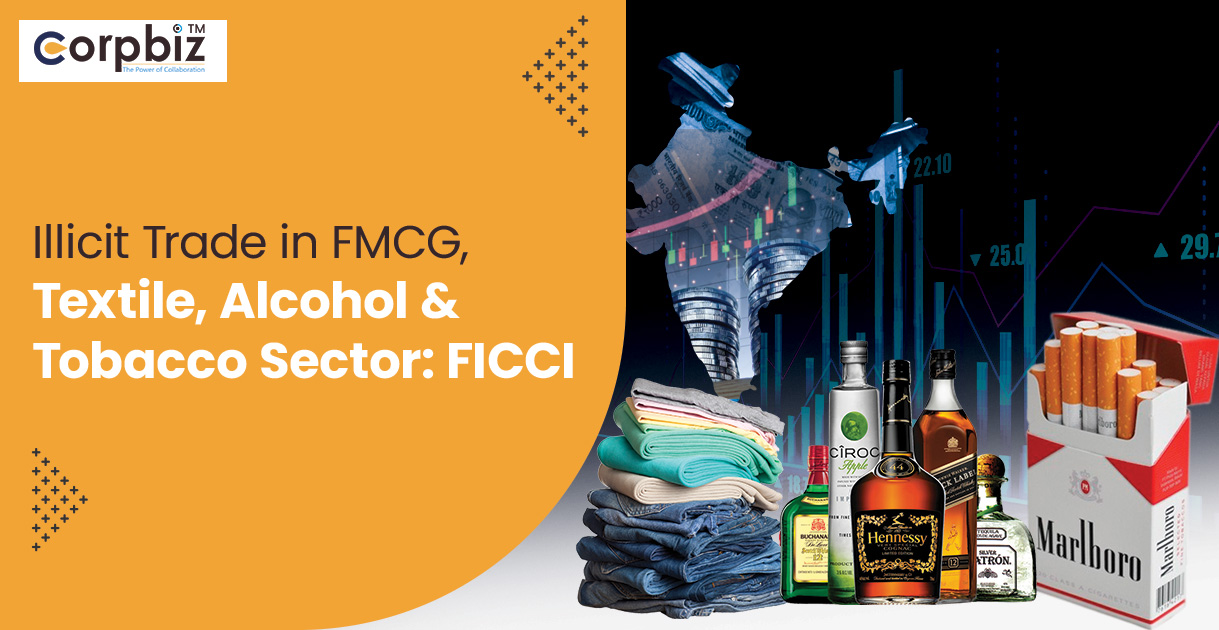
Illicit Trade in FMCG, Textile, Alcohol & Tobacco Sector: FICCI
(4.8)


Sector-Specific Analysis of Illicit Trade
A detailed analysis of illicit trade in major sectors impacting the growth and development of industries in India is discussed below:
· FMCG Sector
The counterfeit, smuggling, adulteration, and unauthorized importation of high-value branded, luxury, high-end, taxed goods and services are rising with the consistent heightening of the demands within the FMCG sector. The report presented by the FICCI’s Committee estimates an illicit trade of around Rs. 2,23,875 crores in the FMCG (packaged foods) and around Rs. 73,813 crores in the FMCG (personal and household care goods).
· Textile & Apparel Industry
The textile and apparel industry, considered among the major contributors to the Indian economy, is also plugged with different forms of illicit trade practices. Over 50% of illicit trade, i.e., around Rs. 4,03 915 crores, have been reported in the textile and apparel business since 2022-23.
· Alcohol Industry
The significant price disparity between legal and illicit alcohol/liquor distribution or production makes the sector a prime target for illegal operations. The FICCI report suggests a rise of around 153.5% in the illicit market size of alcoholic beverages between 2017-18 and 2022-23. The report further specifies a rise in the illicit market size of alcoholic beverages from Rs. 48,134 crores to Rs. 66,106 in 2022-23.
· Tobacco Industry
The illicit trade of tobacco through counterfeiting cigarettes, illegal imports, and smuggling is responsible for major financial losses and an unorganized sector. According to the FICCI report, the actual volume of the illicit market in the tobacco industry grew from Rs. 7,699 in 2011-12 to around Rs. 13,198 in 2022-23.
Join the fight against illicit trade and secure your business with streamlined company registration services to thrive legally.
Factors Leading to Consistent Rise in Illicit Trade
The FICCI outlined various factors leading to a consistent rise in illicit trade across various sectors and industries of India. Some of the leading factors are discussed below:
· Higher Tax Regimes
The higher tax regime is considered one of the leading factors enabling the smugglers to crack the expensive rates, contributing towards the rise of illicit trade among the sectors dealing with tobacco, alcohol, and other luxury items.
· Consumer’s Demand for Diverse/Alternative Goods
The rise in demand for diverse goods and services paves an opportunity for counterfeiters, smugglers, and other illegal operators to exploit market vulnerabilities.
· Complex Supply Chain
The complex supply chain of products with higher tax rates and demands leverage opportunities for rise in illegal trade/ market of sectors dealing with FMCG, textiles, etc.
· Corruption
The consistent rise of corruption and regulatory weakness in developing countries leads to a rise in factors like scarcity, erratic supply of basic medicines, uncontrolled distribution chains, and large price differentials amounting to illicit trade in FMCG, textile, tobacco, and other industries.
· Failure of Law Enforcement Agencies
Law enforcement agencies’ failure to properly manage trade in sectors are held accountable for the rise of illicit trade, which ruins the economic growth of developing countries.
· Large Market Size
The consistent rise of consumption (market size) of high-valued brands, luxury, high-end, taxed goods and services, etc., among the expanding aspirational middle class is considered one of the reasons backing the illicit trade in India.
FICCI Findings on Impact of Illicit Trade
According to the findings of FICCI, the impact of illicit trade on businesses and government institutions is of an economic and social nature. Some of the impacts are as discussed below:
· Impact on Legitimate Businesses
Industries/ legitimate businesses exposed to higher tax regimes (especially the tobacco and alcohol industries) are prone to adverse impacts, such as unfair competition, declining market share, job loss, and reduced profitability.
· Taxation Loss
The rising practices of illicit trade are consistently impacting the tax revenues of the Indian government in sectors dealing with alcohol and tobacco. The loss of government tax revenue adversely impacts the nation’s public services, infrastructure development and healthcare.
· Distorted Market Competition
Illicit trade practices in legitimate business sectors are reported to distort market competition and create an uneven playing field. Further, illicit trade practices hamper investments, innovation, and economic growth within the economy.
· Drained Business Revenue
The illicit trade promotes enormous capital flow from outside the economy, resulting in a loss of government and business/ industrial revenue. This financial drain has a serious impact on legitimate business revenue and local economies.
· Impacted Safety of Consumers
The illicit trade impacts the safety of the consumers making unknowing purchases of counterfeit, smuggled, or sub-standardized purchase of products in the unregulated market of alcohol and tobacco.
· Enhanced Crime Rates
The rise of illicit trade in the FMCG, textile, apparel, tobacco, and alcohol industries has enhanced the network of organized crime rates in India. Furthermore, illicit trade adds complexity to the enforcement.
· Enormous Capital Flow
The illicit trade of FMCG, textile, apparel, tobacco, and alcohol industries generate enormous capital flow, affecting the economy and national security.
Read our Blogs: Joint Ownership of Trademark in India: Complete Guide
FICCI’s Initiatives in Combatting Illicit Trade
The FICCI worked closely with the Indian government to analyze and combat illicit trade through established initiatives (like tightening customs, enhancing border control, and imposing heavier penalties) for those involved in counterfeiting and smuggling.
· Tech-Driven Risk Management Portal
The FICCI took the initiative to build a tech-driven risk management portal to predict possible smuggling operations. According to a member (compliance) of CBIC (Central Board of Indirect Taxes and Customs), the Field Officers are currently making 60 detections a day (on an average estimate) using the portal launched for the purpose.
· Youth Awareness Programmes & Seminars
The FICCI CASCADE took relentless initiatives, creating large-scale youth awareness programmes and seminars on the ‘ill effects of smuggling & counterfeiting on the Country and the Role of Youth in Making India Free of Illegal Trade’.
· Policy Reforms
The FICCI recommended various policy reforms to reduce the regulatory and tax burdens that create price disparities between legal and illicit products. Policy reforms aimed at lowering taxes on heavily taxed products, such as alcohol and tobacco, could help reduce the incentive for illegal trade.
· Strengthen Collaboration with Global Organizations
FICCI strengthens its collaborations with various international bodies, such as the World Trade Organization (WTO) and the World Customs Organization (WCO), to tackle the threat of illicit trade from the FMCG, textile, alcohol, and tobacco industries.
· Capacity Building Programme
The FICCI CASCADE has been closely working with the government, industry, enforcement officials, and legal fraternity to create an awareness and capacity-building programme on the adverse impact of counterfeiting and smuggling.
· Adopted Innovative Technologies
The FICCI suggested adopting innovative technologies to safeguard market integrity and protect the interests of businesses, consumers, and societies.
Conclusion
FICCI’s extensive research and observation reveal the challenges and consequences of counterfeiting and smuggling within major sectors like FMCG, textile, alcohol, and tobacco. Furthermore, the FICCI’s effort in advocating and strengthening the enforcement or regulatory mechanism reduces the impact of illicit trade on major sectors, safeguarding both the economy and public health.
Visit our website https://corpbiz.io/ and take a stand against illicit trade. Learn how FICCI is transforming industries and protecting consumers.
Frequently Asked Questions
What is the illicit goods trade?
The illicit trade of goods refers to the illegal trade, viz. smuggling and counterfeiting of goods or services, hampering the production, sale, and distribution of goods in multiple global sectors, such as Fast-Moving Consumer Goods (FMCG), textiles, alcohol, and tobacco.
What are the different types of illicit trade?
The different types of illicit trading practices in India are counterfeiting, piracy, falsification, adulteration of products, smuggling of genuine products, and tax evasion.
What is an example of an illicit market?
Counterfeiting, smuggling of goods & services, illegal drugs, exotic & protected species of animals, and human organ transplants are some examples of illicit markets.
What is the most profitable illicit business?
The most profitable illicit businesses engaged in the transactional crime of crude oil theft, small arms & light weapons trafficking, organ trafficking,
What causes illicit trade?
The reasons for the rise of illicit trade among the FMCG, textile, tobacco, and alcohol industries are higher tax regimes, consumer demand for diverse/ alternative goods, complex supply chains, corruption, failure of law enforcement agencies, and large market size.
How do you deal with illicit trade?
The FICCI CASCADE took initiatives in establishing a tech-driven risk management portal, youth awareness programmes and seminars, strong policy reforms, collaboration with global organizations, capacity-building programmes, and adoption of innovative technologies to eliminate the risk associated with illicit trade in India.
What is the CASCADE sector?
CASCADE, which stands for Committee Against Smuggling and Counterfeiting Activities Destroying Economy, is a forum established by the Federation of Indian Chambers of Commerce and Industry (FICCI) to combat the rising threat of counterfeiting, smuggling and passing off goods and other threatening brands in every region of the country.
Read our Blogs: How Can You Apply For Online Trademark Registration in India?