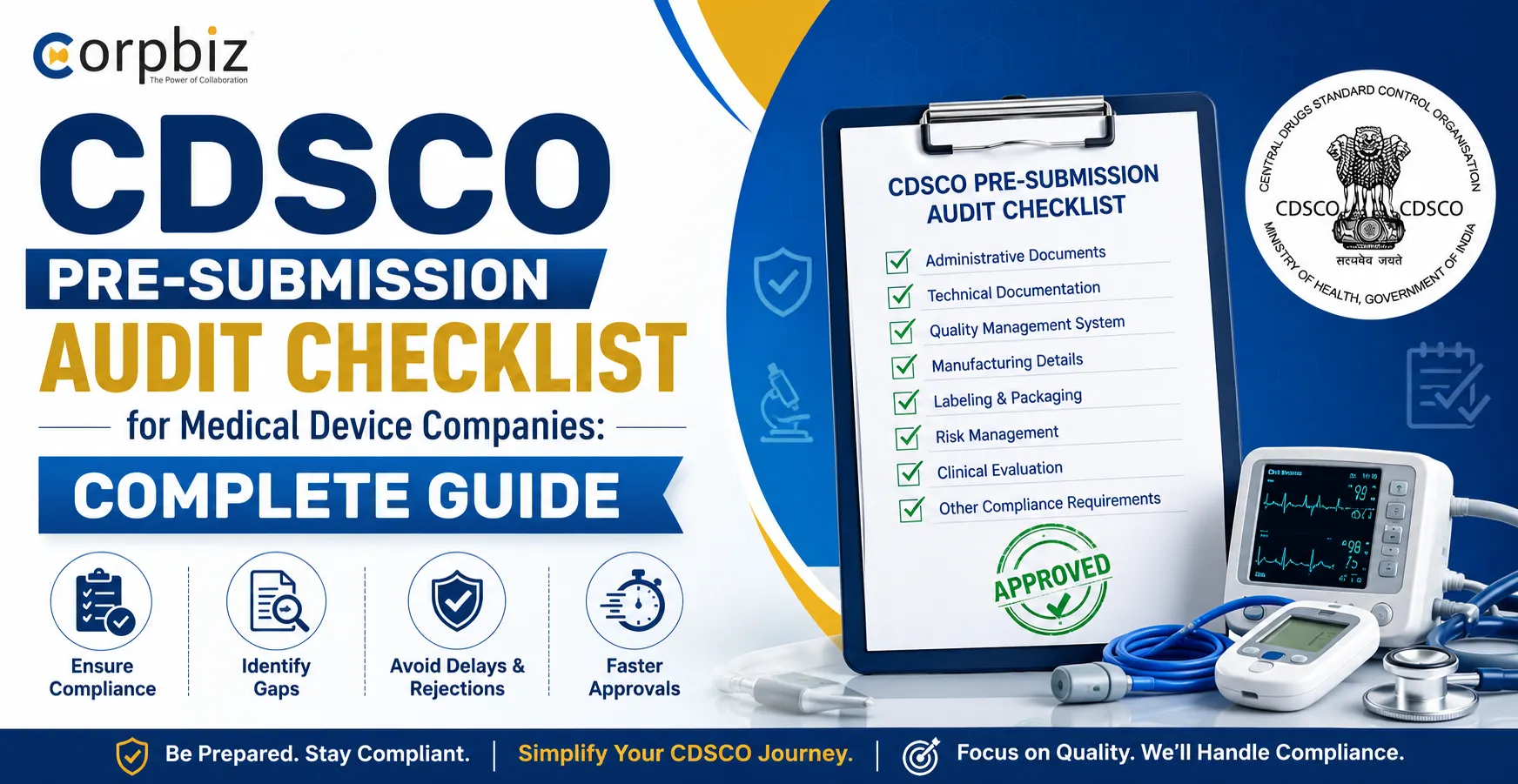



The Central Drugs Standard Control Organization (CDSCO) is India’s principal regulatory body. This organization monitors the country’s medicines and manufactured medical devices. CDSCOs authority ensure that the patient’s safety is not compromised in any way.
According to the Medical Devices Rules (MDR), 2017, devices are classified based on their risk level, as not all devices carry the same risk. Devices used in cancer treatment are directly linked to patients’ lives.
On January 2, 2026, CDSCO published a separate risk classification list for 77 Oncology medical devices. This list is an update of the 2022 list, and clearly specifies the risk levels, i.e. from A to D, classifying the medical devices into risk category from low to high
Background of the CDSCO Notification
CDSCO initially published a draft list to determine the risk classification of oncology medical devices. This draft was released under File No. MED-16014(12)/1/2024, dated January 6, 2025.
After receiving feedback and observations from relevant parties, the final list was published. This Drugs Controller General of India, Dr Rajiv Singh Raghuvanshi, signed the final notification.
This classification has been issued in accordance with Rule 4(3) of the Medical Devices Rules, 2017. The notification came into effect immediately upon publication, and the complete device list is included in Appendix A. If you are looking for CDSCO registration, you must be aware of the list.
Purpose of Publishing the Oncology Risk Classification List
There was often confusion regarding oncology medical devices. It was not clear which devices fell into which risk category. CDSCO has published a separate oncology risk classification list to address this problem.
This list includes a total of 77 medical devices. These include:
- Devices for cancer detection
- Therapy and radiotherapy equipment
- Implants and catheters
- Software and AI-based medical devices
This list applies to both Indian and foreign manufacturers and importers. So, obtaining CDSCO import license for medical devices and applying, and complying with regulations will now be much clearer and easier.
Talk To Expert

Get Expert help on CDSCO Certification
(4.8)


An Overview of Risk Classification of Oncology Medical Devices
CDSCO has classified oncology medical devices into four categories based on the potential risk to the patient. These categories are determined by the type of treatment, the use of the device, and its impact on the body. This makes it easier for manufacturers and importers to comply with regulations.
Oncology Medical Device Risk Classification Table
Here is a defined risk classification table for each that depicts the level of risk and the nature of medical device:
| Risk Class | Risk Level | Typical Device Nature |
| Class A | Low Risk | Simple surgical consumables |
| Class B | Low–Moderate Risk | Diagnostic & supportive tools |
| Class C | Moderate–High Risk | Active devices, implants, software |
| Class D | High Risk | Life-sustaining & intensive therapy |
CDSCO determines which class a device belongs to base on its use, patient safety, and the importance of the treatment.
Class-wise Description of Oncology Medical Devices Based on Risk
Get the description of Oncology medical devices based on their class type and risks.
Class A: Low-Risk Devices
Class A devices are generally low-risk and used for short periods. They do not penetrate the patient’s body deeply. This category includes cervical cytology scrapers, single-use cervical cone knives, and extracorporeal hyperthermia system applicators. These are used for applying heat from outside the body.
Class B: Low to Medium-Risk Devices
Class B devices have a comparatively higher risk. They are used as aids in diagnosis or treatment. This category includes breast transilluminators, flexible video bronchoscopes, scalp cooling systems, and balloon kyphoplasty kits, which assist with cancer-related bone problems.
Class C: Medium to High-Risk Devices
Class C devices are technologically advanced and directly involved in treatment. This category includes microwave ablation systems, robotic guidance systems, linear accelerator QA devices, vascular ports, and esophageal stents. AI and machine learning-based cancer detection software is also included in this category.
Class D: High-Risk Devices
Class D devices are the riskiest and are used in life-saving treatments. These include stereotactic radiosurgery systems, alternating electric field therapy systems, brachytherapy spacers, and embolization particles, which are used in complex cancer treatments.
Read more – Penalties for Selling Products without CDSCO Approval in India: Legal Risks, Fines, and Compliance Guide
Regulatory Framework for AI and Software-Based Oncology Devices
The CDSCO has explicitly classified AI and machine learning-based cancer detection software as Class C. This is a significant step in the digital health sector.
The importance of this decision:
- Software-based devices will now be subject to regulation.
- Patient safety and data accuracy will be ensured.
- It will align with international regulatory standards.
These types of software will require more data, testing, and validation to be classified as Class C. This will not slow down the development of new technologies but rather encourage safe and responsible innovation.
Regulatory Impact on Manufacturers and Importers
Many manufacturers and importers were unsure before this new list was released. These are the regulations that oncology devices would fall under. Now, that confusion has been reduced. It is now clear what type of license is required for each device.
The CDSCO requires additional documentation and clinical data for devices categorized under Class C and Class D. This ensures patient safety. Another important aspect is intended use. If the intended use of the device is not clearly stated, the application may be delayed or even rejected.
Dynamic Nature of the Classification List
The CDSCO has stated that the list of oncology devices is not final. It may change over time as new instruments and technologies continue to emerge in cancer treatment.
New devices may be added to this list in the future. Also, the risk classification of some older devices may change. Therefore, those working in this sector need to check for updates from the CDSCO.
Being aware of changes in regulations significantly reduces the chances of sudden problems with licensing and compliance.
Conclusion
The risk classification list for oncology medical devices published by the CDSCO is a positive initiative for this sector. It provides a clear understanding of the devices used in cancer treatment.
Manufacturers and importers can now easily understand the regulations of the devices. Correct classification makes obtaining licenses easier and reduces the legal complications in the future.
Corpbiz provides end-to-end support for oncology medical device classification, CDSCO registration, licensing, and compliance. If you have any problems understanding the regulations or submitting applications, you can contact Corpbiz.
Read more – A Guide on CDSCO Guidelines for Medical Devices in India
FAQs on CDSCO Risk Classification List
What is the CDSCO Oncology Medical Device Risk Classification List?
The CDSCO classification list is for the medical devices used in cancer treatment that are classified based on risk. It shows which devices are low risk and which are high risk. This list mainly helps manufacturers and importers. They can easily understand which rules apply to their devices.
Which law did CDSCO give this classification?
CDSCO authority gave the risk classification according to the Medical Devices Rules, 2017. This law states that all medical devices should be classified according to the level of risk. Since oncology devices are used with, CDSCO has separately determined their risk class under this rule.
How many oncology devices have been included in the new list?
A total of 77 oncology medical devices has been included in this new classification list. These include cancer detection devices, treatment devices, implants, radiotherapy systems, and software. Most of the devices that are used more in cancer treatment have been included in this list.
How many risk classes are there according to the Medical Devices Rules, 2017?
According to these rules, medical devices are divided into four risk classes.
· Class A is a very low risk device.
· Class B is low to medium risk.
· Class C is relatively high risk.
· Class D is the highest risk and is usually used for life-saving purposes.Why is AI-based cancer detection software classified as Class C?
AI-based cancer detection software helps directly detect cancer. If the results are wrong, then there can be major problems in the treatment of the patient. Therefore, CDSCO has classified this software as a medium to high risk. Class C means that this software will be thoroughly tested and verified before using it.
Does this classification affect import and manufacturing licenses?
Yes, this classification affects import and manufacturing licenses. The rules for obtaining licenses depend on the class in which a device is located. The rules are simpler for low-risk devices. But for high-risk devices, more paperwork and time are required.
Can the manufacturer show the intended use of the device in its own way?
The manufacturer can clarify what their device is. However, it must be realistic and clear. The use mentioned in the CDSCO list is basically a guideline. If the manufacturer wants to show any other use, then it is required to submit the correct information and evidence.
Are the rules stricter for Class C and Class D devices?
Yes, the rules are very strict for two classes of devices: Class C and Class D. Both classes are directly related to the patient's life. Therefore, CDSCO requests more information, reports, and safety documents for these devices. Although it takes more time to obtain approval, patient safety is ensured.
Can this list of oncology devices change in the future?
Yes, CDSCO has said that this list may change in the future. As new technologies in cancer treatment come out, new devices may be added to this list. Again, the class may also change if the risk of a device increases or decreases. So, it is important to see regular updates.
How does Corpbiz help with CDSCO oncology device work?
Corpbiz helps its clients understand classification of oncology medical devices, CDSCO registration, and licensing. They aid in the entire process from document preparation to application submission. This allows manufacturers and importers to comply with the regulations easily and without hassle.