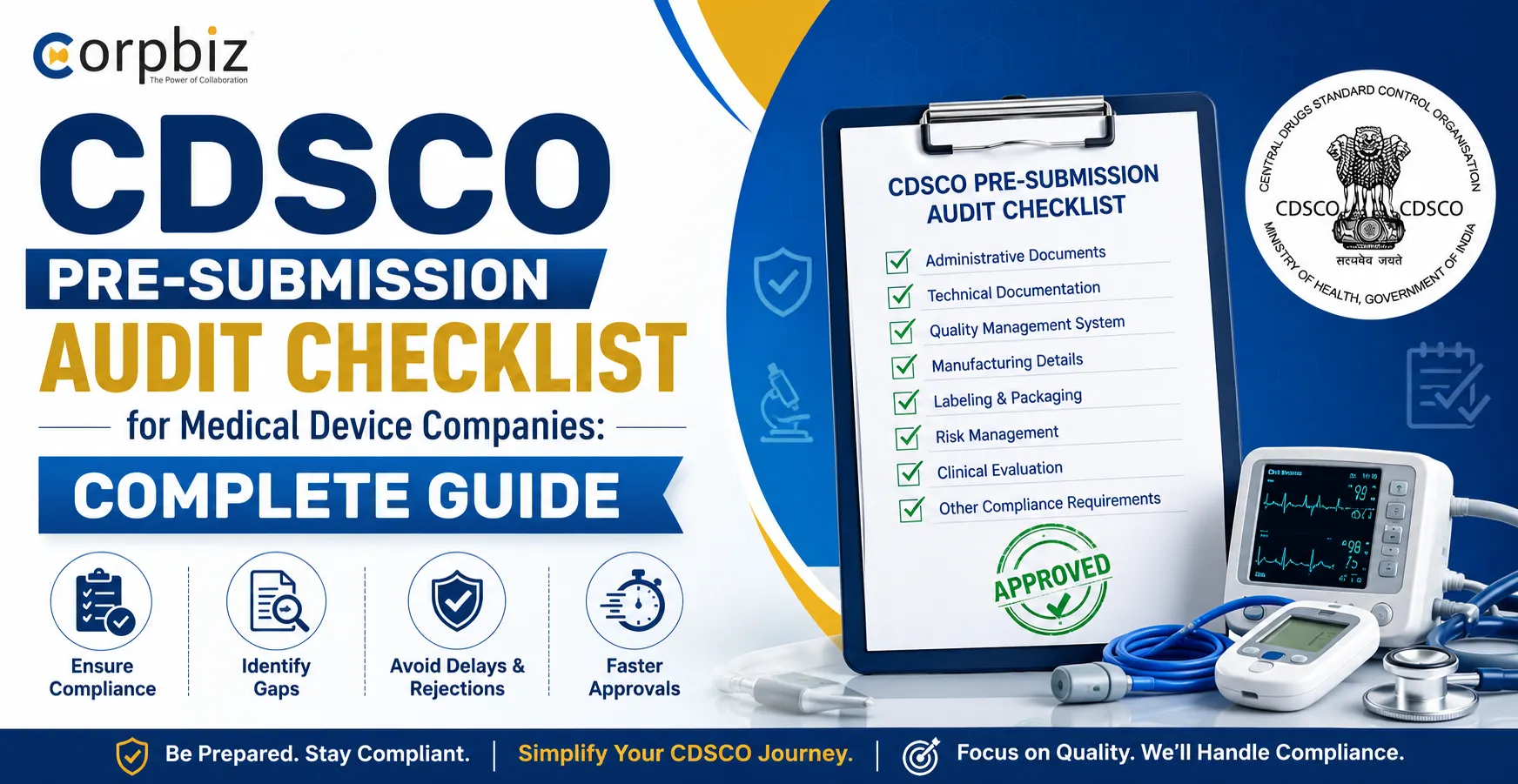



The Central Drugs Standard Control Organization (CDSCO) is the national regulatory body of India and works under the Ministry of Health and Family Welfare. It ensures the quality, safety, and efficacy of drugs and medical devices.
The CDSCO approves and monitors every stage of import, production, and sale. This maintains the quality of medical devices and ensures patient safety.
According to the Medical Device Rules introduced in 2017, various medical devices are classified based on risk. Defibrillators have been declared a ‘Notified Device,’ and CDSCO registration is essential before they can be marketed.
Defibrillator Market Potential
The global defibrillator market is growing rapidly. It is predicted to grow at a rate of over 6% between 2021 and 2026.
The manufacturer or importer must comply with the CDSCO rules to take advantage of this growth. Registration in accordance with the rules ensures the quality, safety, and credibility of the device in the market.
If there is a deficiency in compliance, then the registration may be cancelled, and fines or even a ban on selling the product in the market may be imposed. Therefore, proper compliance with the rules is essential for long-term business success.
Talk To Expert

Get Expert Help with CDSCO Compliance – Contact Us Today
(4.8)


What is CDSCO, and What is its Role in Regulating Medical Devices?
The Central Drugs Standard Control Organization (CDSCO) is the national regulatory body of India and works under the Ministry of Health and Family Welfare. It ensures the quality, safety, and efficacy of drugs and medical devices.
The CDSCO approves and monitors every stage of import, production, and sale. This maintains the quality of medical devices and ensures patient safety.
According to the Medical Device Rules introduced in 2017, various medical devices are classified based on risk. Defibrillators have been declared a ‘Notified Device,’ and CDSCO registration is essential before they can be marketed.
Read more – CDSCO Guidelines for Medical Devices in India
Regulation of Medical Devices in India
CDSCO and the Drug Controller General of India (DCGI) play the most important role in the regulation of medical devices in India. They supervise everything from production within the country to approval of imports from abroad.
After the Medical Device Rules of 2017 came into force, separate policies were formulated for medical devices. Each device is divided into different categories according to the level of risk, and control is maintained according to these rules.
Gazette Notification No. 648(E) was published on 1 April 2020, where several devices, including defibrillators, were brought under the ambit of drugs. This imposes stricter controls on such devices. The entire process is carried out under the framework of the Drugs & Cosmetics Act, 1940.
Classification of Defibrillators
According to the Medical Device Rules of India, 2017, medical devices are classified into four categories based on the level of risk.
Class A: Low risk
Class B: Low to medium risk
Class C: Medium to high risk
Class D: Highest risk
Being in Class C, the manufacturer must comply with detailed technical documentation, quality control certificates, and international standards. This ensures patient safety and quality devices reach the market.
Read more – CDSCO Registration for Cardiovascular Medical Devices
Step-by-Step Registration Process of CDSCO
CDSCO registration for defibrillators is done through a specific process. The steps are:
Notified Status Verification: Ensure the defibrillator is in the ‘Notified Medical Device’ list. Currently, it is already listed.
Appointment of Indian Authorized Agent (IAA): Foreign manufacturers must appoint an authorized agent in India. He/She contacts CDSCO on behalf of the manufacturer.
Application through Sugam Portal: The application for registration has to be submitted on CDSCO’s online portal “SUGAM.” This is where the fee can be deposited, and the progress can be tracked.
Document Submission: Technical and administrative documents have to be submitted while applying. Such as a quality certificate, technical file of the device, information about the manufacturing facility, etc.
CDSCO Review: The submitted documents are verified by CDSCO. Additional information or clarifications may be sought if necessary.
Issuance of License: A registration/license certificate is issued when everything is correct. The manufacturer or medical device importer can sell or use the device in India after getting this.
Documents for CDSCO Registration for Defibrillators
Certain specific documents have to be submitted for CDSCO registration for defibrillators. The important documents are:
Application Form (Form-40/MD14/MD15): The main form for registration.
ISO 13485 Certificate: Proof of the manufacturer’s quality management system.
CE Design Certificate: Proof that the device has been tested to European standards.
Free Sale Certificate: Certificate issued by the authorized authority of the country of manufacture.
Device Master File (DMF) and Plant Master File (PMF): Detailed information about the design, use, and manufacturing plant of the device.
Power of Attorney: Power of attorney granted by the foreign manufacturer to the Indian agent.
Undertaking and Quality Assurance Certificate: All the information submitted is correct, and quality control is in place.
Read more – Apply for CDSCO Registration for ENT Medical Devices in India
Timeline and Validity for CDSCO Registration for Defibrillators
The CDSCO registration process for defibrillators usually takes 6 to 9 months. The time frame depends on the accuracy or completeness of the submitted documents. If there are errors or omissions in the documents, the process may take longer.
Once the CDSCO registration is completed, it is valid for 3 years. It must be renewed before this period expires. Generally, the renewal application should be submitted at least 6 months before the expiry date.
Renewal of Registration
Some updated documents have to be submitted during the renewal of registration. These include:
- Updated ISO Certificate
- Amended or renewed Free Sale Certificate
- Details of recent information or changes to the product
Sometimes, CDSCO may ask the manufacturer for a post-market surveillance report or performance report. This ensures patient safety and monitors the device’s condition in the market.
The Final Words
A defibrillator is a Class C medical device, which is directly related to saving lives. So, CDSCO registration is mandatory to ensure patient safety.
Proper documentation and compliance are mandatory to enter the market in India. This process often seems complicated for manufacturers and importers. However, the whole process becomes much easier with expert help.
Corpbiz helps you with document preparation and application submission to obtain licenses. Ensure timely registration for your business.
Contact Corpbiz today and establish a strong position in the Indian healthcare market by completing CDSCO registration for your defibrillator.
Read more – CDSCO Registration for Ophthalmic Medical Devices
Frequently Asked Questions
Is CDSCO registration mandatory for all types of defibrillators in India?
Yes, all types of defibrillators- AEDs, ICDs, and WCDs, are required to be registered under CDSCO in India. They are classified as Class C medical devices. They cannot be imported, manufactured, or sold without CDSCO approval. This ensures safety, quality, and effective defibrillators reach patients and medical facilities.
Why is a defibrillator classified as a Class C medical device?
A defibrillator is directly involved in saving the life of a patient. Therefore, its malfunction can cause serious harm. Considering this risk, CDSCO has classified it as a medium-high risk (Class C) device. Due to this classification, strict monitoring, detailed documentation, and quality control testing are mandatory for registration. This ensures patient safety and the effectiveness of the device.
What are the documents required for CDSCO registration?
Some important documents need to be submitted for registration for a defibrillator. These include Form-40, ISO 13485 Certificate, CE Certificate, Device Master File, Plant Master File, Free Sale Certificate, and Power of Attorney in case of a foreign manufacturer. TR6 Challan is also required as proof of payment of fees. These documents confirm the manufacturer is working according to international standards and the device is safe.
How long does it take to get CDSCO registration for a defibrillator?
The registration process usually takes 6 to 9 months. The time depends on how accurately and completely the documents are submitted. If CDSCO asks for additional explanations or documents, the time may increase. Preparing in advance and taking the help of experts makes the process much faster and easier.
Who can apply for registration if the manufacturer is foreign?
If the manufacturer is outside India, he must appoint an Indian Authorized Agent (IAA). This agent liaises with CDSCO and manages the registration process. Besides, even after approval, the agent is responsible for complying with all the rules and regulations and submitting reports. Therefore, the role of IAA is very important for foreign companies.
How long is the validity of the CDSCO registration?
Once the registration is approved, it is valid for 3 years. It is mandatory to renew the registration before the expiry of this period. Generally, the renewal application should be made at least 6 months in advance. This ensures no break in the license, and the supply of the product continues in the market. Failure to renew may lead to legal complications and business problems.
Can CDSCO reject the registration application?
Yes, CDSCO can reject the application if the documents are incomplete, incorrect, or inconsistent. Such problems occur due to errors in the technical file, lack of certificates, or non-compliance with the prescribed format. Therefore, it is important to verify all the documents properly before applying. Taking expert help greatly reduces the risk of rejection.
What is the role of the SUGAM portal in the registration process?
The SUGAM portal is the online platform of CDSCO where applications can be submitted, documents uploaded, fees paid, and progress tracked. It has made the process easy and transparent. Where earlier a lot of paperwork was required, now the digital system provides quick verification and approval. This saves both time and money for the applicant.
What happens if CDSCO registration is not renewed on time?
If the registration is not renewed on time, the approval to manufacture or import defibrillators in India is cancelled. This can lead to supply disruption and loss of business. Legal risks are also created. Therefore, it is important to apply for renewal at least six months before the expiry of the registration.
How does CDSCO registration benefit manufacturers and patients?
CDSCO registration means legal entry into the Indian market, building brand confidence, and compliance with international standards for manufacturers. It ensures the device is tested, safe, and effective for patients and doctors. This improves the quality of medical care and has a positive impact on the country's healthcare system as a whole.
Read more – CDSCO Registration for Nephrology and Renal Care Medical Devices