


Will Dhoni Succeed in Registering a Trademark for Captain Cool?
Mahendra Singh Dhoni, famously known as MS Dhoni, applied to register “CAPTAIN COOL”, a nickname coined by the international sports community as a trademark on June 5, 2023.
The Trademarks Registry objected, stating that the trademark was already registered by Prabha Skill Sports (OPC) Private Limited, alleging prior registration under Section 11(1) of the Trade Marks Act, 1999.
Dhoni filed a rectification application against Prabha Skill Sports (OPC) Private Limited, alleging that they’ve been using the trademark in bad faith to benefit from his popularity and brand.
The registry finally accepted his counter-application and published the trademark in its official journal, allowing third-party objections, on June 16, 2025.
In this blog, we’ll cover the legal background that helped MS Dhoni’s case, trademark oppositions and rectification in India, challenges of unregistered brands, factors affecting registrations, and famous disputes of trademark opposition.
Talk To Expert

Will Dhoni Succeed in Registering a Trademark for Captain Cool?
(4.8)


Legal Background on Dhoni’s TM Registration of “Captain Cool”
Discover the legal background on Dhoni’s TM registration of “Captain Cool” as follows:
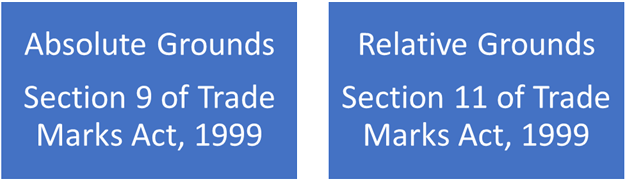
Sections of Trade Marks Act, 1999
Section 11
This section provides the relevant grounds for refusal of a trademark registration in India. The section states that a trademark may not be registered if:
- It identifies with an existing trademark and goods or services covered by it, and may create confusion in the consumer market.
- It is similar to a well-known trademark, even if the products and services are different from those of the latter.
Section 11 (10) (i)
This section explicitly states that the registry must give more weightage to a well-known trademark over a similar or identical one if the latter was registered in bad faith to take undue advantage of the former.
Section 9 (1)
As per this section, a trademark will be refused on absolute grounds as listed below:
- It doesn’t have any unique features.
- The trademark is registered to deceive the public.
- It may hurt the religious sentiments of Indian citizens.
- The mark is offensive and obscene.
- It is prohibited under the Emblems and Names (Prevention of Improper Use) Act, 1950.
Section 57 (1)
According to this section, the tribunal or the registry may, upon receiving an application, cancel a trademark registration.
Section 57 (3)
The registry or tribunal has the right to rectify or remove the trademark from the register.
Section 20 (1)
This section requires the advertisement or publication of a trademark in the journal for third-party oppositions after approval by the registry.
Class 41 of the Nice Classification
Class 41 of the Nice Classification is the main category that registers services relating to sports. It includes the following:
- Exhibitions for educational and training purposes.
- Print or publication of books and texts.
- Sports news and photography reporting.
- Sports-related film, TV, and web series.
- Coaching and fitness services.
- Digital gaming.
- Ticket and booking services for sports events.
- This class is ideal for companies and entrepreneurs seeking protection for their brands in India.
Read more – What Is Trademark Class and Why Is It Important?
Challenges with Unregistered Sports Brands & Services in India
Unregistered sport brands and services often lead to business failure, so check the following points you’re looking to gain market advantage in the one of the top GDP contributor industries:
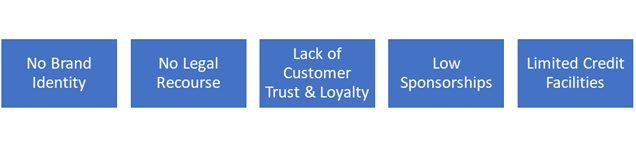
No Exclusive Rights
As an unregistered brand owner, you can’t claim exclusive rights, which might ultimately lead to the loss of market share.
Trademark Infringement
Unlike a registered brand, you don’t have the same level of legal protection against trademark infringements and counterfeited products.
Lack of Legal Security
Without a trademark registration, you have limited course of legal action. It’ll be difficult for you to win a legal dispute and obtain monetary claims. Unregistered trademark applications are often thrown out in courts without any proceedings.
Customer Distrust
An unregistered brand is perceived as unreliable as compared to registered trademarks. With the increase of counterfeiting of unregistered goods and services, the brand value decreases amongst the consumer market.
Limited Media Visibility
You may face obstacles to secure sponsorship for your brand if it is not registered with the Indian Trade Mark Registry.
No scope for Global Expansion
Without a valid registration, there’s no roadway for international business expansion of your brand.
Rebranding & Late Product Launch
You may have to incur heavy costs to rebrand your products or services per high courts’ orders, which would amount to late product launch.
Trademark Rectification in India
Learn below how MS Dhoni got approval after he applied for trademark rectification in India before the registrar, as explained below:
Who can file a Rectification?
Any natural or artificial person who has a reason to believe that a registered trademark is violating their IP rights is entitled to apply to the Trade Marks Registry.
Requirements:
- The owner misrepresented the facts to register the trademark.
- The trademark hasn’t been in use for 5 consecutive years.
- The mark owner wrongly classified the goods or services that don’t belong in the class of the said mark.
- The trademark was obtained through fraudulent means by the holder.
- The owner missed the grace period deadline to renew the trademark.
- The trademark was wrongly registered, meaning it shouldn’t have been registered in the first place by the registry.
Process of Trademark Rectification in India
The process of trademark rectification in India is as follows:
- You must apply with proof that you believe is sufficient as cause for rectification before the Trade Marks Registry.
- The registry will send a notice to the proprietor/owner of the trademark in question.
- The owner will send the counterstatement to the registry.
- Upon receiving the statements from both sides, the registrar will set a date for a hearing to pass the verdict.
You have an option to submit an appeal under:
Section 91 of the Trade Marks Act, 1999, if you’re dissatisfied with the registrar’s decision
Article 226 of the Indian Constitution, if you’ve a reason to believe the registry lacked jurisdiction or violated your fundamental rights.
An Overview of Trademark Opposition in India
Mahendra Singh Dhoni’s application is now accepted and published in the registry’s journal to allow third-party objections. Check the procedure for trademark opposition in India as described below:
- Apply within four months of the official advertisement in the journal.
- The registry will send the notification of the opposition to the trademark applicant who will then send the reply within two months.
- If the applicant fails to respond within the stipulated timeline, then the applications stand as “abandoned”.
- After receiving the reply, the registry will send the said statement to the third party.
- The opposing party also has two months to file their statement with evidence to the registrar.
- After receiving replies from all the parties, the Trade Mark registry will set a date for the final hearing.
Read more – Understanding the things that can be Trademarked
Indian & Global Landmark Trademark Disputes
Explore the below-explained Indian and global landmark trademark disputes:
Michael Jeffrey Jordan v. Trademark Review and Adjudication Board and Qiaodan Sports Co., Ltd. (2016) ZGFXZ No. 27, SPC
Facts of the case:
- Michael Jordan (herein referred to as the appellant) alleged that Qiaodan Sports Co. (herein referred to as the respondent) violated his prior use of his name.
- Respondent obtained a trademark “乔丹” under class 28 of the Nice classification.
- The appellant applied for cancellation to the Trademark Review and Adjudication Board (TRAB).
- Upon dissatisfaction with the decision of the TRAB, the appellant filed an appeal to the Supreme People’s Court of the People’s Republic of China.
- He stated that the respondent manufactured and sold shoes, using the Chinese translation of his name on the brand.
Decision:
The Hon’ble Supreme Court ruled in favour of the appellant, reasoning that the trademark violated Mr. Jordan’s existing prior rights. The court ordered TRAB to review the case again.
The respondent was ordered to stop using the appellant’s name, issue a public apology, and pay USD 40,000 for emotional and USD 7000 for legal damages.
Tata Sons Private Limited vs Hakunamatata Tata Founders & Ors. 2022
Facts of the case:
Hakunamatata Tata Founders & Ors. (herein referred to as the respondent), A cryptocurrency company used TATA, a well-known trademark by Tata Sons Private Limited (herein referred to as the appellant), to market their services.
The appellant filed an appeal for an injunction before the Delhi High Court, alleging trademark infringement.
Decision of the Delhi High Court:
The Hon’ble High Court rules in favour of the appellant, granting an ex-parte injunction and prohibiting the respondents from manufacturing, distributing, or selling any products or services using the former’s name “TATA”.
The court reasoned that the use of the well-known trademark would likely confuse the consumer market under Section 11 (2) of the Trade Marks Act, 1999.
Factors to Consider for Sports Trademark Registration
Businesses and entrepreneurs must understand the following key factors to consider for sports trademark registration in India:
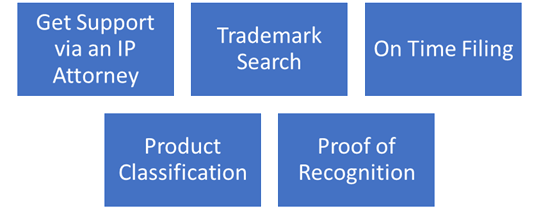
Legal Assistance
You should take the services of a licensed IP attorney to register a trademark because they can help you search a name, apply for registration, and file replies and appeals in case of refusals and oppositions.
Comprehensive Search
You must conduct a thorough trademark search to steer clear of any potential early infringements. All applicants must avoid using names that are vaguely similar to a well-known or existing trademark. It is important to note that a different product or service domain hardly matters when it comes to TMs.
Timely Registration
As India follows the “first to use” principle, you must ensure prompt registration of your brand. You’ll need to rebrand your registered trademark if someone claims priority rights over prior use.
Classification
Sports entrepreneurs and corporations must choose a brand name that doesn’t conflict with similar marks in different domain sectors. You must ensure your brand name isn’t confusing with an already registered trademark in a distinct industry.
Evidence for Prior Use
If you’ve been requested by the registry to demonstrate the first use of the brand, then you must file the necessary evidence, namely, marketing events, product or service launch, and sales receipts.
Well-known Brand Recognition
If anyone is taking undue advantage of your name or brand image, then you can submit a rectification application for the removal of the said trademark before the Trade Mark Registry.
How can Corpbiz Help with Your Trademark Registration?
We can assist you in conducting a comprehensive trademark search through our AI-powered search tool, which will help you detect potentially confusing and similar marks, giving you a positive chance to kickstart your registration journey.
From providing real-time updates and filing rectification applications to 100% compliance support and continuous monitoring, we’ll be there for you until the end.
Conclusion
MS Dhoni awaits the registry’s final approval after the publication of his trademark in the official journal. If nobody files an objection, he will receive the trademark for his moniker “Captain Cool” by Oct. 16, 2025.
A trademark registration in India is the legal proof of your brand’s identity and recognition in India. With a registered brand, you can create a customer base and expand your business in the international market. It will help you to get legal security against counterfeits and fraudsters.
With options like trademark rectification and oppositions, you can get assured assistance against copycats and infringers. The former will enable you to rectify, remove, or cancel a registered trademark, and the latter will assist you in opposing the registration of a brand.
Secure your brand at the earliest opportunity with Corpbiz and eliminate any potential legal barriers that may arise on your business pathway in India and beyond.
Frequently Asked Questions
What will happen if I don’t register my trademark?
Go through the following key consequences that might happen if you don’t register your brand:
– You’ll not receive any exclusive rights to use your brand.
– There will be unnecessary obstacles and delays in the marketing of your product in the market.
– You won’t have any competitive advantage over other brands in the consumer market.
– An unregistered brand will have no value in the eyes of the law, meaning you won’t be able to file lawsuits and claim monetary compensation.
– You’ll get entangled in the litigation even if your case is allowed, which will hamper the launch of your product in the market.
– If somebody registers a brand before you, then you’ll have to rebrand your product or service unless the registry agrees with your plea.How do I check if a trademark is already registered?
You can use the Indian Official Trademark Search through the Trade Marks Registry or use our AI proctored search tool to ensure your brand name isn’t already registered in India.
How can I ensure my trademark isn’t objected to by a third party?
Follow the key points below for a seamless trademark registration process:
– Find a reputable compliance service provider.
– Even though it is not mandated by Indian law, it is advisable to hire a trademark attorney who would help you conduct a trademark search and file documents.
– Make a list of goods and services as per the Nice or Vienna classification.
– Use AI-powered tools for a comprehensive brand name search.
– Pick a name or logo that is distinctive and doesn’t contain generic terms.
– Take assistance from a lawyer to check your paperwork, including notarization of documents and application filing.
– Ensure not to choose a name that is similar to a well-known trademark, even though your domain of product or services is different from it.
– Timely file your reply with supporting evidence through an IP attorney against the notice of opposition by the registry.
– Continue monitoring the status of your application through the Indian Trademark Search portal.What is the validity of a trademark in India?
An Indian trademark is valid for 10 years from the date of official registration. It can be renewed for the next 10 years with a small fee.
What should I do if someone opposes my trademark in India?
Follow the below-mentioned steps to apply for an opposition:
– You must send your counterstatement two months from the receiving the official notice from the Indian Trade Marks Registry.
– Once you’ve sent your reply along with the evidence supporting your case, the registry will send the said to the opposing party, who will then have two months to present their case.
– The registry will review evidence from both sides and rule on the case in favour of or against either party. You are entitled to file an appeal before the High Court of your respective state if the registry rules against you.Which section is relevant for rectification of a wrongly registered trademark in India?
Section 57 of the Indian Trade Marks Act, 1999 is the primary provision that entitles the registry or a High Court to correct or rectify a trademark entry in the register by cancelling, modifying, or removing it.
Any third party can apply to the registry or a high court of the respective state.What are the grounds for rectification under section 57 of the Trade Marks Act, 1999?
The grounds for rectification under the Trade Marks Act, 1999 state that a trademark may be cancelled, rectified, or completely removed if:
– The owner violates the conditions of the trademark use.
– The trademark lacks pertinent information, is misspelt, or is placed under the wrong classification.
– It shouldn’t be on the register at all for non-use, expiration, or registration invalidity.Which class is important for services related to sports trademarks in India?
Class 41 is the relevant class for trademark registration of services and activities related to sports. The class includes the following:
– Screenplay writing and songwriting.
– Tickets and booking for sports entertainment and events.
– Online sports gaming services.
– Sports coaching and fitness training services.
– TV and film production
– Book and text publishing.
– Entertainment and museum exhibitionsWhat are the grounds for trademark refusal or opposition in India?
A trademark may be refused or opposed if it:
– Lacks uniqueness
– It is against Indian laws.
– Is uncannily similar or confusing with an existing or well-known trademark.
– It is filed in bad faith to mislead consumers or take undue advantage of a well-established brand.Is there any other Indian landmark dispute concerning trademark registration?
Yahoo!, Inc. vs Akash Arora & Anr. on 19 February, 1999:
– The Hon’ble Delhi High Court held that Akash Arora infringed the well-known web domain “Yahoo” by creating “YahooIndia.com”.
– Yahoo is a global brand with a larger customer base, and the defendant’s use of “YahooIndia” would likely create confusion.
Read more – Guide to Copyright and Trademark