

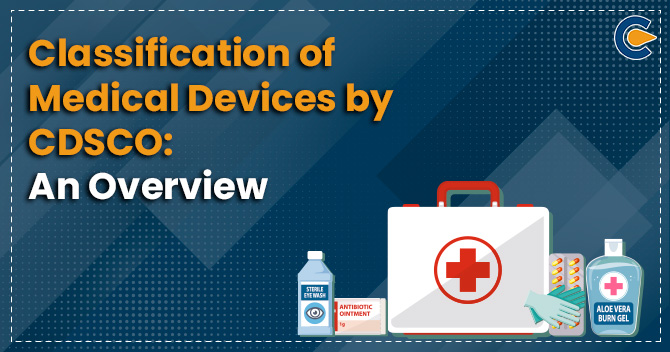
CDCSO manages the classification of medical devices. The authority operates under the purview of the Drug Controller General of India. The CDSCO classification of medical devices is useful for manufacturers, importers, and health staff.
The Drugs and Cosmetics Act, 1940, provides the regulatory structure for all medical devices in India. The Medical Device Rules, 2017, fulfil safety, quality, and performance standards for medical devices before entering the Indian market. CDSCO registration seekers must know this.
The Health Ministry of India introduced new medical devices and IVD regulations. It will enhance the effectiveness of the Drugs and Cosmetics Act 1940. The said regulations came into effect on Jan 1, 2018. Read the blog to know more about the CDSCO Classification of Medical Devices, along with their categories, regulatory framework, effects, key challenges, penalties, and costs.
New Medical Devices Rules India, 2017
The New Medical Devices Rules, India, 2017, reduce the frequency of periodic renewal of licenses. Accordingly, the production and import licenses shall continue to stay valid until it is revoked, suspended, or surrendered.
The entire licensing process is completed online via a dedicated online portal known as SUGUM. The said portal shall ensure seamless submission, tracking, and review of the registration documents.
Regulators have already been briefed on the timeline of all the activities concerned. The said regulations fulfil international regulations.
The SUGUM Portal shall also provide the facility for a change in registration. The applicant can access this facility via “Post Approval Change.”
India’s Medical Device Market in 2026: Why CDSCO Classification is needed?
India is the fourth-largest medical device market in Asia after Japan, China, and South Korea. It accounts for roughly 1.6% of global medical technology. The medical device market grew from $20.98 Billion in 2026. It is projected to reach $38.08 Billion by 2030. The market share of imports (62%) is higher than the domestic production (38%) for the Indian medical device industry in FY2025-26.
Despite a strong domestic production in syringes, consumables, and simple disposables, India remains import-dependent for cardiology, oncology, and high-end imaging. It is the biggest reason why import license (MD-15) volumes consistently outstrip manufacturing license (MD-5/MD-9) volumes at CDSCO each fiscal year.
Indian Medical Device Market Share FY2025-26
Here is a quick list for the product categories under the Indian medical device market, FY2025-26:
- Diagnostic Imaging: 22% market share
- Consumables and Disposables: 19% market share
- Patient Aids: 14% market share
- IVD/Reagents: 14% market share
- Orthopaedic and Prosthetic: 12% market share
- Cardiology: 10% market share
- Others: 5% market share
Top Source Countries for Medical Device Imports into India (FY2025-26)
Find the list of the top countries importing medical devices in India for FY2025-26:
- USA
- Germany
- China
- Singapore
- Japan
- Netherlands
- Others
Legal and Regulatory Framework for the CDSCO Classification of Medical Devices
Here is a list of the regulations in the CDSCO Classification of Medical Devices, given as follows:
- Drugs and Cosmetics Act, 1940
- Drugs and Cosmetics Rules, 1945
- Medical Device Rules, 2017
- MDR Amendment, 2020
- MDR (Amendment) Rules, 2022
- National Medical Device Policy, 2023
- MvPI Operational Guidelines, 2024-25
- NDCT Rules/ IND Device Pathway, Updated 2025
Regulatory Approvals for CDSCO Classification of Medical Devices
The new regulations ensure the proper CDSCO classification of medical devices in line with international standards and remove the prevailing gaps.
The National Medical Device Authority shall hold the authority to advocate for the domestic medical device market, which includes specific price limits, safety standards, and price control policy for related surgical devices.
Presently, 22 notified medical devices listed under the Drug and Cosmetic Act, 1940, are required to secure the medical device registration from the CDCSO. See the list of the New Medical Devices given below:
- Disposing of Hypodermic Syringes
- Disposing of Hypodermic Needles
- Disposing of Perfusion Sets
- In Vitro Diagnostic devices for AIDS, HBsAG, and HCV
- Cardiac Stents
- Drug-Eluting Stents
- Catheters
- Intraocular Lenses
- I.V. Cannula
- Bone Cements
- Heart Valves
- Scalp Vein Set
- Orthopedic implant
- Internal Prosthetic Replacement
- Ablation Device
CDSCO Classification of Medical Devices under the New Rules
The medical devices listed under the new Rules “Medical Devices Rules, 2017”, are categorized as per the Global Harmonization Task Force, depending on associated risks. See below with their distribution:
- Class A (Low Risk): 42%
- Class B (Low-Moderate Risk): 34%
- Class C (Moderate High Risk): 17%
- Class D (High Risk): 7%
Class A and B: The State Licensing authority shall deal with the licensing of these classes. Entities willing to deal with these entire classes can send the application to the State authority in the prescribed manner.
Class C and D: The Central licensing grants regulatory consent for the registration of medical devices.
The producers of medical devices shall be required to comply with risk-proportionate regulatory norms cited under the Rules.
CDSCO Classification of Medical Devices: List of New Medical Devices & their Class
The medical devices classification covers a wide array of devices in the grouping form, such as stents and cannulas, into more specific sub-groups, such as coronary stents and ureteral stents. CDCSO has underpinned the classification of new sub-groups with risk analysis methods, which are vital under the Medical Devices Rules, 2017.
CATEGORY A – LOW RISK
| SPECIALTY | DEVICES COVERED | PURPOSE |
| Surgical Aids | Kidney tray, cotton swabs, surgical retractors, sterile drapes. | Operation Theatre (OT) |
| General Care | Tongue, Depressors, oxygen masks (non-active), examination lights | Routine examination and oxygen delivery |
| Mobility | Crutches, wheelchair, walking stick | Patients without activeness to move |
| Wound Care | Adhesive bandage, plasters, sterile dressings, gauze | Short-term wound coverage |
CATEGORY B – LOW-TO-MODERATE RISK
| SPECIALTY | DEVICES COVERED | PURPOSE |
| Anaesthesia | Tracheal tubes, laryngoscopes (non-active), face masks | Airway Management |
| Cardiology (Diag.) | Single-use ESG electrode, digital BP monitors, and pulse oximeters | Cardiac monitoring |
| Surgery | Hypodermic syringe, blood collection lancets sutures (non-absorbable, short-term) | Routine surgical and phlebotomy use. |
| Hearing & Vision | Hearing aids, magnifying spectacles, and daily-wear contact lenses | Sensory correction |
| Imaging Accessories | Ultrasound transducer covers, MRI cushions | Accessory consumables for imaging. |
CATEGORY C – MODERATE-TO-HIGH RISK
| SPECIALTY | DEVICES COVERED | PURPOSE |
| Cardiology | Coronary catheter guidewires, ballon angioplasty catheters, cardiac monitors (active) | Diagnostic and interventional cardiology |
| Anaesthesia/ ICU | Ventilators (invasive), infusion pumps, and anaesthesia workstations | Active Life Support |
| Orthopedics | Dental implants, Bone fixation plates and screws, intramedullary nails | Surgically invasive long-term implants |
| Imaging | Ultrasound scanners, mammography units, X-ray fluoroscopy systems, mobile C-arms | Active diagnostic imaging |
| Surgery | Surgical lasers, robotic surgical systems (assistive) | Active therapeutic energy delivery |
| Software | Diagnostic AI Software for radiology triage (non-life threatening) | Software as a Medical device, IMDRF Cat 3. |
CATEGORY D – HIGH RISK
| SPECIALTY | DEVICES COVERED | PURPOSE |
| Cardiology | Implantable pacemakers, ICD/CRT-D devices, prosthetic heart values, drug-eluting stents | Active long-term implantable; central circulatory system |
| Neurology | Cochlear implants, deep brain stimulators, neurovascular embolization coils | CNS contact, life supporting |
| Ophthalmology | Intraocular lenses (anterior + posterior), retinal prostheses | Long-term implantable in a vital optical pathway. |
| Reproductive Health | Intra-uterine devices (hormone-releasing), hysteroscopic implants | Long-term implantable, hormonal combination |
| IVD Class D | HBV, HIV, HCV NAT assays for blood-bank screening | Detect transmissible agents in blood/tissue donations. |
| Combination | Drug-coated ballons, bioabsorbable scaffolds with active pharmaceutical ingredient | Device-drug combination products. |
CDSCO Registration and Approval Pathways: MD-5, MD-9, & MD-15 Clarified
Once the CDSCO classification of medical devices is determined, the next step is licensing. The CDSCO approval depends on the manufacturing and importing of medical devices and the risk class. Look at the given table to know the output form, issuing authority, application, and activity as per the risk class.
| RISK CLASS | ACTIVITY | APPLICATION FORM | ISSUING AUTHORITY | OUTPUT FORM |
| A/B | Manufacture | MD-3 (loan)/MD-5 (own) | State Licensing Authority | MD-5 |
| C/D | Manufacture | MD-7 (loan)/MD-9 (own) | Central Licensing Authority (CDSCO) | MD-9 |
| A, B, C, or D | Import | MD-14 with MD-15 application | Central Licensing Authority (CDSCO) | MD-15 |
| All | Wholesale Sale | MD-41 (general/restricted) | State Licensing Authority | MD-42 |
| All | Retail Sale | MD-41 | State Licensing Authority | MD-42 |
| C/D (New Device) | Clinical Investigation | MD-22 | CDSCO+ Ethics Committee | MD-23 (Permission) |
| C/D | Performance Evaluation (IVD) | MD-24 | CDSCO+ Ethics Committee | MD-25 |
| All | Test License | MD-12 | Central/State LA per class | MD-13 |
SPECIAL PATHWAYS
Predicate-Equivalence Pathway covers class C and D medical devices that are US FDA, EU under MDR/IVDR, Australia, Japan, Canada, or the UK MHRA approved. It provides leverage for foreign approvals to bypass mandatory in-country clinical investigation, provided a justification of equivalence is filed with safety data.
India has brought a quick approval route for innovative medical devices under the New Drugs and Clinical Trials (Amendment) Rules, 2025, managed by CDSCO, as it reviews and provides feedback within 30 working days at each step.
Regulatory Authority for CDSCO Classification of Medical Devices
The CDSCO body has the power/authority to:
- License approval for manufacturing and importing.
- On-site inspection in the manufacturing plant.
- Strictly check if a device is unsafe.
- Monitor the post-market surveillance for adverse impacts.
Documents Required in CDSCO by Risk Class
Find the structured table below mapped as per A, B, C, and D class of the CDSCO classification of Medical Devices:
| DOCUMENT | CLASS A | CLASS B | CLASS C | CLASS D |
| Cover letter & Form MD-3/7/14 | Yes | Yes | Yes | Yes |
| Plant Master File (PMF) | Yes (Basic) | Yes | Yes (detailed | Yes (detailed |
| Device Master File (DMF/CSDT) | Summary | Yes | Detailed | detailed + risk file |
| ISO 13485:2016 Certificate (or BIS IS 13485) | Recommended | Mandatory | Mandatory | Mandatory |
| Risk Management File (ISO 14971) | Optional | Recommended | Mandatory | Mandatory |
| Biocompatibility (ISO 10993 series) | If applicable | If applicable | Mandatory if patient-contacting | Mandatory |
| Sterility/Validation Reports | If applicable | If applicable | Mandatory if sterile | Mandatory if sterile |
| Electrical/EMC Reports (IEC 60601) | – | If active | Mandatory if active | Mandatory if active |
| Clinical Evaluation Report (CER) | – | Light | Detailed | Detailed+ India trial unless predicate |
| Predicate/Free sale certificate | – | Recommended | Mandatory | Mandatory |
| Labels, IFU and Pack-Insert (English + Hindi where applicable) | Yes | Yes | Yes | Yes |
| Authorized Indian Agent appointment (imports) | Yes | Yes | Yes | Yes |
| Power of attorney notarized + apostilled) | Yes | Yes | Yes | Yes |
| Government Fee Proof (TR-6 challan) | Yes | Yes | Ye | Yes |
Best Ways for CDSCO Registration in India
Know the best ways of CDSCO registration for class A, B, C, D medical devices:
Class A and B:
CDSCO registration of Class A and B requires self-certification for Indian manufacturers or an Import license for foreign manufacturers.
Class C and D
CDSCO registration of Class C and D requires mandatory approval by clinical trial or performance assessment.
CDSCO Registration Fees 2026 As Per Government Structure
CDSCO registration fees are generated directly from the CDSCO classification of medical devices. The fee schedule is laid down in Schedules I and II of MDR 2017, revised in 2024. The fee is payable through a Challan in favor of the Pay & Accounts Officer, Department of Health and Family Welfare.
The given table below is revised as of April 2026 for the CDSCO registration fees for A, B, C, and D class based on an activity or form.
| ACTIVITY/FORM | CLASS A | CLASS B | CLASS C | CLASS D |
| Manufacturing: Site Fee (MD-5 / MD-9) | Rs.5,000 | Rs.5,000 | Rs.50,000 | Rs.50,000 |
| Manufacturing:Per Device Fee | Rs.500 | Rs.500 | Rs.1,000 | Rs.1,000 |
| Loan license (MD-3 / MD-7) | Rs.5000 | Rs.5000 | Rs.50,000 | Rs.50,000 |
| Import License: Site Fee (MD-15) | US$1,000 | US$2,000 | US$3,000 | US$3,000 |
| Import License: Per Device Fee | US$50 | US$1,000 | US$1,500 | US$1,500 |
| Test License (MD-12 / MD-13) | Rs.500 | Rs.500 | Rs.500 | Rs.500 |
| Clinical Investigation Permission | – | – | Rs.1,00,000 | Rs.1,00,00 |
| Sale License (MD-41/MD-42) | Rs.3,000 | Rs.3,000 | Rs.3,000 | Rs.3,000 |
The fee structure of Class D is higher in comparison to Class A, which is less costly and affordable, too.
CDSCO Approval Timeline 2026: How Long Does CDSCO Registration Take?
The statutory timeline under the MDR 2017 varies by CDSCO classification of medical devices. Here is the average CDSCO License approval timelines by Risk Class (2026):
- Class A takes maximum 60 days and a minimum of 30 days
- Class B takes maximum 120 days and a minimum of 60 days
- Class C takes maximum 240 days and a minimum of 120 days
- Class D takes maximum 365 days and a minimum of 180 days
Below is a structured table for risk class based on stages:
| STAGE | CLASS A & B | CLASS C & D |
| Pre-submission readiness review (in-house) | 2 to 3 weeks | 4 to 8 weeks |
| SUGAM/NSWS submission acknowledgement | 1 to 3 days | 1 to 3 days |
| Document scrutiny (deficiency letter, if any) | 30 to 45 days | 60 to 90 days |
| Manufacturing location/desktop audit | 30 days | 60 days |
| Final order issuance | 60 days from clean file | 90 days from clean file |
| End-to-end realistic timeline | 3 to 4 months | 6 to 12 months |
Primary Purposes of Obtaining the CDSCO Certification in India
Find the list for a wide range of purposes of securing the CDSCO certification in India, given below:
- Export NOC (Zone)
- Cosmetic Registration
- CDSCO Test License
- Dual Use NOC (Trader)
- Formulation R&D Organization
- Blood Product Registration
- Sponsors (BA/BE and CT)
- Ethics Committee
- Blood Bank Registration
CDSCO’s Effects on the Healthcare System & Patients
Here are a few highlights of CDSCOs’ effects on the healthcare system and patients, given as follows:
- Legally approved devices: Every medical device must be legally approved to fulfil safety, quality, and performance standards. It lowers the risk of healthcare systems.
- Safety of the Patient: Install legally approved instruments under the CDSCO classification of medical devices. They must be tested and evaluated to ensure patient safety during diagnosis, treatment, and medical procedures.
- Contribute to Next-Gen Technology: Implement the use of advanced medical technology, ensuring regulatory compliance and using customers’ feedback, too. It leads to safer, smarter, and more effective healthcare technologies in the future.
- Post-Surveillance Monitoring: The medical devices are under post-surveillance monitoring after approval to track performance.
Major Challenges in the CDSCO Registration Process
Applicants face serious challenges during the CDSCO registration process. From wrong CDSCO classification of medical devices, minor errors, and missing files, there are more challenges. So, if you’re going through something similar, look for the key challenges during the CDSCO registration process, given as follows:
- Risk-prone instruments under CDSCO classification face delayed approvals due to strict norms.
- Less knowledge of the CDSCO regulatory framework and norms causes delays, errors, and compliance issues in the CDSCO registration procedure.
- Fake, low-quality, or unapproved instruments may harm patients.
- The CDSCO registration process requires excessive technical data, documents, and reports. Even a small error or a missing credential may lead to rejection.
- The wrong CDSCO classification of medical devices results in delays and legal issues associated with it.
Major Reasons for CDSCO Application Rejections
Find the top reasons for CDSCO applications queries or rejections:
- Inadequate QMS / ISO 13485 doc: 28%
- Incomplete device master file: 22%
- Labelling non-compliance: 17%
- Clinical evidence gaps: 14%
- Plant master file issues: 11%
- Other (fees, signatures): 8%
CDSCO vs US FDA vs EU MDR: How the CDSCO Classifications of Medical Devices Compare Globally?
The comparison of CDSCO classification with US FDA vs EU MDR is based on several dimensions provided in the table below:
| DIMENSIONS | CDSCO (INDIA) | US FDA | EU MDR/IVDR |
| Classification Taxonomy | Class A/B/C/D | Class I/II/III | Class I/IIa/IIb/III+ IVDR Class A – D |
| Pre-market pathway | MD-9/MD-15 with DMF + clinical investigation | PMA: Pre-market approval | CE Marking via notified body, Annex VII conformity |
| Statutory approval timeline | 270 days (MDR Rule 32: C/D) | 180 days FDA review goal | Variable, typically 12 to 18 months |
| Government Fee bracket | US$3,000 to US$5,000 | US$38,000+ (PMA fee FY26) | Notified body fees: EUR 25,000 to EUR 80,000 |
| Clinical investigation requirement | It is mandatory unless predicate from listed jurisdictions | Almost always mandatory | Almost always mandatory; PMCF mandatory |
| Post-market compliance | MvPI + PSUR by class | MDR+MAUDE database | PSUR+EUDAMED+ Periodic safety reports |
| UDI | CUDID, mandatory for C/D from Oct-25 | GUDID, mandatory by class | EUDAMED, mandatory by class |
| Reliance /Convergence | Reliance on listed regulators (US, EU, JP, AU, CA, UK) for predicate | Limited reliance | Limited; CE accepted by some non-EU markets. |
Future Outlook: CDSCO Classification of Medical Devices 2026-2030
The three driving factors for growing prospects of CDSCO classification of medical devices 2026-2030 are:
- National Medical Devices 2023 targets 10x domestic manufacturing of US$50 billion by 2030.
- India aligning with international systems, and submissions are likely to be in a standardized digital format, like eCTD by 2027.
- India is updating its rules to handle modern technologies like Software-as-a-Medical Device (SaMD) and AI/ML. New guidelines for telemedicine and remote monitoring were introduced in February 2026.
Manufacturers staying ahead by digitizing documentation, building UDI into the products, aligning clinical data for India/US/EU, and adding strong cybersecurity get quicker and easier approvals from the Central Drugs Standard Control Organization.
Conclusion
The policy for the CDSCO classification of medical devices seeks to strengthen the Drug and Cosmetic Act by encompassing the above products. Continuing research for better treatment has flooded the healthcare sector with new medical devices that are being used without any regulation. The new medical device policy seeks to address this gap by covering comprehensive legal regulations to protect the public interest.
To get expert-led support in CDSCO registration, talk to our experts at Corpbiz.
FAQs on CDSCO Classification of Medical Devices
What is the CDSCO Classification of Medical Devices?
The Central Drugs Standard Control Organization (CDSCO) is India’s regulatory authority liable for approving, regulating, and classifying medical devices. It is necessary for manufacturers, importers, and health providers.
How many categories are there under the New Medical Rules?
There are four categories under the New Medical Rules: Category A, B, C, and D. Among all, Category A has a low risk, whereas Category D has a high risk.
Which authority manages the CDSCO classification of medical devices in India?
The Drug Controller General of India manages the CDSCO classification of medical devices in India.
Who can apply for CDSCO Registration in India?
Indian agents, importers, corporates, and foreign entities holding an Indian subsidiary are the applicants permitted to apply for the apply for the CDSCO registration in India.
What is the validity of the CDSCO registration in India?
CDSCO registration in India is valid for 5 years from the date of its issuance. An applicant must apply for renewal 6 months before the expiry date.
What if the CDSCO classification of medical devices is incorrect?
The incorrect CDSCO classification of medical devices results in rejection, delays, or legal issues. So, it is essential to ensure the accuracy of details and information.